Kyrgyzstan may be famous for mountains and yurt camps, but it's also home to a surprisingly dense religious map. The State Commission for Religious Affairs and Interethnic Relations has put the official number at 4,596 religious organisations and facilities across the country.
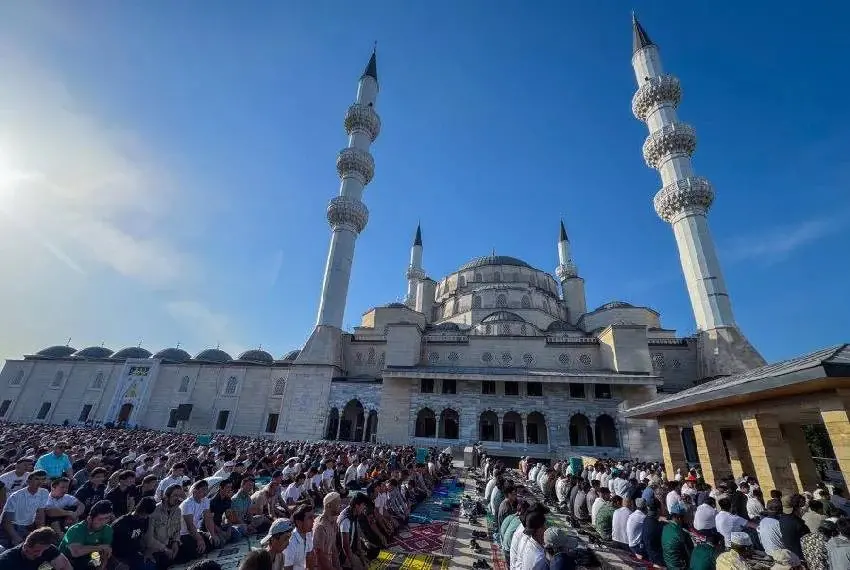
The overwhelming majority are mosques: 3,883 of them, dotted through Bishkek's apartment districts and remote villages alike. Beyond that, the Islamic institutions include 220 religious educational establishments, 58 religious organisations and 42 charitable foundations.
The non-Muslim presence is smaller but notable. There are 387 Christian religious organisations, reflecting the Russian Orthodox and other communities that have long been part of Central Asian life. Six organisations represent other faiths: a single Jewish community, one Buddhist community and four Bahá'í communities. It's a small snapshot of the country's multi-ethnic make-up — Kyrgyz, Russian, Uzbek, Dungan and other groups have lived side by side for generations.
There's an administrative story behind the numbers too. The muftiyat is currently carrying out an inventory of mosques, checking land and building documentation, as part of a legal requirement for religious facilities to be transferred onto the balance sheet of the central religious administration. Not exactly glamorous, but it signals tighter oversight of religious property — worth knowing if you plan to visit or photograph mosques, since access rules and building status may shift as the process unfolds.
So why should a traveller care? Because religious buildings are some of the most rewarding stops on a Kyrgyzstan trip, especially in towns where Soviet-era blocks meet functioning mosques and Orthodox churches within a few streets. The scale here matters: with nearly 4,000 mosques nationwide, you're rarely far from one, and in most cases visitors are welcome outside prayer times if they dress modestly and ask first.
The figures also help set expectations. This is a predominantly Muslim country where religious practice is generally relaxed and low-key — headscarves aren't required for foreign women, and locals are typically unfazed by curious tourists. At the same time, the small numbers of Jewish, Buddhist and Bahá'í communities hint at a history of tolerance that predates the modern state, a legacy travellers can trace in cemeteries, old churches and the occasional synagogue.
If religious sites are high on your list, pair them with the country's better-known draws. The western town of Osh, with its centuries-old sacred mountain Sulaiman-Too, is the natural place to start; Bishkek's mix of mosques and Orthodox cathedrals works well as a base; and the Buddhist-adjacent heritage of the eastern regions sits conveniently near the trekking trails around Karakol. In other words, the 4,596 figure isn't just bureaucracy — it's a reminder that culture-hopping between a mosque, a church and a mountain shrine can all happen in one Kyrgyz day.
For travellers weighing a Central Asia trip, the takeaway is simple: Kyrgyzstan offers religious and cultural sightseeing alongside its famed trekking, often for very little money and with few crowds.