Most visitors to Hampi come for the temples, the boulder-strewn views and the ruins of the Royal Enclosure. Few realise that scattered among the palaces and bazaars are mosques, Sufi tombs and the remains of an entire Muslim quarter — quiet evidence that the Vijayanagara Empire was far more cosmopolitan than the usual Hindu-versus-Muslim framing suggests.
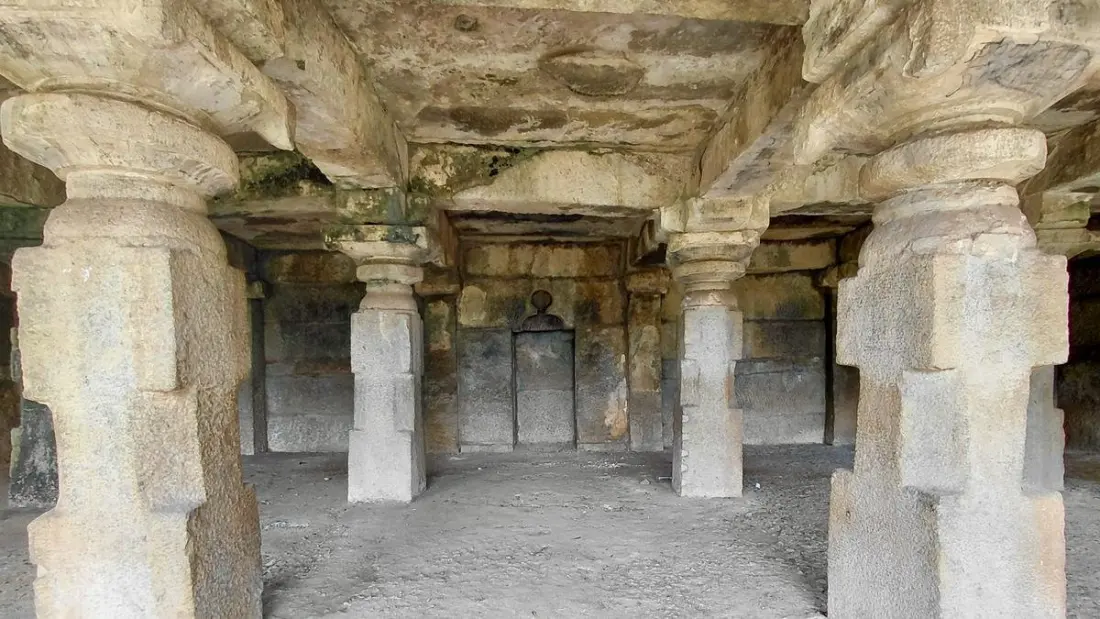
Start with the Ahmed Khan Mosque, the most striking survivor. From the outside it looks like a classic Dravidian mandapam: a pillared granite hall opening east, walled on three sides. Inside, a finely carved mihrab on the western wall points the way to Mecca. A Kannada inscription dated 1439 CE records that Ahmad Khan, an official serving King Devaraya II, built it for the merit of his king — an early and elegant blend of local building traditions and Islamic religious needs.
The records back up the stones. A 1420 CE inscription on a boulder near the Malayavanta Raghunatha Temple notes two officials constructing a mosque, tomb and compound for one Miya Ravutta. Portuguese traveller Domingo Paes, visiting around 1520, wrote that many Muslims were natives of the country and served in the king's guard. Chronicler Ferishta even reports that Devaraya II recruited Muslim archers, granted them land and placed a copy of the Quran on a dais at court so his Muslim subjects could honour it.
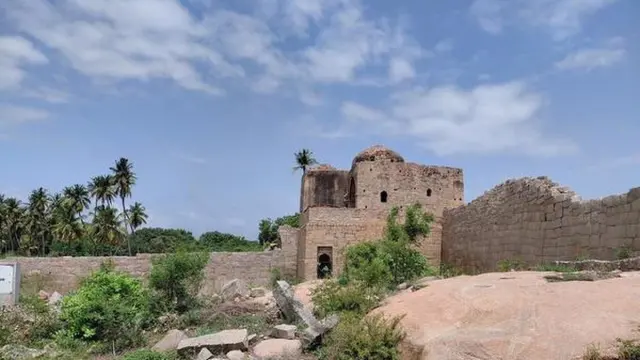
The most atmospheric corner to explore is the hillside above the Ahmed Khan Mosque, where tombs, wells and ruined buildings hint at a sizeable settlement — apparently known in 1564 as 'Gori Kelagana Grama'. Further east at Kaddirampura, a walled compound holds two imposing tombs, one dome credited by inscription to Syed Peer Ali in 1505. History adds colour here too: when Shia nobles fell out of favour in Bijapur in the 1530s, Rama Raya reportedly gave asylum to 3,000 of them and let them build their own mosque.
Even the famous royal buildings carry this mixed heritage. The Lotus Mahal, Elephant Stables, Queen's Bath and the Muhammadan Watch Tower all show Indo-Saracenic influences — arches, domes and plasterwork absorbed through decades of war and alliance with the Deccan Sultanates. Carvings of horses and their handlers on temple walls and the Mahanavami Dibba often depict Muslim traders and soldiers, woven into the stone alongside gods and kings.
For travellers, this reframes a Hampi visit. Beyond the Virupaksha Temple and the Stone Chariot, there's a quieter trail: the Ahmed Khan Mosque, the hilltop tombs, the Kaddirampura compound. It makes for a half-day of exploration most people skip, and it tells a sharper story — of an empire where Muslim administrators, commanders, artisans and residents were part of the fabric, not outsiders at the gate. Worth factoring in, especially if you've already ticked off the headline monuments and want Hampi at a slower, more contemplative pace.
Original reporting: The Hindu Travel