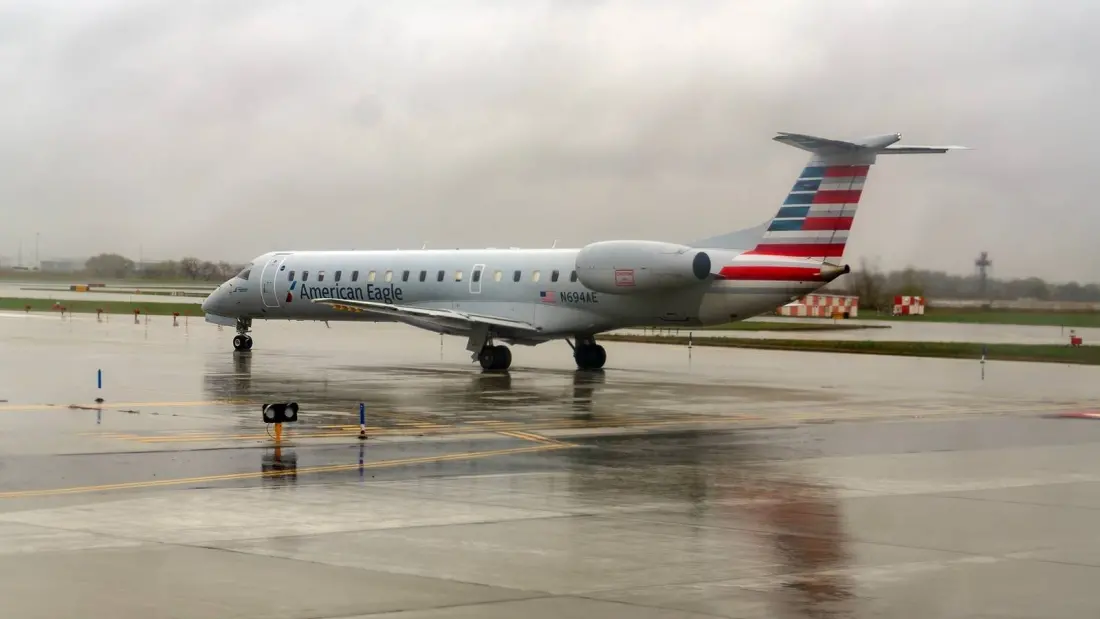
A violent hailstorm swept over parts of Pennsylvania and Delaware County on a recent Thursday, hammering Philadelphia International Airport so hard that ice piled up like snow on the tarmac. By the time the sky cleared, American Airlines had roughly two dozen aircraft parked at gates with possible damage — and every one of them needed a full engineering inspection before it could carry passengers again.
The airline imposed a ground stop that applied only to its own flights at Philadelphia while technicians worked through the fleet. The knock-on effects spread quickly: some inbound flights were held at their origin airports, including American's service from Tampa, where one passenger reported sitting onboard for around three hours waiting for conditions at Philadelphia to improve. American did not immediately respond to requests for comment.
The hailstorm was only part of the problem. Low clouds, steady rain and wind were already dragging on airports across the US northeast that day, and the cumulative disruption was significant — around 820 flights delayed and 65 cancelled nationwide. Affected airports included Boston, Chicago O'Hare and Midway, all three major New York-area fields (JFK, LaGuardia and Newark), Philadelphia, Washington Dulles and National, and Baltimore. Thousands of travellers arrived late, and many missed onward connections.
Why does hail trigger such a dramatic response? Falling ice at high speed can do real damage to an aircraft. Cockpit windows can crack or shatter, threatening pilot visibility. The nose cone — the radome — houses the weather radar, and dents or fractures there matter. And if hail is sucked into an engine, it can chip fan blades or damage compressors, potentially causing internal failure. Airlines therefore routinely declare an 'aircraft on ground' status after a severe hail event, releasing jets back to service only once engineers sign off on a complete safety assessment.
For anyone flying through the northeastern US in storm season, this is a useful reminder of how quickly weather can upend a schedule. Hail and thunderstorm disruptions are rarely announced far in advance, so building buffer time into connections — especially tight same-day links through hub airports like Philadelphia — can save a lot of stress. If your flight is held at the gate before departure, as happened on the Tampa flight, it's usually because the airline is waiting for conditions at the destination to clear rather than because anything is wrong with your aircraft.