Southern Colorado hides one of the oddest road trip combos in America: a 160-foot stone castle built by one man, a dune field taller than any other on the continent, and a fortress pieced together from beer cans and hubcaps. All three sit within a few hours of each other, and a camper van handles the loop nicely if you mind the access rules.
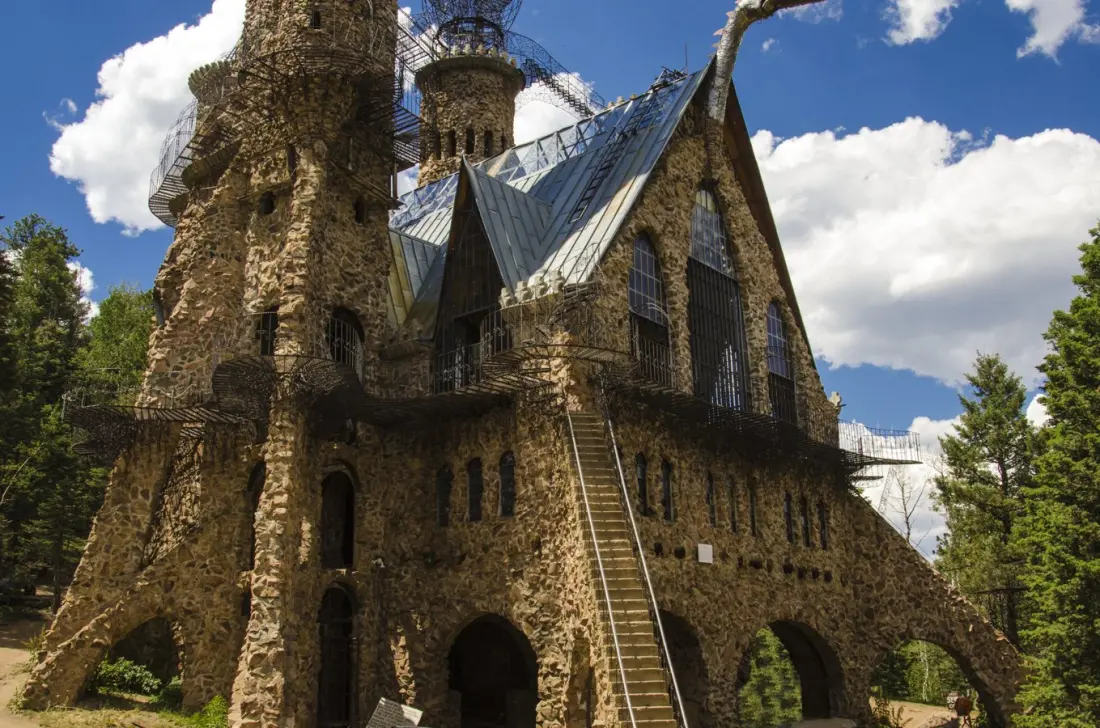
Start at Bishop Castle on Highway 165 in the Wet Mountains, roughly three hours south of Denver. Jim Bishop, who died in 2024, spent about five decades building it by hand from rock gathered in the surrounding national forest, and the main tower now tops out around 160 feet. Entry is free, sunrise to sunset, year-round, with a gift shop open daily May through October and weekends the rest of the year. No tours here — you wander on your own. Keep in mind it's still an active construction site with open stairways and uneven ground, so sturdy shoes are non-negotiable. Parking is roadside along the highway shoulder, which favors shorter vans over long motorhomes.
From there it's about 120 miles to Great Sand Dunes National Park, home to the tallest sand dunes in North America. Timing matters: Medano Creek flows at the base of the dunes in spring and early summer but is usually dry by July, and summer sand can hit 150°F by afternoon — do your walking early or late. For drivers, Medano Pass Primitive Road crosses the creek nine times, and past the Point of No Return (1.1 miles in) you'll need a genuine high-clearance 4WD with low range; AWD doesn't cut it. Sleeping options include Piñon Flats Campground (April to October, reserved via Recreation.gov) and 21 free first-come sites along Medano Pass Road. Vehicle camping anywhere else is banned.
The finale is Cano's Castle in Antonito, about 35 miles from the dunes via Alamosa, then 28 miles south on US 285. Dominic "Cano" Espinoza has been building it since the early 1980s out of hubcaps, beer cans and scrap metal. It's private property, so this is a sidewalk photo stop rather than a tour — a quick contrast between longer stretches of driving.
What makes the route work is the variety: forest, dune field and small-town street, each stop with its own improbable backstory. It rewards travellers happy to skip the interstate for a few days and collect sights most road-trippers never see.