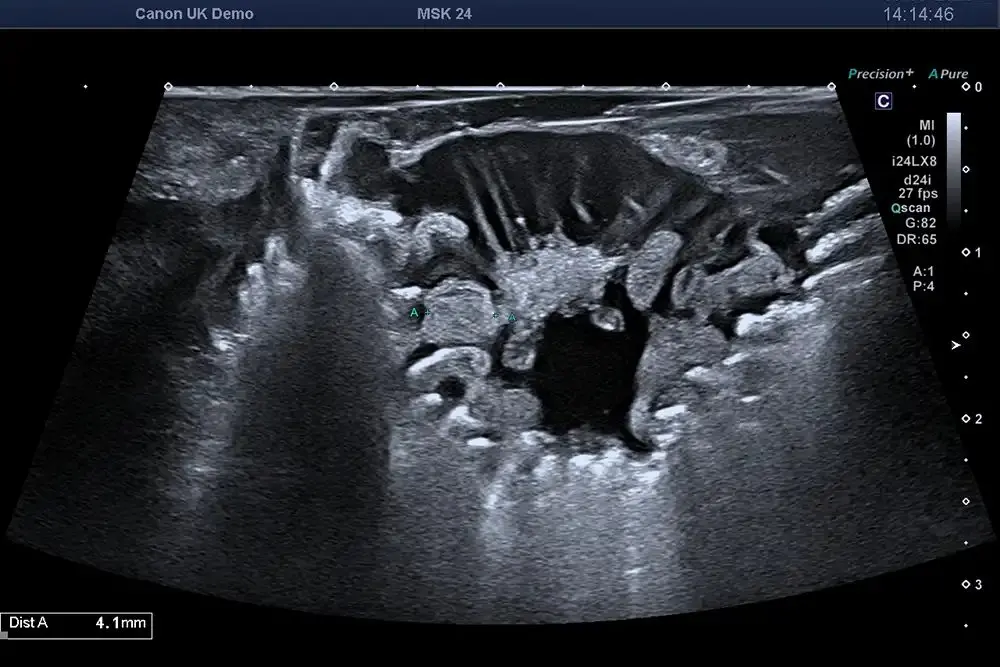
A piece of kit you'd normally find in a maternity ward has just produced the first-ever medical ultrasound of eggs maturing inside living coral. Coral Spawning International (CSI) teamed up with Canon Medical Systems UK and Canon EMEA to scan the reproductive organs of six stony coral species using the Canon Aplio i700, a hospital-grade imaging platform designed for examining human organs, blood vessels and pregnancies.
Why go to these lengths? Because checking whether a coral is 'pregnant' has, until now, meant killing it. Researchers traditionally cut into polyps to inspect their internal structures and spot developing eggs. The Aplio i700's high- and ultra-high-frequency scanners let CSI scientists peer inside polyps while the animals stayed alive and submerged — including open brain coral (Trachyphyllia geoffroyi), one of the species scanned.
The prize is better timing. Most reef-building corals are broadcast spawners, synchronising the release of eggs and sperm into the water in spectacular mass events, often timed to the lunar cycle. If researchers can watch eggs mature in real time, they can pinpoint the precise reproductive window far more accurately than before — knowledge that could sharpen future reef restoration work at a moment when coral reefs worldwide are under pressure from warming seas.
The work is only beginning. CSI will monitor the scanned corals for another six months, recording footage when gametes are actually released, to build a fuller picture of how large-polyp stony corals reproduce. Co-founder Dr Jamie Craggs called the ability to watch these processes unfold inside a living coral an extraordinary moment, noting that corals 'still hold so many secrets' about their own reproduction.
Canon, for its part, sees ripple effects beyond the reef: clinical product specialist Sally Davey suggested the success could open doors in minimally invasive surgery and skin-condition diagnosis.
For travellers, the link may seem indirect, but it matters. Divers who plan trips around coral spawning — from the Great Barrier Reef to the Maldives and the Red Sea — are chasing the same narrow window CSI is trying to predict. Better science means better odds of witnessing one of the ocean's great spectacles, and stronger restoration programmes to keep reefs worth diving for the next generation.