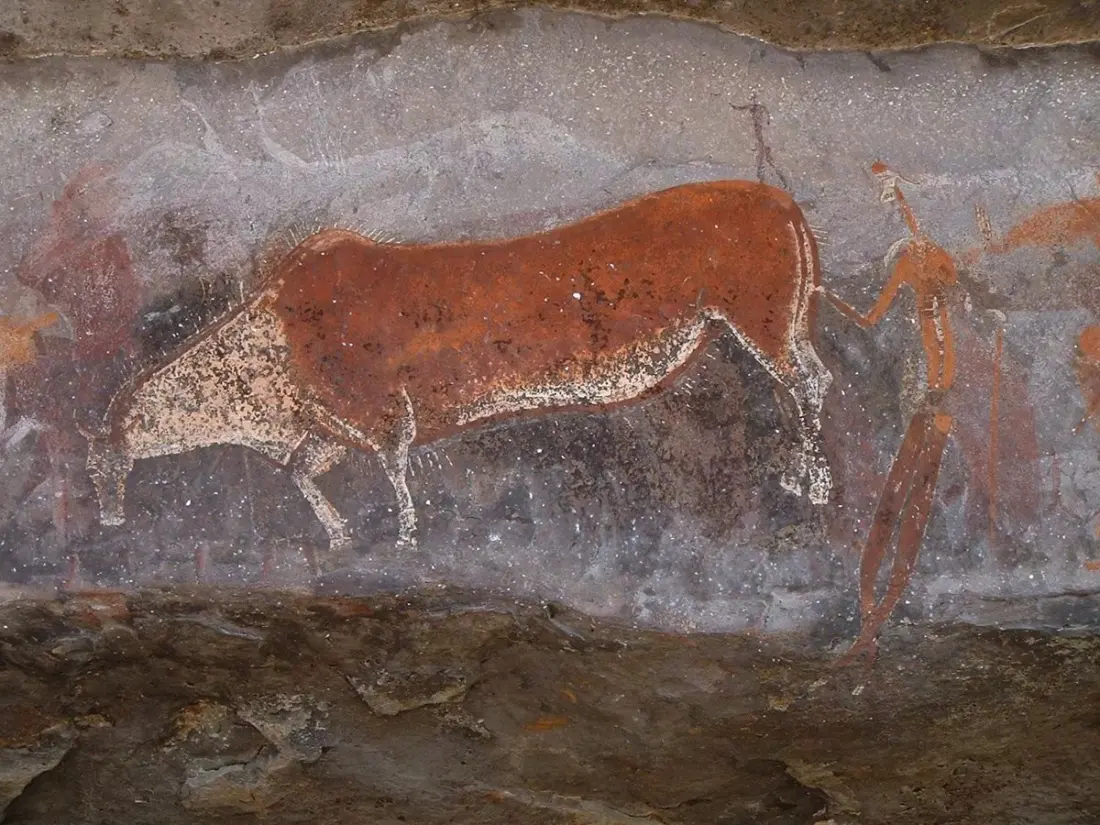
High in KwaZulu-Natal's Kamberg Nature Reserve, a painted eland bows its head with legs crossed while a human figure grips its tail in the same pose. That small, strange detail at Game Pass Shelter rewrote how researchers read San rock art across southern Africa.
Getting there is part of the appeal. The guided route starts at the Kamberg Rock Art Centre, passes Waterfall Shelter, and climbs roughly 6.8km return. Budget 90 minutes to two hours for the uphill leg and treat the whole outing as a half-day; Wits University rates the climb as relatively strenuous. The shelter sits inside the Maloti-Drakensberg Park World Heritage Site, protected as much for its extraordinary concentration of paintings as for its scenery.
You can't walk in alone. KwaZulu-Natal's heritage authority, Amafa, requires every visitor to be accompanied by a trained custodian who both protects the paintings and unpacks what you're seeing — and the explanations matter here.
Eland dominate the shelter's shaded, multicoloured panels, alongside human figures and therianthropes — part-human, part-animal beings. For San painters, eland carried spiritual power tapped during rituals like trance dances. In the early 1980s Professor David Lewis-Williams dubbed the main panel the Rosetta Stone of rock art because it unlocked that meaning: the dying eland and the figure holding its tail mirror each other in lowered head, crossed legs and raised hair, echoing the San idea of trance as a kind of 'half-death'. What first looks like a hunting scene is actually a picture of spiritual transformation. Once a guide points out the parallels, they're hard to unsee.
The site is far from a museum piece. Zulu traditional healers and Khoe-San descendants still make pilgrimages to Game Pass, it closes on certain days for private ceremonies, and guiding provides work for the nearby Thendela community. SAHRA formally recognises these living cultural ties, so visitors are asked to follow the guide's lead.
There's fresh research too: an August 2026 acoustic study found the shelter's conditions keep voices and rhythmic sound unusually clear — suggestive, if not proof, of how performances may have sounded around the paintings.
Practicalities: book through Kamberg reception and confirm fees and departure times before you set off. Bring sturdy shoes, water, a hat, sunscreen and snacks. At the shelter, photograph freely but never touch, lean on or wet the rock to sharpen the colours.
For hikers who like their trails with a dose of meaning, this is one of South Africa's most rewarding walks — the mountain gets you there, but the art is what stays.