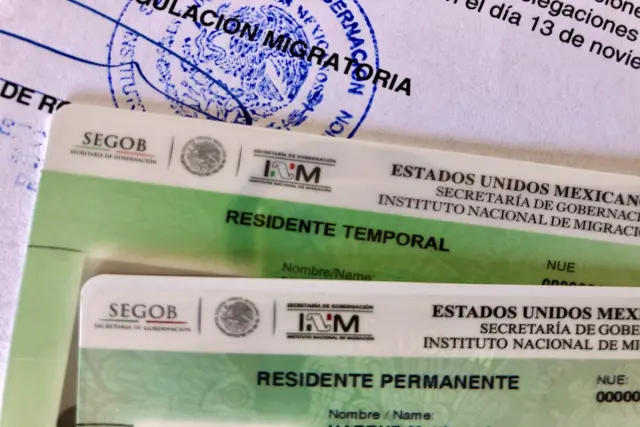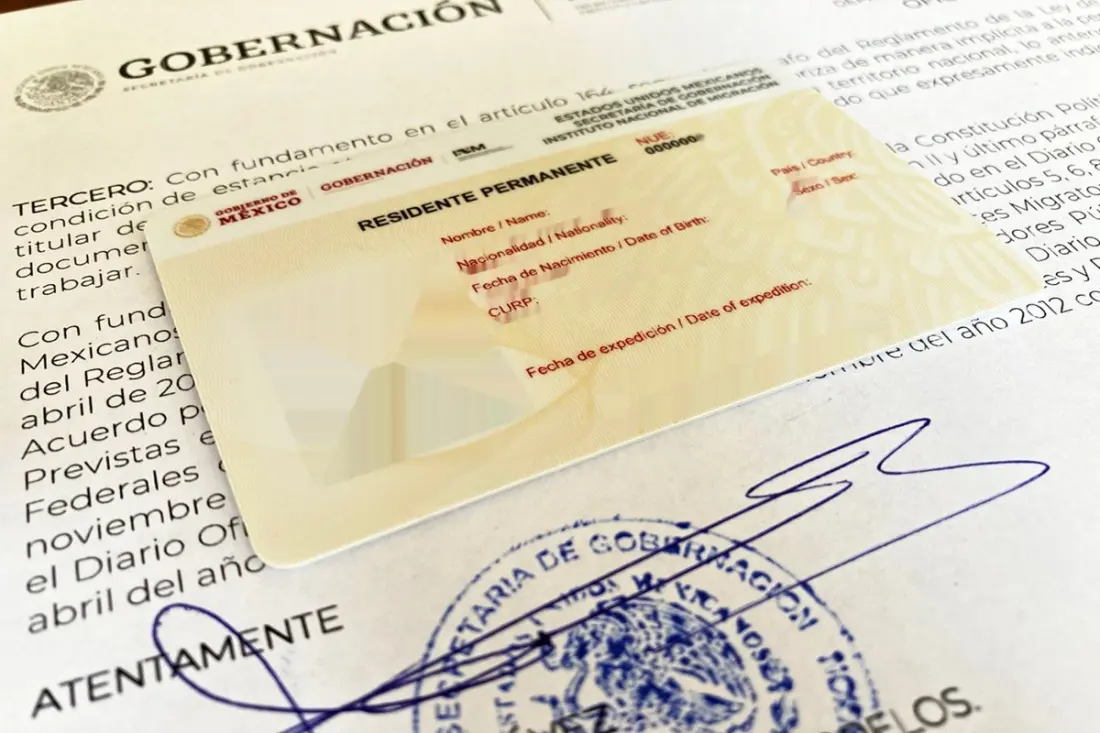
Dreaming of settling in Mexico with your partner? Before you start gathering paperwork, there's a quirk in the country's immigration rules worth knowing: when a couple applies for Permanent Residency together, only the principal applicant gets permanent status. The dependent spouse or partner is initially granted Temporary Residency instead.
The good news: Mexican immigration law recognises married couples, common-law partners and same-sex partnerships alike. The less-good news is the timeline. Applying through a consulate abroad, the dependent partner renews their Temporary card after one year, then for three further years, and can only swap it for Permanent Residency at the end of year four. There's a faster path — applying from inside Mexico under Family Unit rules typically shortens that wait to two years — but processing has slowed, with cases now taking two to four months, and applicants need a Mexican address since immigration authorities (INM) carry out a home visit as part of the process.
Money matters too. Couples applying on economic solvency grounds need the principal applicant to show the income or savings required for permanent status, plus an extra 220 times UMA for the dependent partner. And if your accounts are joint but only one of you applies, that account must show double the required amount.
There's also a third option that skips the couple-application headache entirely: if each of you independently qualifies with funds in your own name, you can both apply separately for Permanent Residency — no marriage certificate needed. Joint accounts, however, mean double the sums and proof of the relationship.
One more hurdle: Mexican consulates abroad now generally require Permanent Residency applicants to be retired, even if they comfortably meet the financial thresholds. Younger couples with the savings may still be pointed toward Temporary Residency first, with the option to convert to permanent status after four consecutive years.
Paperwork tips if you go the Family Unit route in Mexico: your marriage certificate needs an apostille and a certified Spanish translation, and unmarried partners should check locally what evidence of a common-law partnership is accepted.
So who is this for? Retired couples with solid finances can realistically secure permanent status straight away at a consulate. Younger or remote-working couples usually fare better starting with Temporary Residency, or using the one-applies-abroad, one-applies-in-Mexico strategy to shorten the dependent partner's route to permanence.