Day 7 of the Camino Primitivo is the kind of day that shows what this oldest route to Santiago is really like: quiet villages, generous strangers, and a lot of miles between towns. This stage ran from Castro to the Complejo O Piñeiral — 14.8 miles, roughly the halfway point of the full trek.
The day started early, with a 6am wake-up and a simple breakfast of rice with vegetables before hitting the trail. Small rural stops along the way have their own charm here: at Peñafuente, coffee comes from a vending machine tucked into a tiny enclosed space open to anyone passing through. Pastries and juice made it a proper trailside breakfast.
A highlight for many pilgrims on the Primitivo is crossing into Galicia, Spain's green northwestern region, and that happened mid-morning. A second breakfast followed in O Acevo — the classic pilgrim combination of potato, tomato and ham on bread, washed down with coffee. The route is sociable by nature; walkers tend to leapfrog each other and swap stories at every stop, in this case with fellow hikers including someone who'd completed the Arizona Trail.
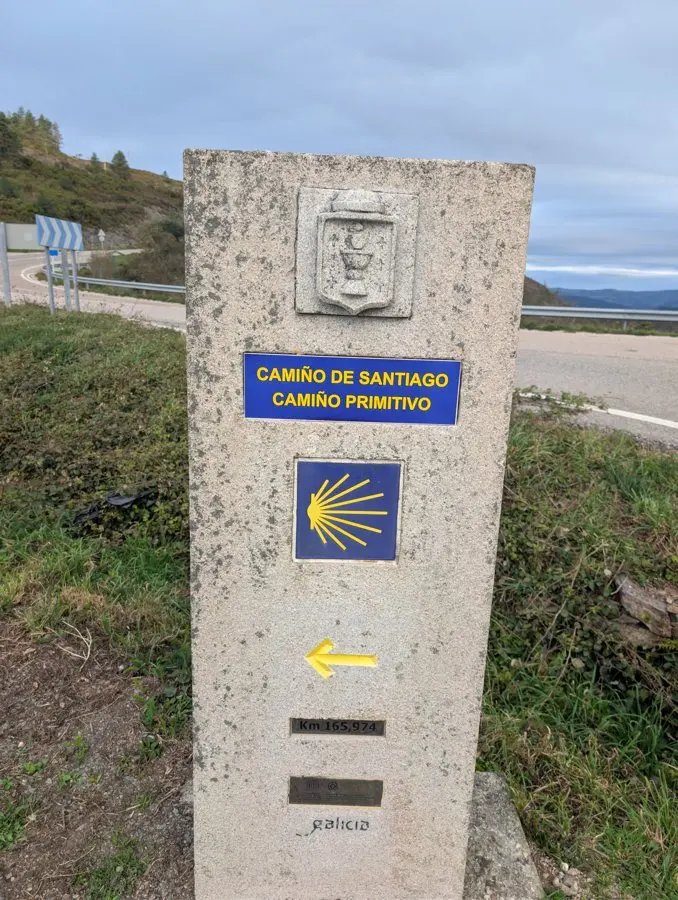
Navigation does require attention. Near A Fonsagrada, a double Camino intersection caused a brief wrong turn — partly because a parked car was hiding the sign for the correct path. Town logistics can also be hit-and-miss: the grocery store was shut, so the day's resupply came from a Repsol petrol station, which doubles as a snack stop on rural Spanish trails.
The stage ended at the Albergue-Pensión O Piñeiral, but not before a stop at a pilgrim park offering free hot tea, coffee and snacks — plus a scallop shell, the traditional symbol of the pilgrimage. Lunch there was substantial: salad and meat plates, salmon, and lemon ice cream for dessert. After an evening of chatting with other pilgrims, an early bed followed — full stomachs, tired legs, halfway done.
Why care? The Camino Primitivo is the original pilgrimage route to Santiago de Compostela, quieter and hillier than the popular Camino Francés, running from Oviedo through Asturias and Galicia. Days like this one show the appeal: no big crowds, cheap albergue accommodation, free pilgrim hospitality, and village-to-village walking where a 15-mile day still leaves time for a long lunch and a movie. It suits walkers who want the Camino experience with fewer people, and who don't mind remote stretches where services are basic. Book private rooms where available, carry snacks for Sundays and holidays when shops close, and keep an eye out for Camino waymarks — sometimes hidden behind parked cars.