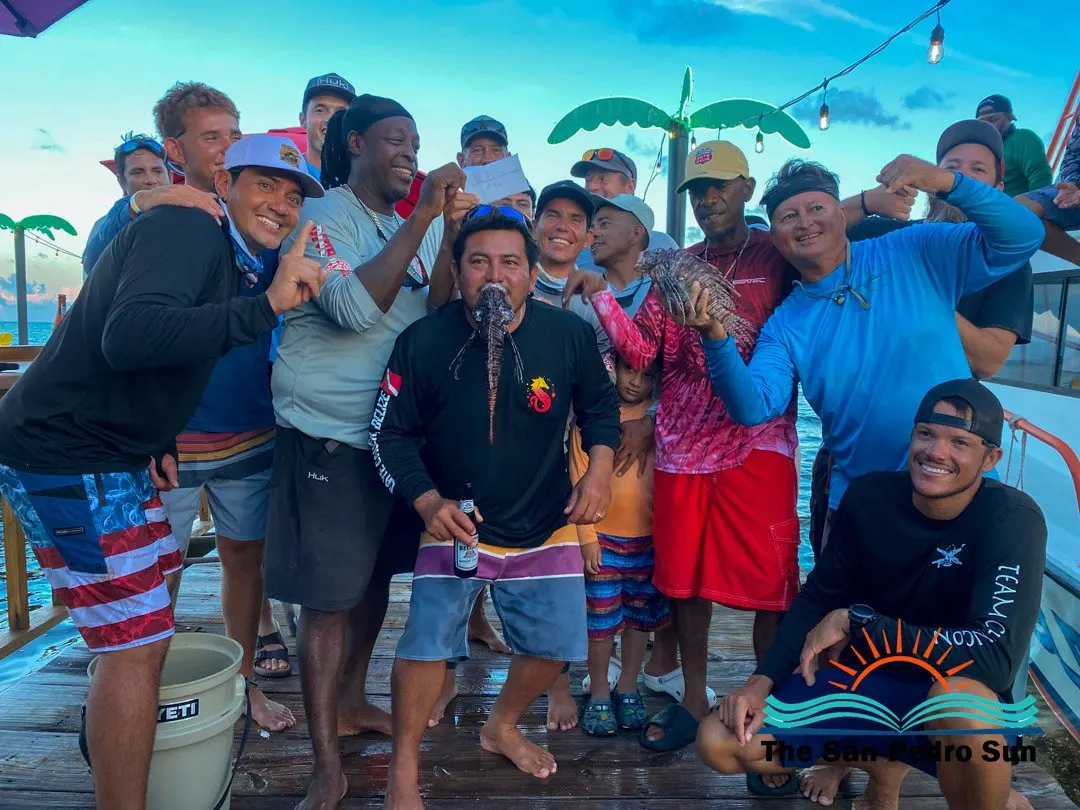
San Pedro Town on Ambergris Caye hosted the sixth annual Reef Adventures Lionfish Fishing Tournament on Saturday, October 10th, and the result was a one-day dent in one of the Caribbean's most stubborn ecological problems: 1,737 invasive lionfish pulled off the reef by just three teams.
Team Chingon defended its title in convincing fashion, landing 835 lionfish and adding the prize for the single largest fish caught. Team CARMA came second with 554, and Elite Adventures third with 348. The boats set out early and worked dive sites around Turneffe Atoll and out to St. George's Caye near Belize City before returning to the Palapa Bar dock by 4pm, where catches were weighed and counted.
Why does a fishing competition matter to travellers? Lionfish are native to the Indo-Pacific but have spread aggressively through the Caribbean and Gulf of Mexico, where they eat juvenile fish and eggs and throw reef ecosystems out of balance. Divers in this year's event reported seeing them feeding across Belize's Barrier Reef. Every fish removed is a small win for the reef that draws snorkellers and divers to Belize in the first place.
Organiser Philip Vernon wants more teams next year and makes the point plainly: lionfish are striking to look at, but they are doing real damage to the reef. The tournament doubles as an awareness push, and increasingly as a culinary one. Fish caught during the event were turned into ceviche and other dishes and served at island restaurants including Caramba — part of a wider effort to build a market for lionfish as food, which gives divers a reason to keep hunting them.
The 2026 haul fell just short of last year's 1,865 fish, but the format — a competition, a dockside weigh-in and a plate of ceviche at the end — has become a fixture on San Pedro's calendar. For visitors, it's a reminder that the lionfish on a menu in Belize isn't a novelty; it's a conservation tool you can order with a squeeze of lime.