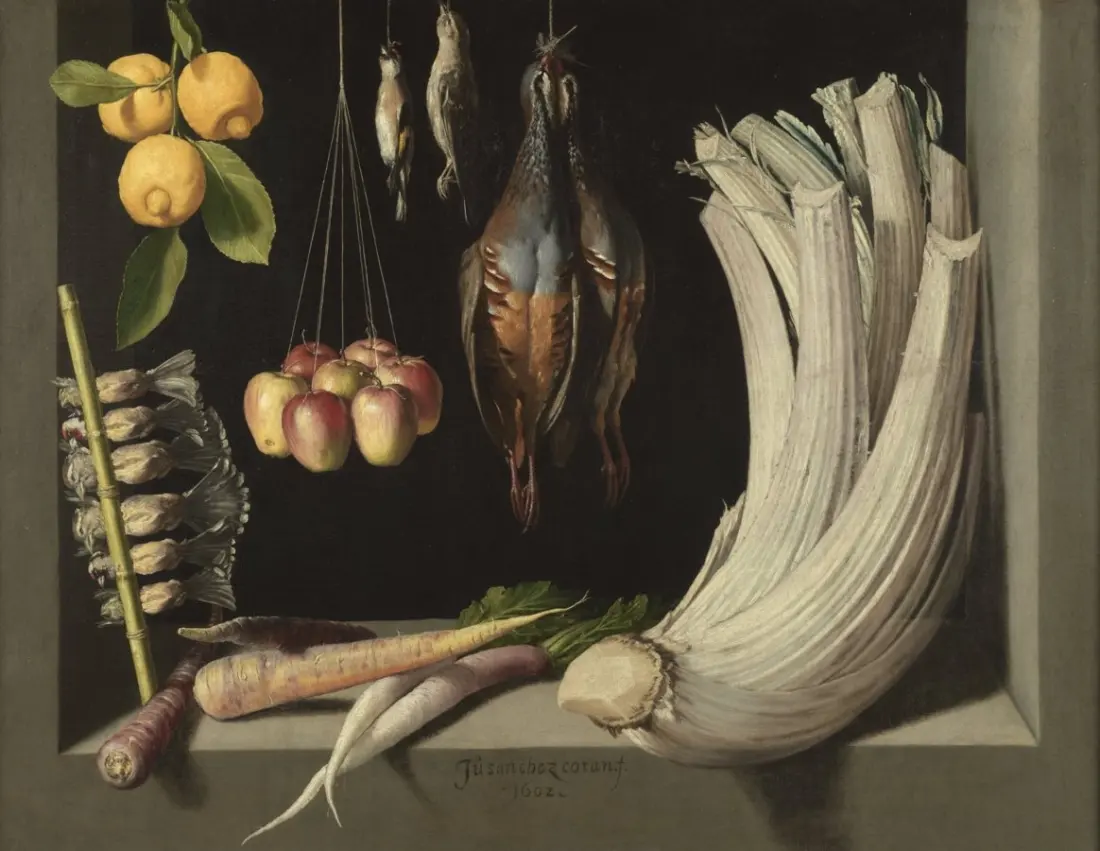
The first train from Madrid to Toledo gets you there early enough to have a market almost to yourself. That was the plan, anyway, for a writer from Roads & Kingdoms chasing a very specific ingredient: fresh quince. The reason for the obsession hangs in the Prado, in a still life painted by Juan Sánchez Cotán in 1602 — one of the great Spanish bodegones, where apples, quince and a dead partridge hang from strings against a black void, arranged with the gravity of religious relics.
Toledo's municipal market is small. Four stalls and a squeezed-in supermarket: a charcutería, a florist, a fishmonger that seems past its best days, and a greengrocer. Quince is in season, the vendor says — but he no longer stocks it, because nobody buys it fresh anymore. He phones two other greengrocers around town. Nothing. The ingredient at the heart of one of Spain's most famous paintings has quietly slipped off the city's market shelves.
That's what makes the piece worth reading for food-loving travellers: it connects a museum masterpiece to a living — and vanishing — culinary tradition. Quince in Spain mostly survives as membrillo, the dense, sweet quince paste served with manchego cheese, rather than as the fresh fruit. Cotán's paintings, hung produce and all, capture an earlier kitchen economy, when game birds and orchard fruit were everyday goods. Toledo itself, a former capital stacked with synagogues, mosques and cathedrals on a hill an hour from Madrid, is an easy day trip, and the hunt for obscure ingredients is a genuinely fun way to see it beyond the usual monument checklist.
The article is behind a $6.50-per-month membership on Roads & Kingdoms, which also includes twice-weekly features and in-person events. For anyone planning a Madrid trip, though, the core idea travels well: pick a painting with food in it, then go find the food. Just don't count on the greengrocer having the quince.