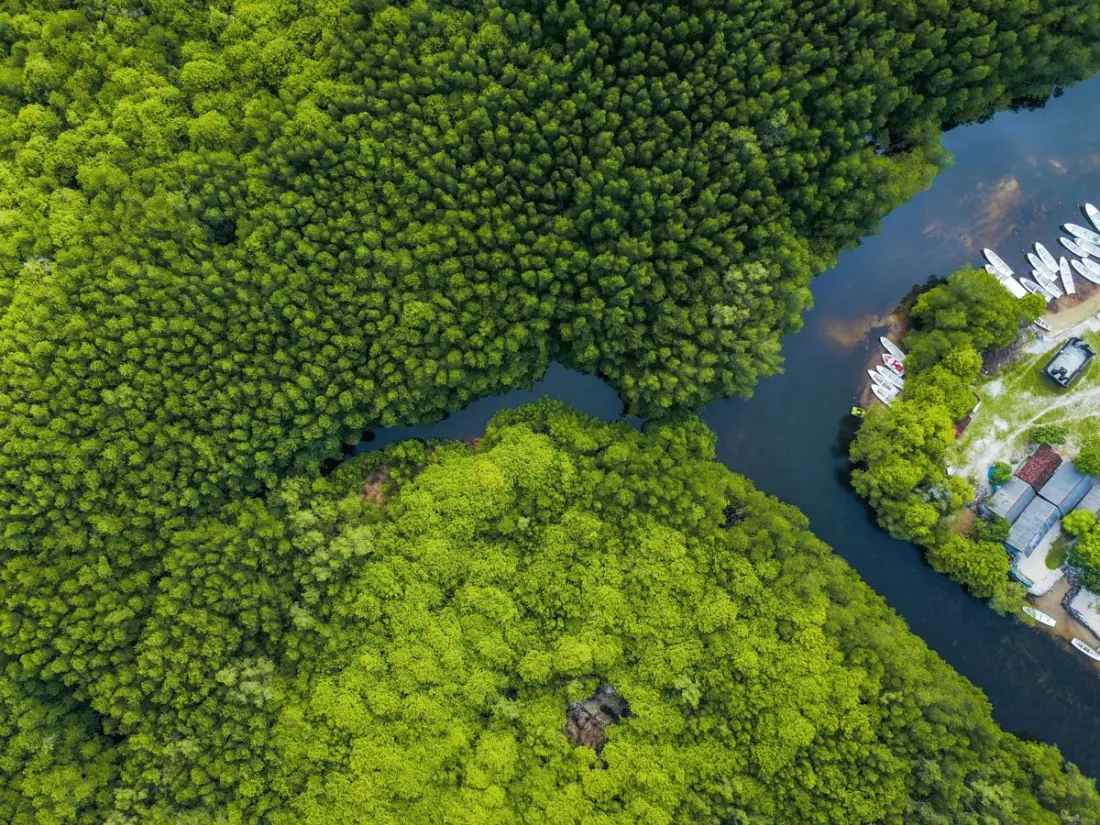
Mangroves have become the darlings of the carbon credit world. These salty coastal forests store extraordinary amounts of carbon, and governments and companies are pouring money into replanting them. But researchers warn that a forest can 'succeed' on paper while the people who live beside it end up worse off.
Writing in The Conversation, a team of academics from the University of Manchester, Universiti Kebangsaan Malaysia and Universiti Malaysia Terengganu lay out three ways a restoration project can play out. The ecosystem recovers and local communities keep a fair share of the value. The ecosystem recovers but the money flows to intermediaries and distant credit buyers. Or the whole scheme collapses because nobody set up proper governance before rushing to sell. The awkward truth, they argue, is that the second outcome — value draining away from locals — can still be counted as a success by funders and certifiers.
A 2026 review of 77 ocean and coastal carbon storage projects found it is rarely possible to tell which of the three outcomes you're looking at, because community involvement is so seldom documented. Carbon can be measured down to the tonne; what can't be measured is who paid for it in lost fishing access, foregone harvests or unpaid labour. The authors' Revive project, working across three sites in Malaysia, flips the usual script: it starts by asking residents what a good outcome looks like for them, then traces how that clashes or aligns with the commercial value chains built around the forest. At the moment, decision-making tends to follow whoever is signing the cheques.
For travellers, this matters more than it might seem. Ecotourism and 'blue carbon' offsets are increasingly bundled into trip marketing, from mangrove kayak tours to fly-and-offset schemes. If you're booking a trip that trades on restored mangroves — in Malaysia, Southeast Asia more broadly, or anywhere coastal — the question worth asking operators is simple: who locally is involved, and are they being paid and consulted, or just photographed? Projects designed by and for the communities that have managed these forests for generations tend to be more durable, and more rewarding to visit. Ones designed purely to generate credits can quietly restrict the fishing and forest access that locals depend on.
The researchers' bottom line is that trade-offs between carbon income and local livelihoods can't be designed away, but who makes the decisions can change. Until the people doing the planting get to define what success means, tripling the money flowing into mangrove restoration risks tripling the imbalance. For anyone with a conscience and a boarding pass, it's a useful lens for judging which conservation experiences genuinely give back.