In the Ketapang regency of Indonesian Borneo, a group of more than 100 women spend their mornings on housework and their afternoons fighting peatland fires. They call themselves the Power of Mama, and they've become one of the more remarkable grassroots responses to Southeast Asia's recurring haze crisis.
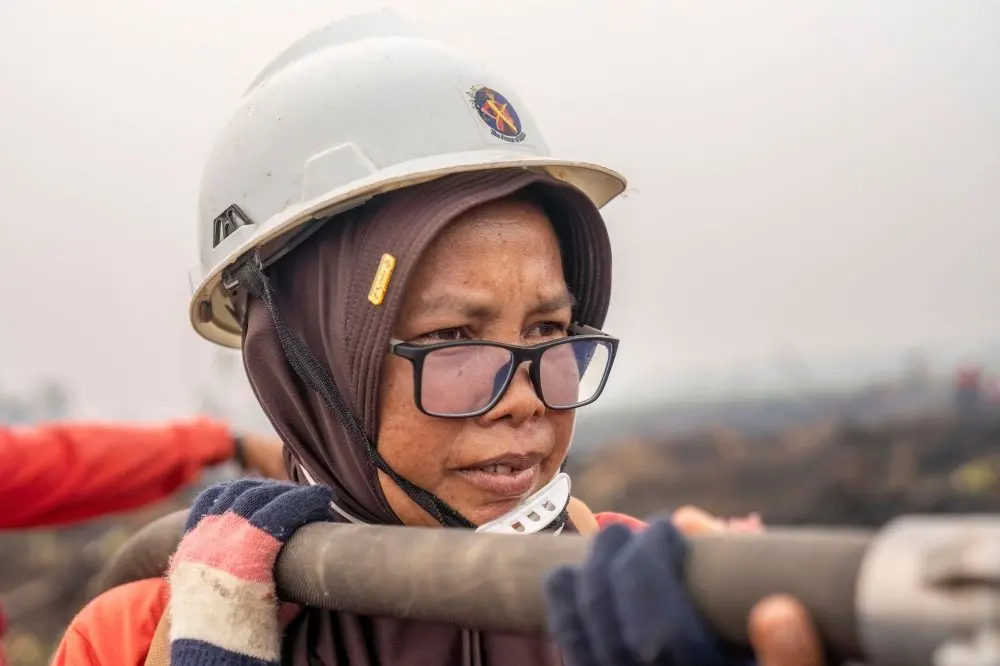
The Mamas were formed in 2022 with support from the Indonesian wildlife foundation YIARI, and they operate across a dozen villages around Ketapang, in Kalimantan — the Indonesian portion of Borneo. Their patrols run roughly 10am to 1pm: volunteers head out on motorbikes or pile into a pickup with a water pump and buckets, dressed in orange overalls, rubber boots and hard hats, many with hijabs underneath. Surgical masks are their only real protection against toxic smoke.
The trigger was 2019, when El Nino-driven drought turned Kalimantan's wildfires into a full-blown disaster. Peatland fires are the worst offenders here — they smoulder underground for weeks or months, pumping out smoke even when no flames are visible. Many of the fires are traced to slash-and-burn land clearing, which strips fire-resistant forest and drains peatlands.
This year has been brutal. The Nusantara Atlas fire monitor says nearly 900,000 hectares of Indonesian land have burnt — more than five times the size of Greater London — while official figures count just over 202,000 hectares between January and July. The fallout is exactly what these mothers feared: schools closed by the thousands, tens of thousands of respiratory infections, and smoke drifting into neighbouring countries. One volunteer, Ramilah, 46, said her own child couldn't get to school because of the haze.
The women have faced open sexism in communities where firefighting is considered men's work. Coordinator Mita Anggraeni says some villagers still insist women aren't suited to handling fires, and others dismissed the Mamas as 'just riding motorbikes back and forth'. One critic who had belittled the group for two months got no help when his own land caught fire. But attitudes are shifting as the volunteers prove themselves — acceptance, and even husbands' support, has grown.
Why should a traveller care? The haze season isn't just a local story — it disrupts flights, closes schools and causes health problems across Indonesia, Malaysia and Singapore, and it's worth checking conditions before travelling to Borneo or Sumatra in dry El Nino years. More than that, this is the human face of a crisis most visitors only see as a smoky weather app. The Power of Mama is a reminder that the communities living with these fires are fighting back, one bucket at a time.