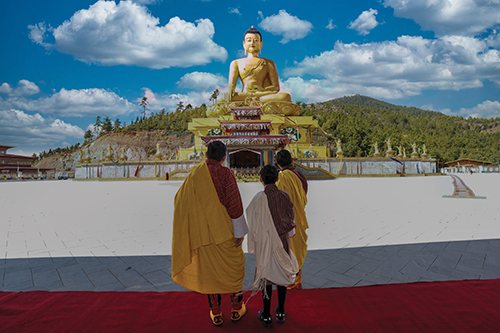
One of Bhutan's most recognisable landmarks has just been given a golden makeover. The Tashi Rabney — the consecration ceremony — of the re-gilded Buddha Dordenma statue was held on 11 November, timed deliberately to coincide with the birth anniversary of His Majesty the Fourth Druk Gyalpo, a national holiday in Bhutan.
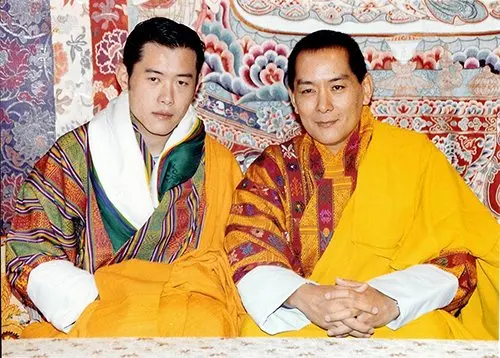
The ceremony was a major state and religious occasion. Their Majesties the King and the Gyaltsuen attended alongside the Fourth King and members of the Royal Family, while His Holiness the Je Khenpo, Bhutan's chief abbot, presided over the rituals. The consecration formally blessed the statue's renewed finish, which included new protective coatings and freshly applied gold leaf on the face and ushnisha — the crown-like protuberance at the top of the head.
The renovation was carried out as a tribute ahead of the Fourth King's 70th birth anniversary, and it clearly struck a chord with ordinary Bhutanese people. The Royal Government funded the project, but devotees were invited to contribute, and thousands did — donating close to 10 million ngultrum in cash, with others offering gold outright for the sacred work. The statue was dedicated to the long life of both the current King and the Fourth King, and to the benefit of all sentient beings.
For travellers, this is good timing. The Buddha Dordenma, a colossal statue sitting on a ridge above Thimphu, is already one of the capital's most popular stops — huge, gilded and visible from across the valley. The re-gilding means it now looks better than it has in years, and a visit at golden hour, when the fresh gold catches the low sun over the Himalayan foothills, should be spectacular.
There's more to the site than the statue itself. The grounds offer wide views over Thimphu, and the interior chambers house thousands of smaller bronze and gilded Buddha statues. It's an easy half-day outing combined with the nearby Kuenselphodrang Nature Park trails.
The ceremony also reinforces why Bhutan feels different from anywhere else: national milestones here are marked not with fireworks but with religious consecrations, royal pilgrimages and public offerings. If you're planning a trip, note that Bhutan's festivals and ceremonial dates fall on the Bhutanese lunar calendar, so it's worth checking what's happening around your travel dates — timing a visit around a Rabney or tshechu adds a layer of atmosphere you won't get otherwise.
Anyone considering Bhutan should also be aware the country caps visitor numbers through its Sustainable Development Fee, and most travellers arrive on packaged itineraries through licensed operators. That said, the effort is rewarded with one of Asia's most intact and distinctive cultures — and, as of this month, one of its most gleaming landmarks.