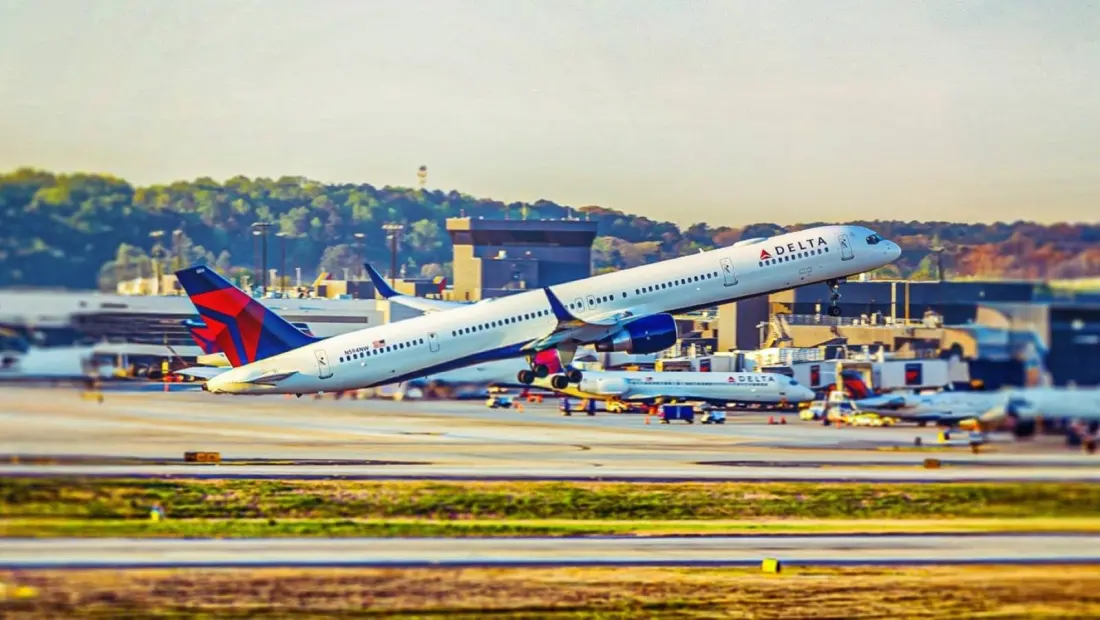
Delta Air Lines' plan to kit out its fleet with Amazon's Leo satellite WiFi has taken another knock. On November 15, a United Launch Alliance Vulcan rocket failed about ten minutes after launch, destroying its payload of 40 Amazon Leo satellites. ULA, a Boeing-Lockheed joint venture, has called it an 'anomaly' and says the cause is still unclear. It's the company's first failure in 20 years of operation.
The loss matters for Delta because Amazon Leo is its chosen platform for next-generation inflight connectivity. The two companies announced their partnership in March, with the first 500 Delta aircraft due to be fitted out from 2028. A big part of the appeal was integrating Delta's Sync entertainment portal with Amazon's AWS cloud — something rival Starlink couldn't offer in the same way.
It's also not the first setback this year. In May, a Blue Origin New Glenn rocket suffered a launchpad explosion caused by engine problems, days before it was due to carry more Leo satellites. The cumulative effect is a slow build-out: across 14 successful launches, only 398 Leo satellites are in orbit, roughly 12% of the planned 3,236 needed for global coverage.
Amazon is publicly staying upbeat, saying it believes ULA will learn from the mission and stick to its long-term plans. ULA says it will work with customers and regulators to find the cause and return to flight as quickly as possible. Still, a grounding of the Vulcan fleet would almost certainly push Leo's timeline further out — and Delta's WiFi upgrade was already not scheduled to arrive until 2028.
The situation has an entertaining subplot. Elon Musk has repeatedly attacked Delta on social media for snubbing Starlink, which he owns via SpaceX. In August he claimed flyers were switching to United for its Starlink-equipped planes, and in September suggested Delta CEO Ed Bastian would 'lose his job over this'. Delta did trial Starlink back in April 2022, but went its own way.
For travellers, the practical takeaway is simple: if you're a Delta regular hoping for fast satellite WiFi on domestic routes, don't expect a leap forward before the late 2020s. Meanwhile, competitors — United most visibly — are already rolling out Starlink connectivity, giving them a genuine in-flight experience edge in the interim. Whether Delta's patience with a struggling satellite constellation pays off, or leaves it trailing, is one of the more interesting aviation stories to watch over the next few years.