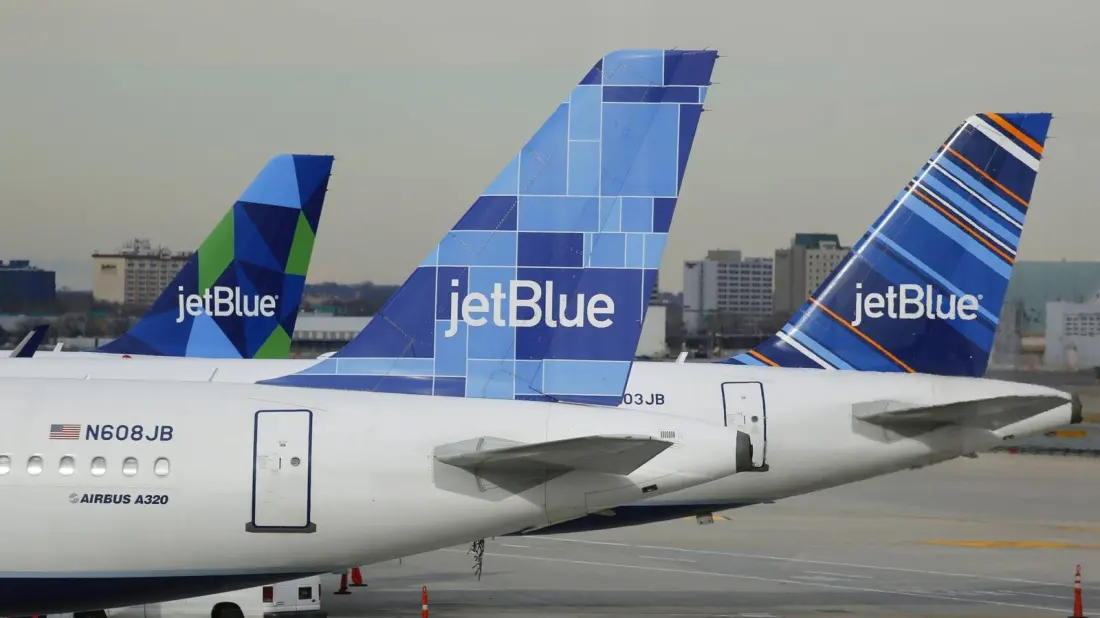
A JetBlue Airbus A321neo is sitting idle at Los Angeles International Airport after scraping its tail on the runway late on November 22 — an incident caught live on camera, sparks and all, by the Airline Videos broadcast.
The aircraft, tail number N2193J and fittingly nicknamed 'StateMint Piece,' was operating Flight B61187 from Boston Logan when the crew abandoned its first landing attempt on Runway 25L at 11:44 PM. As the jet pitched up to climb away, the underside of its rear fuselage made contact with the tarmac. The pilots recovered cleanly, circled back, and touched down safely on the same runway about 16 minutes after midnight. No one was hurt. The plane's scheduled return to New York-JFK the next afternoon was cancelled, and it remains grounded while inspections continue.
The FAA has logged a preliminary report, though the NTSB hasn't opened a formal investigation yet — that usually depends on how bad the damage turns out to be. If inspectors find only abrasion within Airbus's limits, mechanics at LAX can fit an aerodynamic patch, known as a doubler, and the jet returns to duty. If the scraping compromised fuselage panels, antennas or drain masts, engineers will need a custom repair, and the aircraft would fly home under a ferry permit below 10,000 feet to a proper maintenance depot.
It's also the third tail strike on a JetBlue-operated aircraft in under three years. In February, another Boston-originated A321neo bounced on landing at San Francisco and sustained what the NTSB called substantial damage after the first officer pulled the stick fully aft while applying go-around power. Back in 2022, an A320 departing Hayden, Colorado rotated too slowly while dodging a business jet, damaging its tail so badly the crew didn't realise until air traffic control flagged it at 31,000 feet — forcing a diversion to Denver, since a weakened rear fuselage can't be trusted at high altitude.
For the most recent incident, investigators will comb through the cockpit voice and flight data recorders to reconstruct pitch angles, airspeed and control inputs at the critical moment. The focus, per standard practice, is on understanding what went wrong and retraining the crew rather than punishing them, unless misconduct is found.
Why should a traveller care? Beyond the cancelled return leg that disrupted passengers' plans, it's a useful reminder of how thoroughly modern aviation handles these events: a scary-looking shower of sparks on video doesn't mean a dangerous flight. Tail strikes are almost always caught on the ground, crews here landed safely minutes later, and the system — recorders, inspections, manufacturer repair limits — worked exactly as designed. If you're nervous about go-arounds, this is a good example of one being the safer choice, even when it doesn't go perfectly.