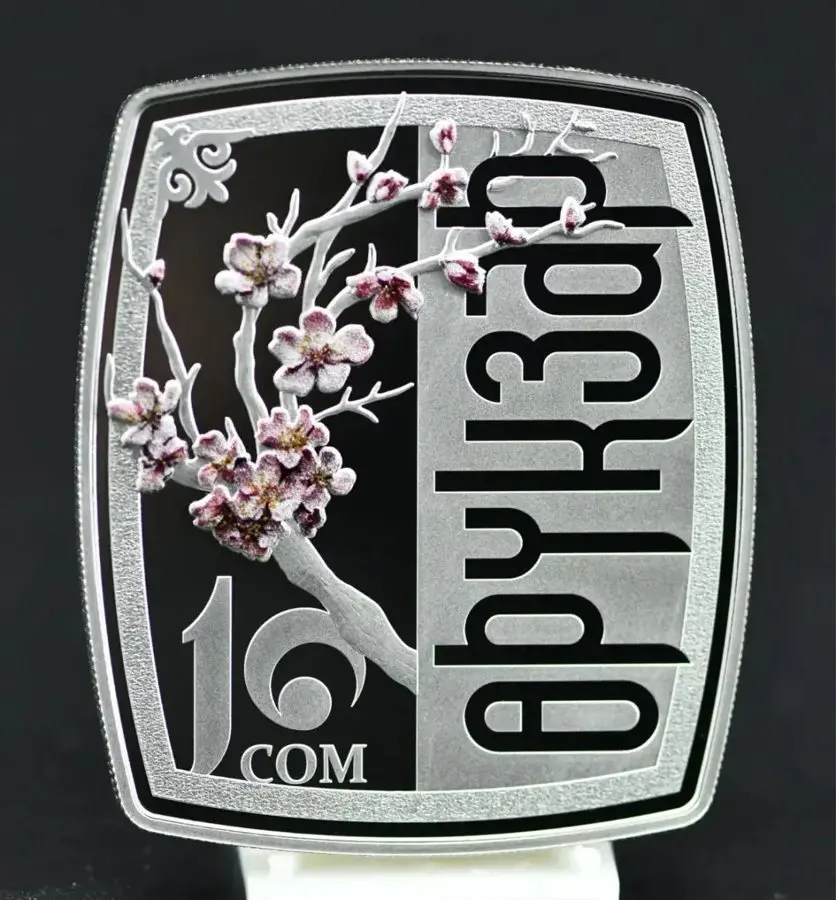
Kyrgyzstan's National Bank has released a small but charming piece of the country into collectors' hands. A silver coin called "Apricot Orchards" — or "Orukzar" in Kyrgyz — entered circulation on November 16, 2026, with a face value of 10 soms and a limited run of just 1,000 pieces. It's the latest entry in the bank's "Nature of Kyrgyzstan" series, which celebrates the country's landscapes and protected areas.
The coin's design is a two-sided love letter to apricot country. One face shows a blossoming apricot branch, with the flowers standing in for spring, renewal and the fertility of Kyrgyz soil. Flip it over and you'll find the reward: a branch heavy with ripe fruit. Both sides carry inscriptions in Kyrgyz — "Orukzar" on one, "Kyrgyzstandyn zharatylyshy" ("Nature of Kyrgyzstan") on the other. Despite the modest face value, the coin sells for 8,220 soms (roughly US$90-95), arrives in an acrylic capsule inside a presentation case, and comes with a certificate of authenticity. It's legal tender in Kyrgyzstan, though few owners will ever spend it.
Why apricots? Parts of the Fergana Valley and the Batken region in the country's southwest have grown distinctive local apricot varieties for centuries, and the trees are woven into the identity of villages where entire hillsides blush orange in late summer. The National Bank frames the coin as a way to protect and promote these natural and cultural sites — handy encouragement for travellers to look beyond the well-trodden alpine lakes.
For visitors, the coin makes a genuinely meaningful souvenir if you can get one. With only 1,000 minted, they're likely to sell through quickly at National Bank branches, so ask on arrival rather than at the end of your trip. If the design inspires the itinerary, head south: Batken province hosts an annual apricot festival, and the orchards around the region pair well with treks in the Pamir-Alay mountains. Even in Bishkek and Osh markets, dried apricots and apricot kernels are among the best edible gifts to carry home.
It's a niche story, sure — but it's also a neat window into how Kyrgyzstan markets itself: not just snow leopards and Song-Kul, but orchards, harvests and the quiet agricultural heritage that most tourists drive past on the way to the mountains.