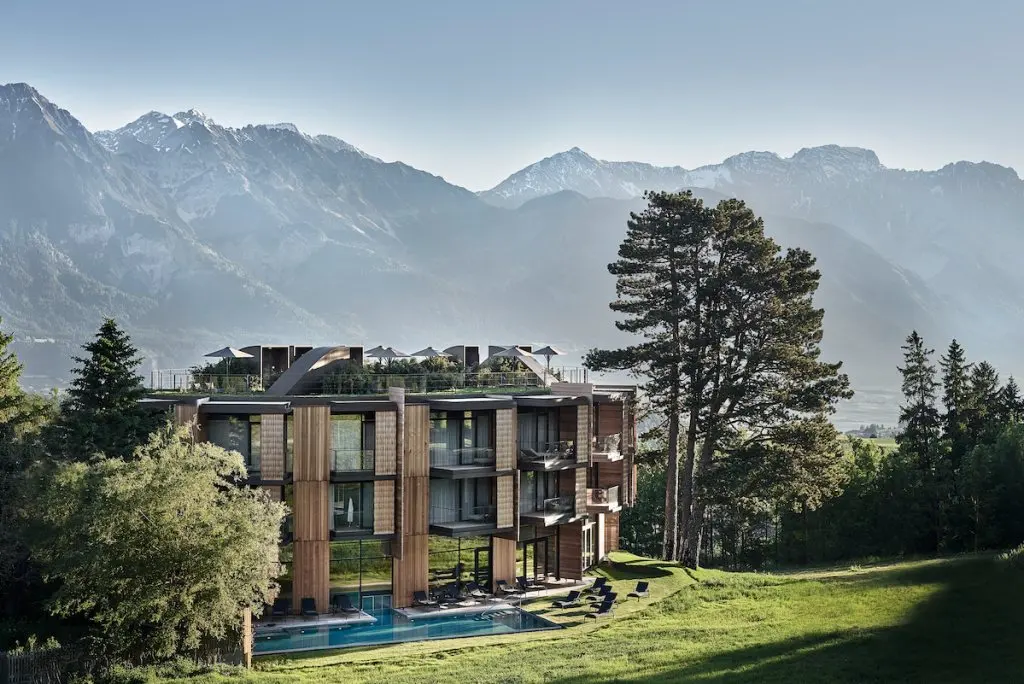
Every luxury hotel group seems to have a longevity pitch right now: cryotherapy pods, IV drip menus, blood panels by the dozen. Lanserhof, the Austrian medical resort group, is taking the opposite bet. Its argument is that the real value in medical wellness is not adding more treatments but having someone qualified tell you which ones you can skip.
The company started in 1984 in the village of Lans outside Innsbruck, built around a philosophy of gut health and regeneration rather than quick fixes. Four decades on, it runs some of Europe's most genuinely medical health resorts: properties at Tegernsee and on the island of Sylt in Germany, plus city clinics in London and Hamburg.
The scale of the medical operation is what sets it apart from a spa with a doctor on the payroll. According to chief commercial officer Eva-Maria Hasenauer, a typical Lanserhof resort staffs roughly 8 to 10 doctors and 50 to 60 therapists for around 60 guests. The average stay is eight days, and some guests check in for several weeks. It is closer to a hospital with very high thread counts than a wellness retreat — diagnostics first, treatment plans second, and relaxation as a supporting act rather than the headline.
That staffing ratio also explains the price tag and the waitlists. With fewer than a hundred guests on site and a clinical team that size, the experience is built around sustained, personalised programmes rather than a menu of add-ons. Hasenauer's point about the industry's current obsession is blunt: longevity and weight-loss treatments are easy to buy, but without proper assessment they are just expensive theatre.
For travellers, the takeaway is a useful filter. If you are considering a medical or longevity-focused holiday, the questions worth asking are less about the equipment list and more about who is interpreting your results, how long the recommended stay is, and whether the programme is tailored or templated. Lanserhof's model — long stays, heavy doctor involvement, a founding philosophy that has not chase-and-replaced itself every few years — represents one end of a spectrum that runs down to resort spas bolting on an IV bar.
Who is this for? Not the weekend spa-break crowd. It suits people willing to invest real time and money in a health reset: executives burning out, guests managing chronic gut or metabolic issues, or anyone who wants diagnostics and follow-up care rather than a massage and a smoothie. The city clinics in London and Hamburg offer a lower-commitment entry point before committing to a week or more in the Alps or on the North Sea coast.
Original reporting by Skift.