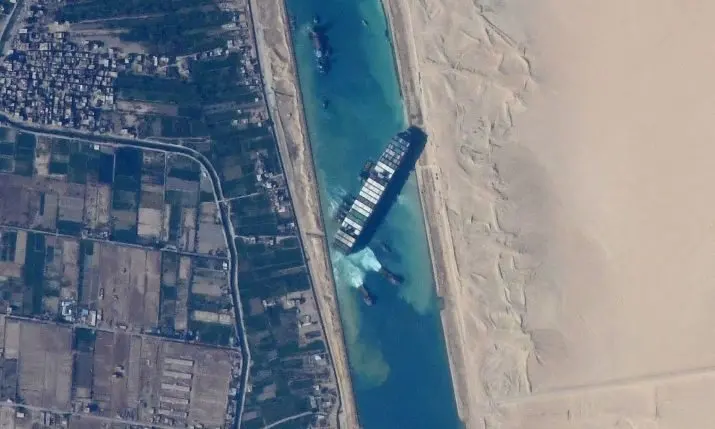
New research has revealed a surprising link between the Croatian coast and one of the 19th century's biggest engineering feats: roughly 3,000 Croatians are believed to have worked on the construction of the Suez Canal in Egypt.
The canal, built between 1859 and 1869 under French entrepreneur Ferdinand de Lesseps, needed an enormous workforce – around 1.5 million people in total. Among them were men from the eastern Adriatic: the Kvarner region, the Croatian Littoral, Dubrovnik and the Bay of Kotor all sent workers to Egypt.
The strongest ties were in the Vinodol area of the Kvarner Riviera. Villages and towns including Grižane, Bribir, Selce and Novi Vinodolski supplied labourers, and records show that 105 residents of Selce alone were working on the canal in 1867. The draw was simple: farming and fishing along the Adriatic often couldn't feed a family in the mid-1800s, and wages on the Egyptian construction site offered a way out. Historians now see this as one of the earliest waves of emigration from the Croatian Littoral.
There's a great individual story in the research, too. Andrija Lončarić, according to professor Robert Lončarić's work, became a close associate of de Lesseps himself – and was given the honour of detonating the final charge that broke through the last section separating the Mediterranean from the Red Sea. He was rewarded for his part in completing the link.
The findings will be presented at a public lecture, Croatians at the Suez Canal, hosted by the Crikvenica Town Museum and the Croatian Heritage Foundation's Rijeka branch. It takes place at the museum at Preradovićeva 1 in Crikvenica at 18:00 on Thursday, 29 October, covering the historical, geographical and economic backdrop of the canal as well as the workers' own experiences. More research is ongoing, with a book of sources and personal accounts a possibility down the line.
Why should travellers care? Because this is exactly the kind of hidden history that makes the Kvarner Riviera more than a beach destination. If you're staying in Crikvenica, Selce or Novi Vinodolski, you're walking through towns whose residents helped reshape global trade – a good excuse to wander beyond the waterfront and into the museums and old villages of the Vinodol valley. The lecture itself is free to attend for anyone in town on the night, and it's a rare chance to hear new research before it becomes a book.