Camping used to mean a thin mat, a wonky stove and a prayer for dry weather. Not any more. The latest wave of wilderness retreats promises remote locations paired with butlers, private chefs and beds you actually want to get into — and travellers are paying serious money for the combination.
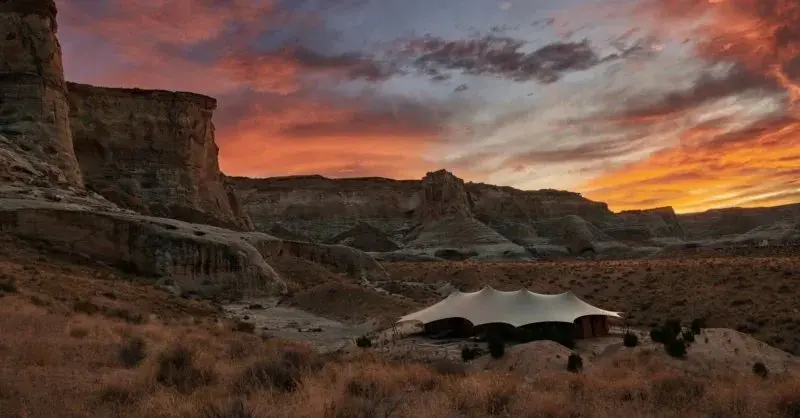
The line-up is impressive. Clayoquot Wilderness Lodge on Canada's Vancouver Island is reached by seaplane or speedboat and puts guests in 25 prospector-style canvas tents with king beds, gas heaters and bathrooms with heated floors, plus saunas, hot tubs and private dining on site. In the Utah desert, Amangiri's Camp Sarika offers ten tented pavilions, each with its own plunge pool and fire pit, a snug base after a day in the slot canyons. In northern Thailand, Anantara Golden Triangle Elephant Camp & Resort lets you sleep in Explorer Tents or a transparent 'Jungle Bubble' surrounded by elephant habitat.
Africa raises the stakes. Singita Explore is a mobile camp that can be pitched anywhere in Tanzania's Grumeti Game Reserve, with a pop-up pool, private chefs and a tented spa — from $3,500 per guest per night, timed for views of the Great Migration. In Kenya, Elewana Loisaba Tented Camp rolls four-poster 'Star Beds' onto wooden platforms each evening, with high-season rates from $1,008.
Interestingly, one of the biggest drivers of this trend is not comfort but discretion. Industry observers note that wealthy travellers increasingly buy out entire properties rather than risk appearing in a stranger's holiday video. A $2,650-a-night hotel is no longer exclusive when it's all over TikTok; stays costing $39,650 or more for a few days, complete with NDAs, are becoming the norm at the top end.
If even that sounds too public, there are options. The Pop-Up Hotel builds private camps wherever you like — its Tipi Tenthouse Suite, which sleeps eight, sells from around $33,000 and comes with portable pools, saunas and spas. For DIY types, gear has gone high-end too: Heimplanet's inflatable Maverick tent ($6,935) offers 156 square feet without any pole-wrestling, Porsche makes a $5,415 hard-shell roof tent with a stargazing skylight, The North Face's expedition-grade 2-Metre Dome ($6,200) shelters eight through storms and snow, and Louis Vuitton will sell you a glamping trunk containing a hand-sewn monogram teepee for eight.
Why does this matter to ordinary travellers? Even if a $3,500-a-night safari is out of reach, the glamping boom has pushed quality up across the board — better beds, better bathrooms and proper food are now standard at mid-range tented camps worldwide. And the design ideas trickle down: inflatable tents and hard-shell roof tents are far more affordable second-hand, so a comfortable night under canvas no longer requires a celebrity budget. The message from the top end is clear: remote no longer has to mean rough.