Lebanon's hillsides are steeped in olive history — literally. Some of the country's trees, like the famous Sisters of Noah, are said to be around 6,000 years old, planted in an era when Phoenician sailors first turned the olive into a Mediterranean export business. The average Lebanese olive tree is a relative youngster at 150 years, but the roots run deep.
The scale today is bigger than most visitors expect. Roughly 14 million olive trees cover somewhere between 57,000 and 62,000 hectares — close to a quarter of all Lebanese farmland. The north produces about 41 percent of the oil, the south 36 percent, with the Bekaa and Mount Lebanon making up the rest. This isn't industrial agriculture: the average farm is just 1.4 hectares, so nearly every bottle traces back to a family plot. Only 8 percent of groves are irrigated, meaning the trees live on winter rain and Mediterranean sun. Two local varieties dominate — Baladi ("local"), used mainly for oil, and Souri, named after Tyre and prized for a robust, peppery result.
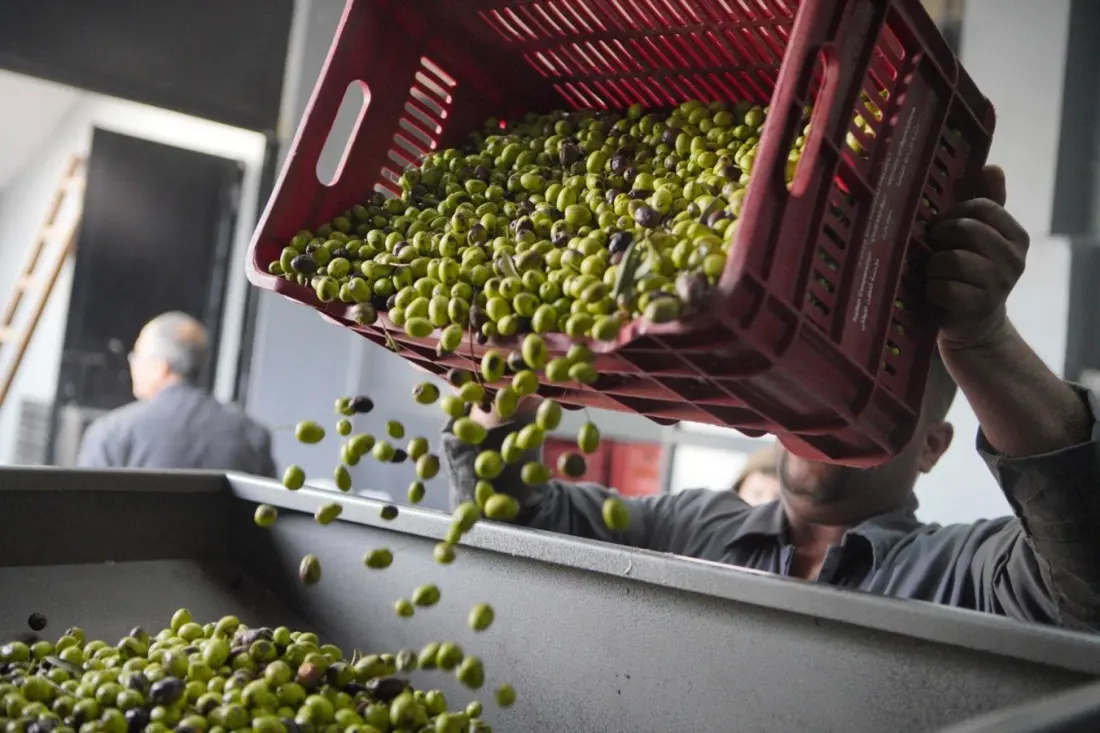
Harvest season runs from September to December, depending on altitude and whether growers want green olives (early, more peppery oil) or black ones (later, softer). Coastal picking typically starts in mid-October, higher ground follows the first rains, and quality-focused Souri producers aim for late September. The old stick-beating method has given way to hand-picking, rakes and vibrating mechanical tongs, and the golden rule stands: press within 24 hours or lose quality.
The equipment has a story of its own. Villages once shared a single press between two or three communities, with vertical grindstones turned by mules or horses until motors arrived in the 1940s. Nothing went to waste — leftover mash fuelled winter fires, and lesser oil went into soap and lamps.
This year looks like a good one to buy Lebanese. Growers report branches heavy with fruit, and early picking across groves like Beino, at 600 metres, has produced a unusually high share of extra virgin oil compared with previous years. Final volumes are still being tallied, but the mood in the groves is upbeat — even with fuel and labour costs up. Lebanon averages around 20,000 tons a year (about 0.57 percent of global production), a small output where quality, not quantity, is the selling point. Expert advice for shoppers: choose oils with real traceability, where you can follow the chain from farmer to mill to bottle.
For travellers, this makes autumn a rewarding time to visit the northern groves around Tripoli and Akkar or the southern hills near Tyre — you can watch harvests in action, taste at family mills, and bring home oil that most of the world never gets to try.