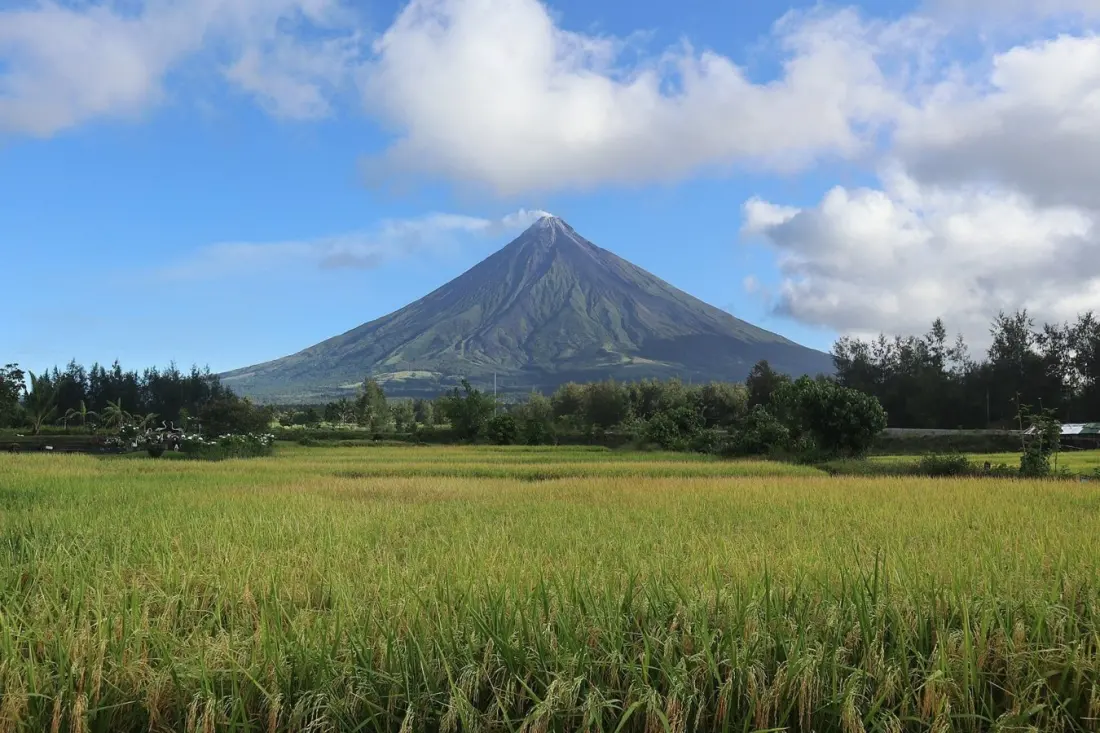
The Philippines' most active volcano is stirring again. On October 30, Mayon Volcano in Albay province, southeastern Luzon, produced a moderately explosive eruption that sent an ash plume 3,000 metres (about 9,800 feet) above its crater. The blast began at 11:53 a.m. local time and lasted roughly six minutes, with ashfall expected in Daraga, Camalig, Guinobatan and nearby communities — and actually reported in Camalig, Guinobatan and upland areas of Legazpi City.
Within hours, the Philippine Institute of Volcanology and Seismology (PHIVOLCS) raised the alert from Level 2 to Level 3, signalling an increased tendency towards a hazardous eruption. That means lava flows and pyroclastic density currents — fast-moving clouds of searing gas, ash and debris known locally as uson — could sweep the volcano's upper and middle slopes in the coming days and weeks. Lahars, waterborne flows of volcanic debris mobilised by rain, are another risk along channels draining the mountain.
Authorities ordered everyone out of the six-kilometre Permanent Danger Zone around the summit. Local governments in Camalig, Malilipot and Tabaco City began mandatory evacuations, and Albay's public safety office estimated around 1,133 families across eight municipalities and cities may need shelter. By mid-afternoon, over 350 families had already moved in Camalig and Tabaco City. The provincial governor suspended classes, officials banned climbing and farming inside the danger zone, and Mayon Skyline, a popular viewpoint, was closed. The social welfare department has more than 417,000 food packs on standby, and 4,000 masks were handed out in ash-affected towns.
For travellers, the takeaway is simple: Albay is off-limits around the summit for now. Climbing on Mayon, a near-perfect cone that rises 2,462 metres and has erupted more than 50 times since 1616, is banned, and the alert could stay elevated for months — this is the volcano's second Level 3 episode of 2026, after a January lava dome collapse. Even areas outside the danger zone can see ashfall, and pilots have been told to steer clear of the summit. The volcano sits about 330 kilometres southeast of Manila, and the Bicol region around it is normally a draw for its beaches, whale sharks in Donsol and that haunting Cagsawa church tower, buried in the great 1814 eruption. Anyone with trips planned to Legazpi or nearby should monitor PHIVOLCS bulletins and expect possible disruption to transport and tours.
In the 24 hours before the eruption, monitoring equipment logged 101 volcanic earthquakes, including 18 tremors — a reminder that Mayon rarely settles quietly. Watch this space.