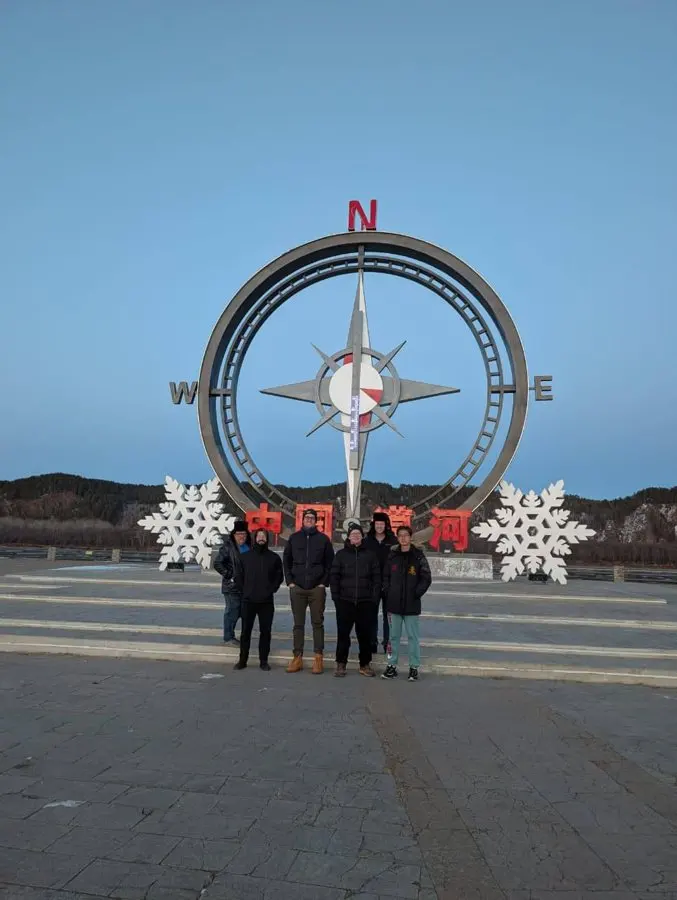
The China-Russia border stretches roughly 4,200 km, split by Mongolia into an eastern and western section — and the eastern stretch alone runs about 3,600 km from Manzhouli down to Tumen, near North Korea. Guides from Young Pioneer Tours recently drove a chunk of it as a research trip, flying Beijing to Qiqihar, then working their way up through Manzhouli, Genhe and Mohe. Their verdict: one of the best road trips they've done.
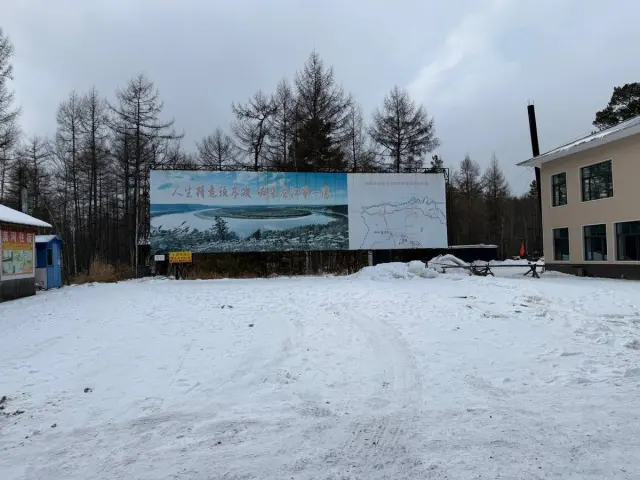
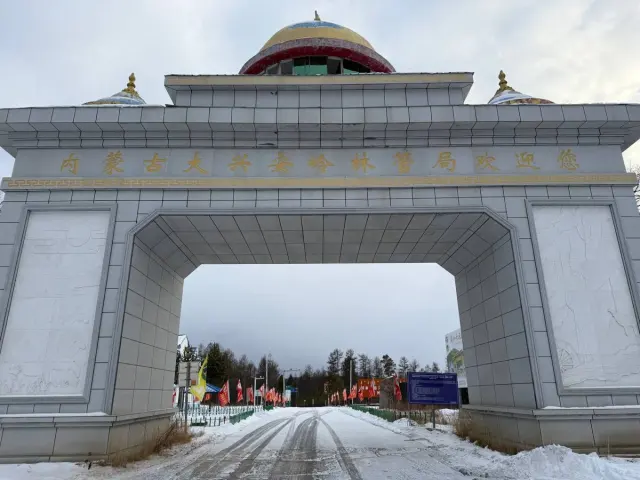
The route is a string of border towns, each with its own character. Manzhouli was the trip favourite — a deliberately Russian-flavoured city of onion-domed architecture, Russian restaurants, trade markets, and even China's northernmost McDonald's. Ergun and the tiny settlement of Shiwei on the Argun River are home to ethnic Russian-Chinese communities. Further north sits Mohe, China's northernmost city, gateway to Beiji (Arctic) Village, where the team spent three nights and watched temperatures hit -21°C as snow rolled in.
The eastern towns have their own hooks. Heihe faces Blagoveshchensk directly across the Amur River and is one of the biggest cross-border trade and tourism hubs. Tongjiang gained a new rail bridge to Russia in 2022. Fuyuan claims the title of China's easternmost city, where the Amur meets the Ussuri. Suifenhe grew up around the old Chinese Eastern Railway and still wears its Russian architecture proudly. And several towns — Sunwu, Hulin, Dongning — carry darker history in the form of Japanese wartime fortifications from the occupation of Manchuria, with Dongning's extensive underground tunnels open to interest travellers.
Practically, this is remote driving country. The team logged roughly 650 km between Qiqihar and Manzhouli (about seven hours), 420 km to Genhe, then 340 km on to Mohe. Distances are long, towns are small, and winter is severe — the guides recommend late autumn or shoulder season, not summer and not deep winter. Genhe, they note, is fairly dull as a city but is the coldest spot in China, so snow fans may disagree. Flights connect the bigger points (Qiqihar, Heihe, Harbin) when the roads or train tickets fail — their planned 17-hour train to Harbin fell through, and a delayed flight forced a scramble through Heihe, where they at least sampled the memorably bad Lenin-Stalin chocolate.
Who is this for? Independent-minded travellers who've already done Beijing, Xi'an and Shanghai and want the raw, unfussy edge of China — frontier towns, grasslands, river views of Russia, and communities where Chinese and Russian cultures blur. It's a niche that a few specialist operators can arrange, and it rewards flexibility more than tight itineraries. Hunchun, near the junction of the Russian and North Korean borders, is a smart addition if you push further east. It's not polished, and some river views of Russia underwhelm — but that's rather the point of the boonies.
Young Pioneer Tours