Yellowstone gets nearly five million visitors a year. Smith River State Park, three hours or so from the same crowds, gets a trickle — because you can't just show up. The only real way into this park is on the water, and the water is rationed.
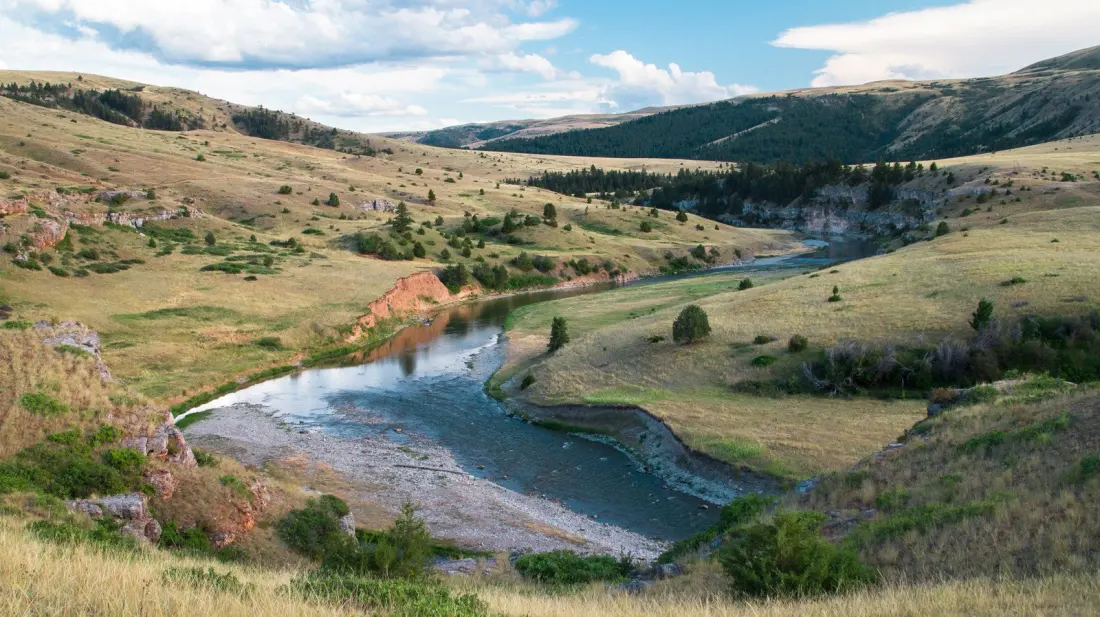
The park wraps around a 59-mile stretch of the Smith River near White Sulphur Springs in central Montana. It's a river run through deep limestone canyons with water so clear the trout have nowhere to hide. There's no road access, no lodge, no day-trip viewpoint. You arrive by canoe, raft, or kayak, and you leave the same way — carrying everything in and everything out, including your own waste (the park literally requires a "poop tube"). Established in 1960, it's Montana's original river park, and it still runs on a simple idea: a handful of people per day, wild country, no concessions.
Getting on that water takes planning. Montana Fish, Wildlife & Parks holds an annual permit lottery every February, and only nine launch groups are drawn for each date. Winners get a one-hour launch window at Camp Baker — miss it and you're done — and a four-night maximum during peak season. The takeout is at Eden Bridge, about four days downstream. Expect class II rapids, so intermediate paddling skills are the baseline. If the lottery gods ignore you (only winners get notified), park-sanctioned outfitters run guided trips, though at a notably higher price and in limited numbers.
Why bother? The fishing, for one. The Smith is a respected brown and rainbow trout fishery with whitefish in the mix, and the peak float window of May 15 to July 15 doubles as prime fishing season. The camping is the other draw: 27 boat camps with 52 sites scattered along the corridor, entirely undeveloped. No showers, no drinking water, no camp store. Just fire rings, cowboy coffee, and some of the darkest night skies you'll find in the Lower 48.
Timing matters more than here than most places. April launch dates are easier to win but bring cold and snow risk; August dates can strand you when the river drops too low to float. Late May through mid-July is the sweet spot — and the most contested.
Getting there takes commitment from out-of-staters. Bozeman Yellowstone International and Helena Regional are both roughly 100 miles away, and an overnight in Helena to sort gear is a smart move. Afterwards, White Sulphur Springs makes a fine decompression stop, with its namesake hot springs, a vintage theatre, and mountain views in every direction.
This is not a trip for casual weekenders or first-time paddlers. It's for anglers and self-sufficient boaters who like their wilderness rationed and their campsites silent. Win the draw, prep properly, and you get one of the finest multi-day river trips in America — with nobody else's tent in the shot.