There's a museum in eastern Paraguay where you won't find a single display case. The Museo del Árbol, in the Puerto Itá Cajón community of Nueva Alborada, spreads across more than 50 hectares of woodland near the Paraná River — and the trees aren't just the setting. They're the whole point.
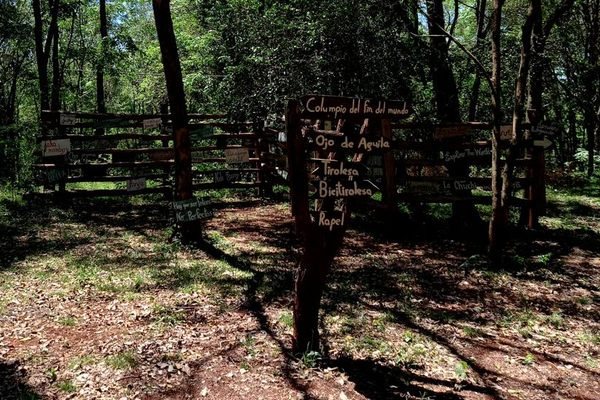
Visitors explore it the way you'd explore a forest: on foot, along trails, with surprises turning up around bends. Sculptures, installations and oversized structures are scattered through the woods, including a giant chair you can climb and an "Árbol de los Deseos" — a wish tree. The standout attraction is the "Columpio del Fin del Mundo," a swing at the edge of a viewpoint that sends you soaring out over the surrounding landscape. There's also the "Tronco de los Lamentos," or Trunk of Laments, a sombre installation dedicated to the forests Paraguay has lost to deforestation.
That mix of playfulness and environmental message is deliberate. The museum was created as a tribute to the country's trees and forests, and it works as an open-air lesson in ecology without ever feeling like a lecture. Some visitors come for the art, some for the river views, some just for a walk — the roughly 1.3-kilometre forest trail passes native trees, lookout points and most of the installations, making it an easy way to see the highlights in one loop.
Practical stuff: this is very much an outdoor experience, so pick a clear day. Several viewpoints frame the Paraná River, and rain can muddy or close off some trails and activities, so it's worth checking conditions before you set out. If you want to stretch it into an overnight trip, camping is allowed — bring your own gear, but there are bathrooms, showers and electricity on site. With 50-plus hectares to cover, plan for more time than you'd budget for a typical museum visit.
Nueva Alborada sits in Paraguay's Itapúa department, a region better known for soy fields and immigrant-founded towns than for eccentric art parks, which makes this find feel all the more unexpected. It suits travellers who like their culture outdoors: families with kids to tire out, photographers chasing river lookouts, campers wanting a base with character, or anyone who'd rather read a forest than a plaque. Come with sturdy shoes and a bit of curiosity — the museum's own pitch is that the trees are the main characters, and they don't perform on schedule.
First reported by Atlas Obscura.