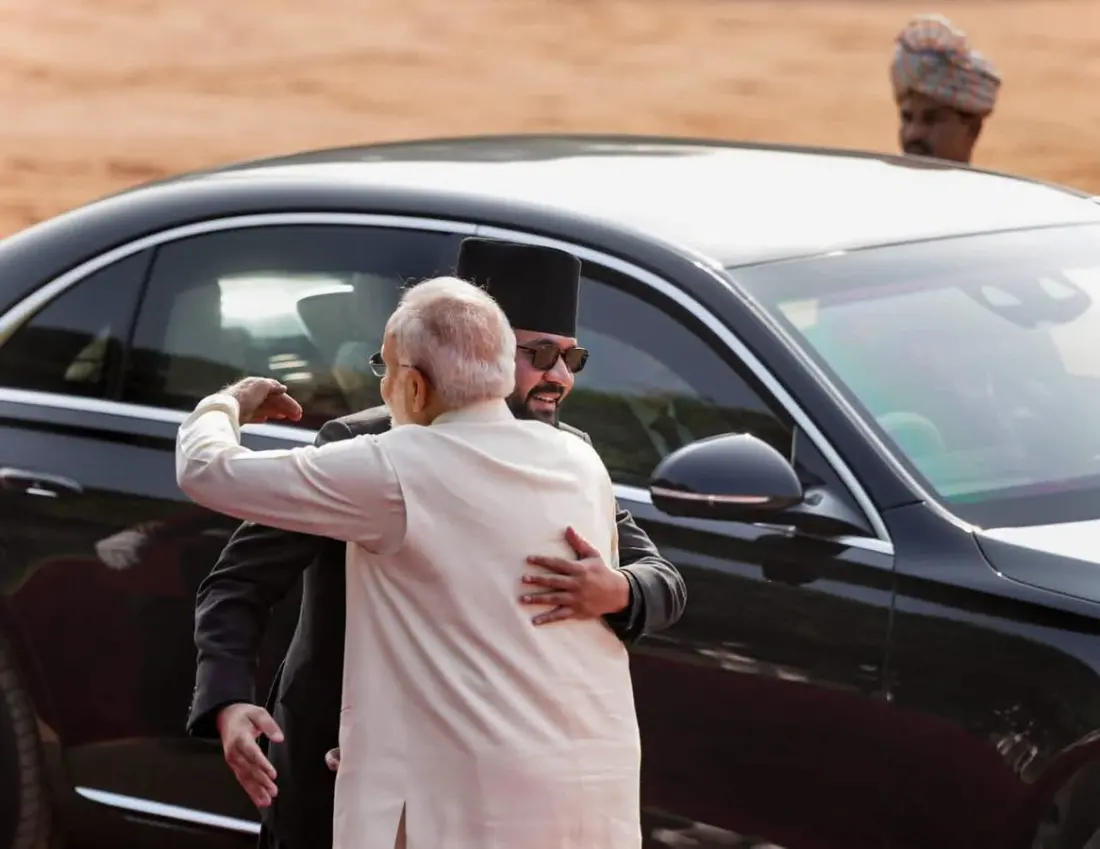
Nepal's Prime Minister Balendra Shah has finally left the country — nine months into his term, and after months of keeping foreign envoys at arm's length. His 24-hour visit to New Delhi included a one-on-one with Indian PM Narendra Modi, and it looks like the ice has well and truly melted.
It's an unlikely pairing on paper. There's a 40-year age gap between the two leaders, and Shah's past behaviour gave Delhi plenty of reason for caution. As mayor of Kathmandu, he posted a map of 'Greater Nepal' in his office and fired off abusive social media posts about India, China and the US. He also promised not to travel abroad during his first year in office. Yet Modi came out of the meeting full of praise, calling Shah a man of 'clear vision and commitment to his country' and pledging that India would be a partner in taking relations to 'new heights' for Nepal's stability and prosperity.
The symbolism ran deep. The two leaders inaugurated a new train service linking Ayodhya in India — revered as the birthplace of Lord Ram — with Janakpur in Nepal, the birthplace of Ram's consort Sita. Shah invoked Pashupatinath in his address and came armed with gifts for Modi: sacred rudraksha beads and a shaligram stone. Religious and cultural ties have long been the soft glue in the India-Nepal relationship, and Shah leaned into them hard.
There were concrete outcomes too. India agreed to a $1.6 billion development package for Nepal, split between a $377 million grant for post-disaster reconstruction and a $1.24 billion concessional line of credit aimed at energy and long-term projects. The two sides also agreed to survey a Raxual-Kathmandu railway line, launch the 669MW Lower Arun hydroelectric project, set up container checkpoints along the border and extend petroleum pipelines into Nepal. Hydropower cooperation has history here — India helped build Nepal's first major plant on the Trisuli back in 1967, and an Indian state-owned company is currently working on a cascade of projects in the Arun Basin.
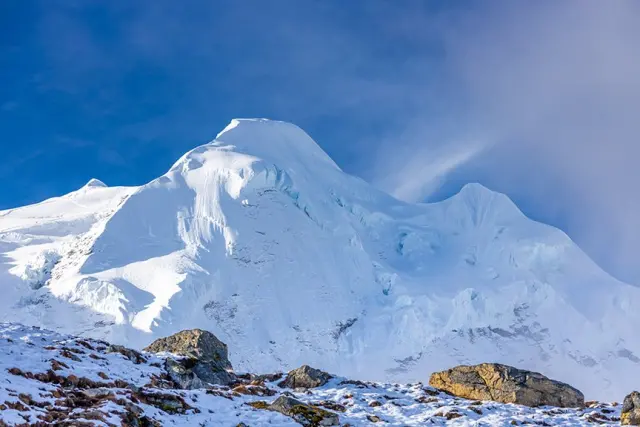
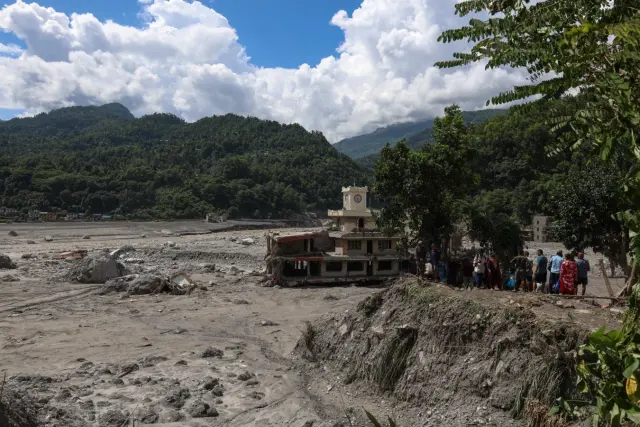
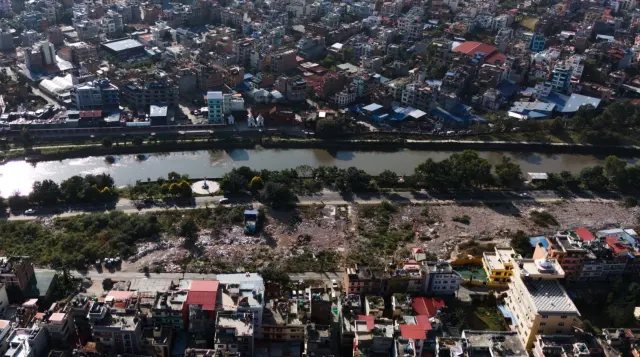
Shah also struck a climate note, telling delegates at Hyderabad House that the Himalayas supply clean water to millions across the region and that climate change demands collective action. He thanked India for its disaster assistance, a nod to Nepal's vulnerability to floods and earthquakes.
For travellers, the most immediately useful news is the Ayodhya-Janakpur rail link. It opens up an overland religious circuit through the Terai lowlands of Nepal that was previously awkward to stitch together, and it signals that cross-border transport between the two countries is being upgraded more broadly. The railway survey to Kathmandu, if it proceeds, could eventually transform how visitors arrive in the capital. Anyone planning a pilgrimage or cultural trip through the India-Nepal borderlands — Ayodhya, Janakpur, Lumbini is an easy add-on — should watch this corridor closely.