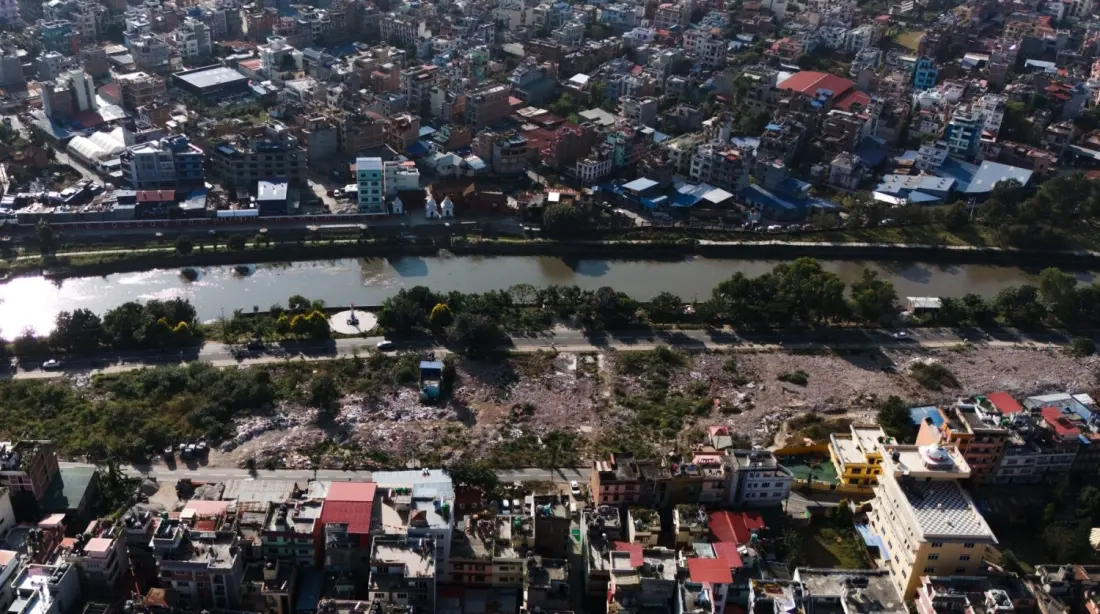
Kathmandu is trying to give itself a riverfront. Prime Minister Balen Shah, who built his reputation on urban campaigns as mayor, ordered bulldozers into the informal settlements along the Bagmati river just a month after taking office. Around 20,000 people were evicted and roughly 3,500 homes demolished as part of a 100-point plan to reclaim the floodplain and eventually resettle the landless.
Six months on, only about 300 of the displaced remain in holding centres; the rest spent the Dasain and Tihar festivals dispersed across the city, their situation largely eclipsed by the August Trisuli Valley disaster that hit tens of thousands. The move split the country — rights groups including Amnesty International condemned it, lawyers are fighting it in court, while others backed it, arguing many riverside residents were settled decades ago as political vote banks rather than genuinely landless.
Why does this matter to travellers? Because the Bagmati is the river you walk past at Pashupatinath and along the southern edge of central Kathmandu, and for years it has been more drain than waterway. Shah's stated ambition is a restored corridor worthy of the river's place in the valley's civilisation — clean, accessible, part of the visitor experience rather than something to avert your eyes from. Whether that happens is an open question. Previous efforts, like the Bagmati River Basin Improvement Project of the early 2010s, promised a 'clean, green and healthy' river; progress has been slow.
The likeliest template is Ahmedabad's Sabarmati riverfront in India. That river spent decades as a polluted dumping ground lined with informal settlements, until the Sabarmati Riverfront Development Corporation launched a concerted redevelopment in 1997. It is now a flagship public waterfront — promenades, parks, cleaner water — cited as a model for projects such as Delhi's Yamuna plans. That script, though, came with its own relocations of riverside communities, which is precisely the controversy Kathmandu is now living through.
If you are planning a trip to Kathmandu in the near term, expect the riverbanks to remain a work in progress: some cleared stretches, active construction, and ongoing protests. The city's real draws — Durbar squares, the temple towns of Bhaktapur and Patan, the Himalayan backdrop — are untouched by any of this. The riverfront story is worth following because it will shape how the valley feels to walk through over the next decade, and travellers arriving now are watching a city argue about what its sacred river should be. Keep to established riverside sites like Pashupatinath's ghats, and read the local press for the latest on access and demonstrations before you go.