Farmington, New Mexico, is a high-desert town where floods of this scale simply don't happen. Yet in late October 2026, rivers across the Four Corners region rose to levels locals compared with the historic inundation of October 1911 — and one whitewater rafting couple found themselves running rescue missions through their own neighbourhoods.
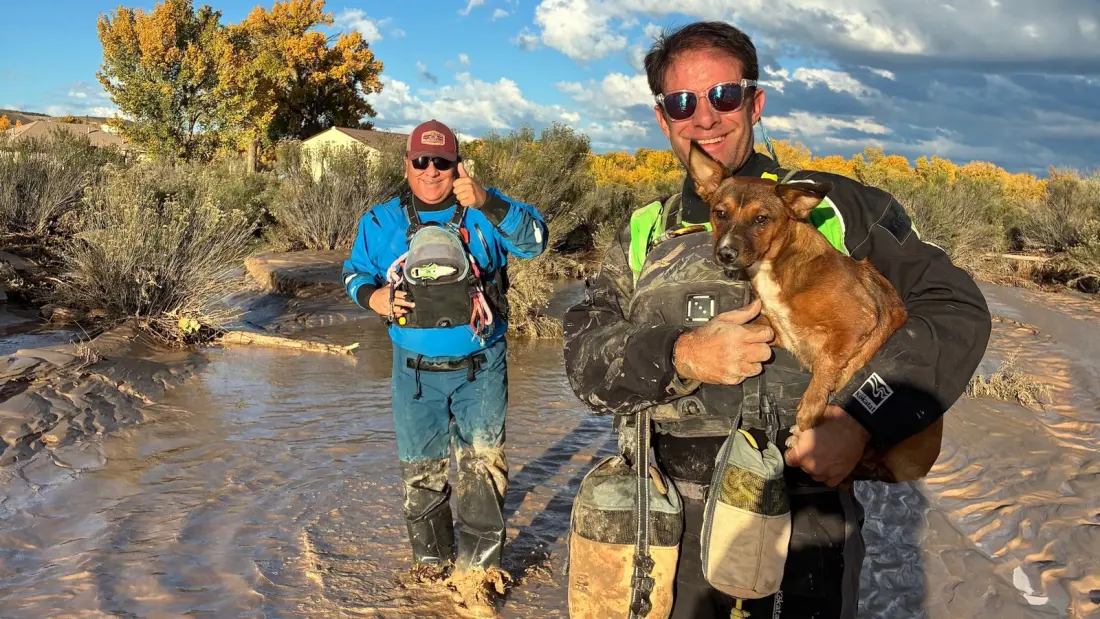
Ryan and Cody Dudgeon own Desert River Guides, a rafting outfit that normally takes clients down the Animas and San Juan Rivers. When floodwaters hit Farmington on 23 October, residents fled their homes — many leaving pets locked inside. The Dudgeons, who run the only swiftwater-qualified operation in the county apart from Search and Rescue, loaded a 14-foot raft into a van, pulled on drysuits and paddled through debris-choked streets for days, pulling dogs, cats and other animals out of submerged houses, kennels and corrals.
The scale was staggering. The San Juan River, which they usually raft at around 500 cubic feet per second, surged to 33,500 CFS in Farmington; the Animas jumped from its usual 1,000–4,000 CFS to roughly 12,000. Upstream in Bloomfield, and downriver through Shiprock and the Navajo Nation, mobile homes were pushed off foundations and swept into bridges. Livestock fared worst of all — the couple couldn't reach one goat farm in time, and drowned pigs, horses and goats floated through town alongside housing debris. Contaminated mud and flooded sewage plants have since made many homes uninhabitable.
The couple's response became the story's brighter thread. They opened their commercial rafting warehouse as an emergency animal shelter, working with the Farmington Regional Animal Shelter to hold lost kittens, puppies, chickens and rabbits. When officials placed the shop itself under flood watch on the first Friday night — up to four inches of rain fell within ten minutes the next morning — friends rallied to move rafts and animal crates to higher ground. The warehouse ended up sheltering people too, with displaced neighbours sleeping on camping gear and cooking on the company's camp stoves. Ryan expects to be housing animals for weeks.
For travellers who know the Four Corners as a base for rafting trips and national parks, this is a reminder that river towns are living communities at the mercy of the same water that draws visitors. It's also a genuine tale of local resilience worth following as the region recovers — trails like Utah's Bridal Veil Falls have closed from rockslides, and Lake Powell rose at least ten feet. If you're planning a trip to the area, check conditions on the ground and consider supporting local recovery efforts, including the animal shelter efforts the Dudgeons helped kick-start.
Ryan, a fourth-grade teacher as well as a guide, summed up the mood: nobody in the community had ever dealt with a disaster like this, yet everyone came together. And in a small moment of levity amid the wreckage, she and Cody even paddled the Animas at its record flow. Her verdict on the run of a lifetime: best float of her life.