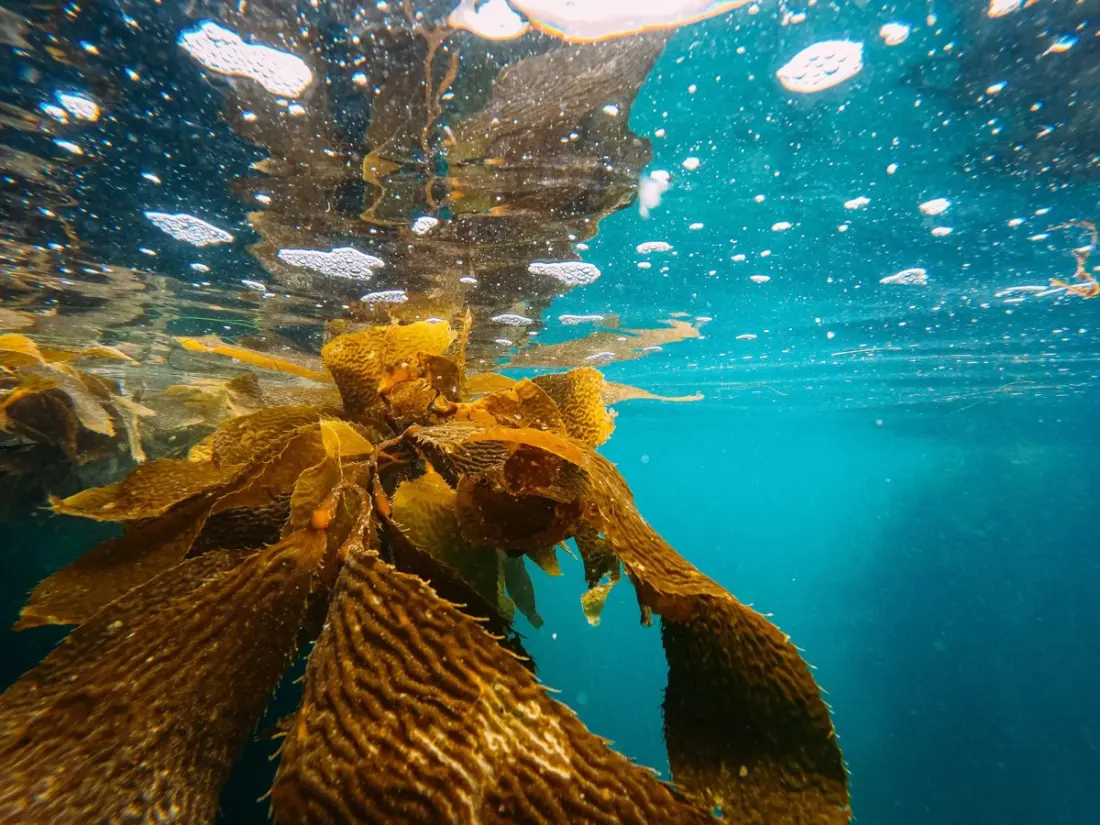
South Africa's waters just got a little more interesting. A red seaweed collected along the country's coast has turned out to be an entirely new species — and it's been named Mzanzia boltonii in honour of Emeritus Professor John J Bolton of the University of Cape Town, a marine botanist who has spent decades cataloguing the country's seaweed diversity.
The find came out of an international genetic study published in the journal Molecular Phylogenetics and Evolution. Scientists discovered that specimens long assumed to be Prionitis filiformis, a species known elsewhere in the world, actually belonged to a separate evolutionary lineage unique to South Africa. That realisation led researchers to create a whole new genus, Mzanzia, with boltonii as its first South African member. The name is drawn from uMzantsi, the isiXhosa and isiZulu word for 'south', and the species is endemic — it grows naturally nowhere else on Earth.
There's a nice human story behind the science, too. Bolton built a postgraduate exchange programme between UCT and Ghent University in Belgium in the late 1990s, and that partnership has reshaped what we know about the country's underwater forests. Work along the KwaZulu-Natal coast pushed known seaweed diversity there up by more than 30% and produced a field guide, Guide to the Seaweeds of KwaZulu-Natal, that divers and citizen scientists still use today. Many of the researchers it trained now work in marine science around the world.
Why should a traveller care? Because it's a reminder that South Africa's coastline — from the kelp-rich Cape peninsulas to the warmer subtropical waters of KwaZulu-Natal — is one of the most biologically interesting in the world, and scientists are still finding species nobody has formally described. For snorkellers, divers and tide-poolers, that means ashore and underwater experiences you genuinely can't have anywhere else. It also signals a healthy research culture: guided marine walks, university-linked eco-tours and citizen science programmes along the coast are backed by people who really know what they're looking at.
The broader takeaway is a humble one. Even in well-studied waters, a seaweed sitting in museum collections for years can turn out to be something new once someone runs the genetics. If that's true for a fairly conspicuous red alga, imagine what's still undiscovered in the deeper reefs. For anyone planning a trip built around South Africa's marine life — shark dives in the Cape, sardine-run season on the east coast, or simply rambling rocky shores at low tide — the country's oceans are clearly still full of surprises, and the list of endemic species you might spot keeps growing.