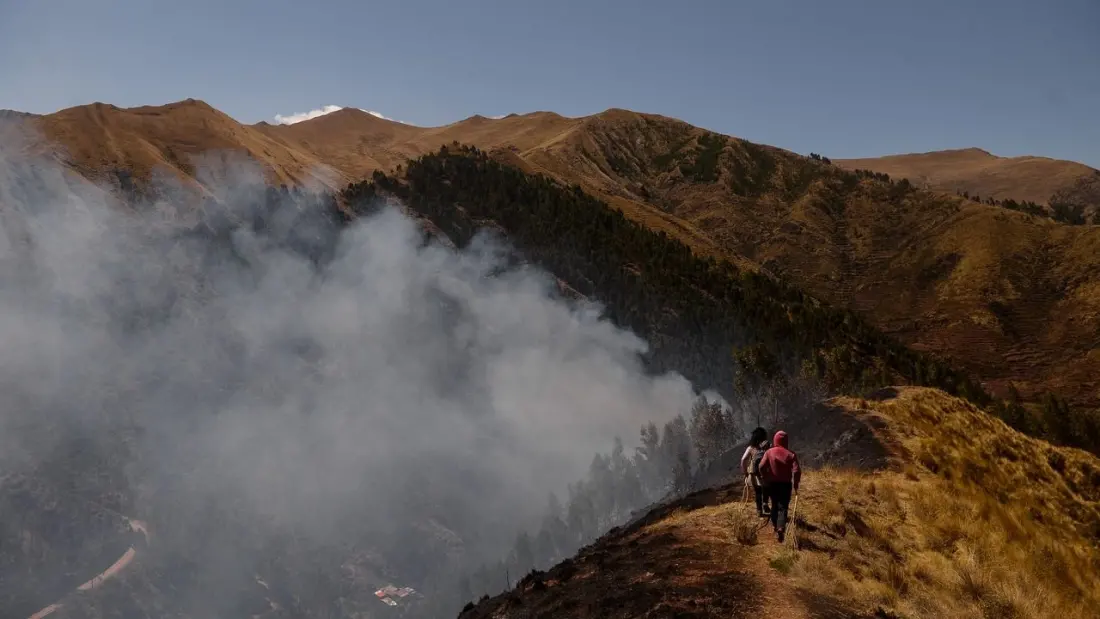
Dozens of wildfires have torn through Peru's Cusco region in recent weeks, charring tens of thousands of acres and killing at least five people. It's a serious situation — but for now, one that's largely unfolding away from the places travellers actually visit.
The blazes are more intense than the seasonal fires the southern Andes usually see. Farming communities regularly burn land ahead of planting season, and strong winds often push those fires out of control. This year, El Niño-driven heat and unusually dry conditions in the highlands have changed both the timing and behaviour of the fires, making them harder to contain. Peru has deployed firefighters, army personnel and a specialised water plane, though some residents say the response has been slow.
So what does this mean if you have a trip booked? The short answer from local tourism experts: don't cancel. Machu Picchu, the Sacred Valley and the region's other headline attractions are open and operating normally. The fires have been concentrated in remote highland areas, and none have reached hotels or tourist sites. There is one active fire in the Sacred Valley near Calca and another in La Convención, both away from the main circuit. One casualty of the disruption: the Cocalmayo hot springs in Santa Teresa, a popular post-trek stop, are temporarily closed because of a precautionary road shutdown.
Access isn't restricted and tours are running, though a few precautions make sense. Stick to the established tourist circuit, skip exploring the higher elevations of the Sacred Valley, and stay in close contact with your operator or hotel. Air quality in parts of Cusco has been rated poor, so anyone with respiratory sensitivities should limit time outdoors and check in with their travel providers before setting off. Local newspaper El Comercio is a good source for on-the-ground updates.
There's also a human dimension worth knowing about. Communities near the fires are struggling, with volunteer firefighters and residents coordinating food and supplies for those on the front lines. If you want to help, organisations like Peru Pendiente are taking monetary donations, and SERFOR is collecting clothing, unopened hygiene products and non-perishables in both Lima and Cusco — your hotel concierge can point you to collection points.
Travellers who feel comfortable continuing with their plans can actually do some good simply by showing up. Tourism supports thousands of families across the Cusco region — guides, drivers, artisans and small businesses all rely on it, and spending that continues during tough periods can matter even more than usual. Keep plans flexible, follow local advice, and your trip can be part of the support system rather than part of the problem.