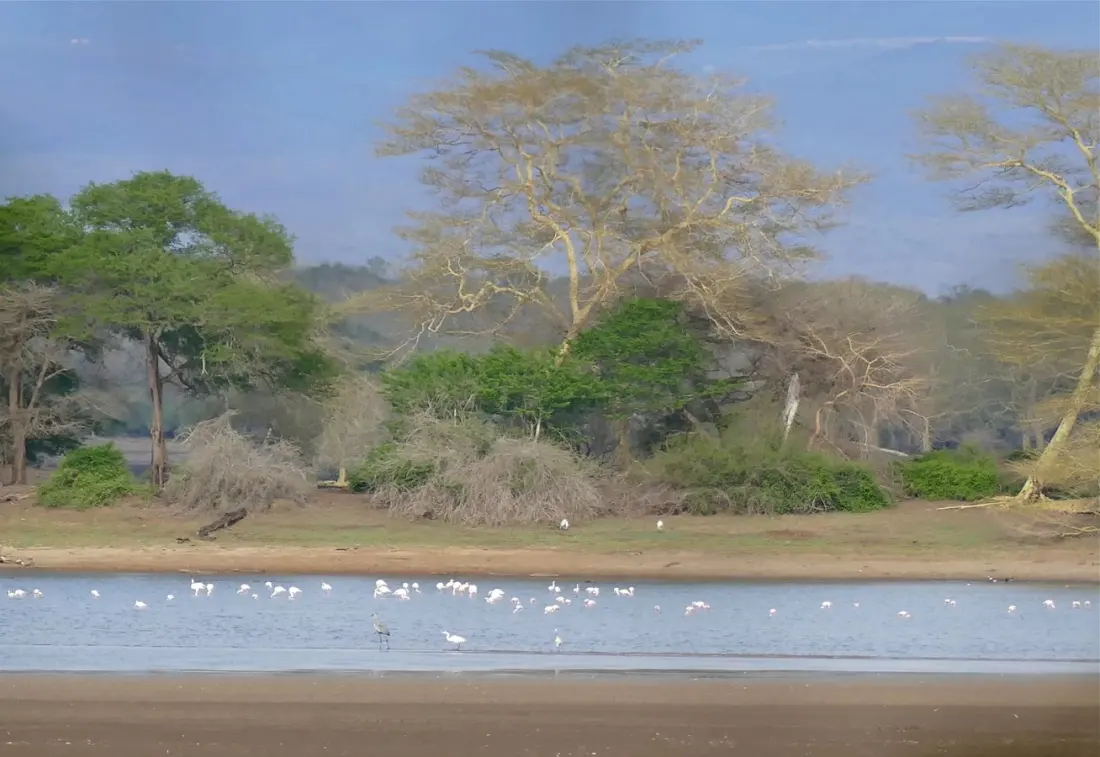
Far from the beaches KwaZulu-Natal is famous for, the province's northern corner hides a wetland world that reinvents itself with every season. Here, on the Makhathini Flats, the Pongola Floodplain spreads out as one of South Africa's most important wetland systems — a shifting network of river channels, grassveld and pans that fill, shrink and sometimes vanish entirely depending on the water.
What makes this region so interesting is that change is the whole point. When the river floods, wetlands reconnect and fish and waterbirds boom; as levels drop, mudflats and leftover pools become feeding magnets. Visit in different seasons and you'll effectively see different places.
For birders, this is serious territory. Ndumo Game Reserve, sitting where the Pongola and Usuthu rivers meet, is a Ramsar-listed Wetland of International Importance and packs floodplains, riverine forest and woodland into one compact area. Its star wetland, Lake Nyamithi, spans roughly 157 hectares, is fringed in places by fever trees, and hosts a hefty population of Nile crocodiles alongside a rotating cast of herons, egrets, African jacanas, kingfishers and ducks. Resident species are joined by migrants as conditions shift through the year.
Head further south and uMkhuze Game Reserve, part of the iSimangaliso Wetland Park, adds another layer. Nsumo Pan, a permanent freshwater wetland, is a recognised breeding site for pink-backed pelicans, with viewing hides that let you watch the waterbirds without spooking them. Nhlonhlela Pan is another rewarding stop, its bird activity rising and falling with the seasons.
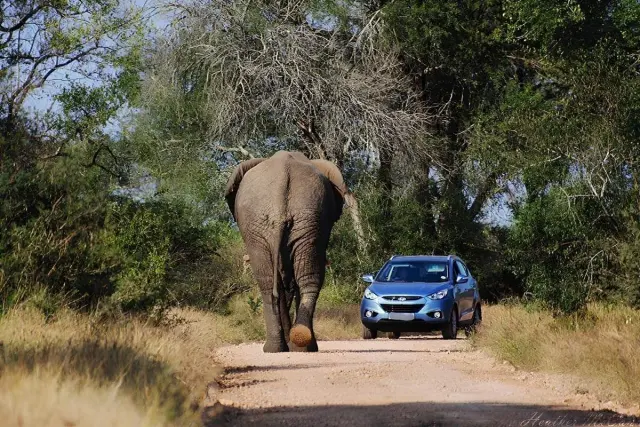
It's not only about birds. Hippos and crocodiles patrol the rivers and permanent water, while the surrounding bushveld supports a range of mammals. In the drier winter months, animals concentrate around remaining water sources, which makes game viewing especially productive — uMkhuze's water-level hides are well placed for exactly this.
Base yourself near Jozini, the practical gateway to the region, where the Pongolapoort (Jozini) Dam sits below the Lebombo Mountains. The dam is best known for tiger fishing, and boating trips double as wildlife cruises along the shoreline. There's a bigger story here too: managed releases from the dam shape water levels downstream, and the floodplain has long supported local communities through fishing, grazing and flood-recession farming. Getting that balance right is now one of the region's central conservation challenges.
When to go depends on what you want. Summer rains from November to March turn the landscape lush and green and replenish the seasonal pans — prime time for birdwatchers and photographers. Winter, from May to October, is drier and better for general game viewing. Practicalities matter in this corner of the country: some reserve roads turn muddy after heavy rain and may need a high-clearance vehicle or 4x4, Ndumo and uMkhuze sit in a low-risk malaria area so check precautions with a doctor and pack repellent, and self-caterers should arrive stocked up — uMkhuze visitors are advised to bring their own drinking water, with the camp shop carrying only limited supplies.
For travellers who've already done the KZN coastline and big-name reserves, these pans offer something genuinely different: a wilderness where water, not the calendar, sets the rhythm.