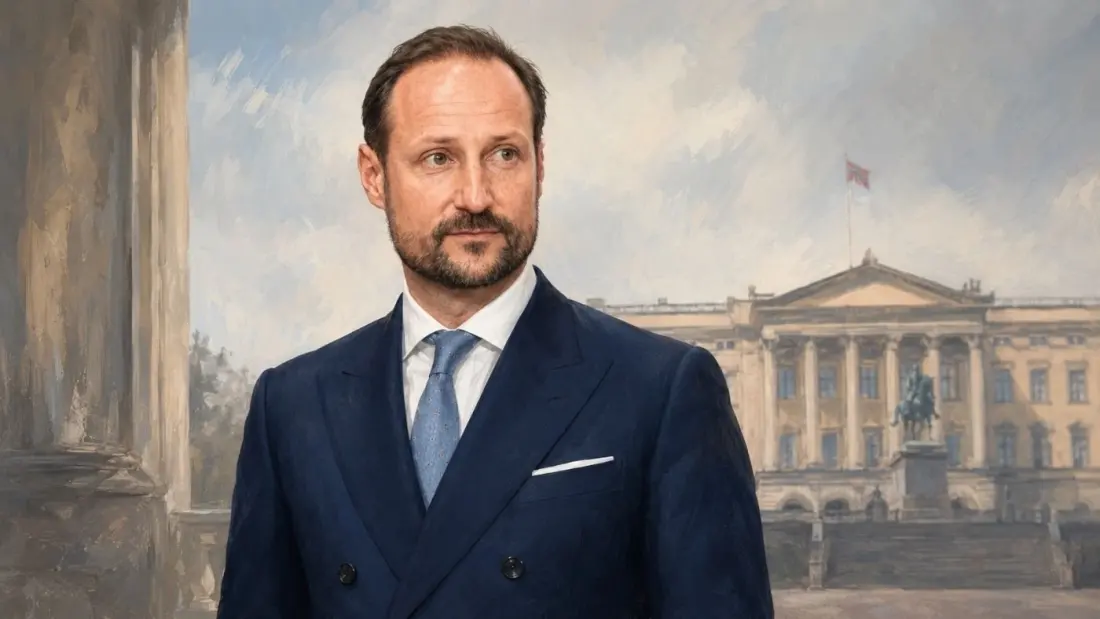
Norway is in the middle of a royal handover. King Harald V died peacefully at Oslo's Rikshospitalet on 28 August 2026, aged 89, and his 53-year-old son became King Haakon the same moment — in Norway there is no interregnum and no coronation is required. For travellers, the monarchy is woven into the country's identity: you'll see it in the changing of the guard at the Royal Palace in Oslo, in the royal seals on everything from postmarks to wine labels, and in the way Norwegians talk about their royals with genuine warmth.
The new king is hardly an unknown. Haakon was just 17, still at secondary school, when his grandfather Olav V died in 1991 and he became Crown Prince. After finishing school he trained as a naval officer at the academy in Bergen, then did something unexpected for a future head of state: he moved to California, graduating from UC Berkeley in political science in 1999. He has since said the distance did him good, and he surfed and played music while he was there. A master's from the London School of Economics and a stint with Norway's UN delegation followed.
His marriage is part of Norwegian pop culture. He met Mette-Marit Tjessem Høiby, a commoner and single mother, at the Quart festival in Kristiansand in 1999; the engagement caused a media storm, echoing his own father's long battle to marry Queen Sonja, also a commoner. They wed at Oslo Cathedral in 2001 and have two children, Princess Ingrid Alexandra and Prince Sverre Magnus. Ingrid Alexandra is now heir to the throne — a result of Norway's 1990 constitutional change letting the eldest child succeed regardless of gender.
Haakon takes over at a tricky moment. The Royal House faces scrutiny over Mette-Marit's past ties to Jeffrey Epstein and criminal proceedings involving her son Marius Borg Høiby, who has never held a royal title. Mette-Marit, diagnosed with pulmonary fibrosis in 2018, had a lung transplant in 2026 and is expected to take a reduced public role. Meanwhile the traditions themselves are fascinating for visitors: Norway abolished coronations, and new monarchs instead take an oath before the Storting and may hold a consecration at Nidaros Cathedral in Trondheim, as Harald and Sonja did in 1991.
Why does this matter if you're planning a trip? Norway's royals are unusually accessible — palace openings, public celebrations on Constitution Day (17 May), and royal residences like Skaugum and the Oslo palace grounds shape the sightseeing calendar. And Haakon's long-standing passions, from ocean health to sustainable development, track closely with how Norway presents itself to visitors: outdoorsy, environmentally minded and quietly modern. Expect his reign to lean into that identity, possibly with a Trondheim ceremony worth timing a trip around. The story is based on reporting from Life in Norway.