Travel blogger Christine Kaaloa has a theory: every solo trip is a small act of deprogramming. Her latest essay, the second in a two-part series on how travelling alone 'glitches the matrix', argues that the real souvenir from time on the road isn't a photo or a fridge magnet — it's a reset of what you believe is possible in your own life.
Her core idea is a 'baseline reset'. When you're pushed outside your comfort zone — navigating a country where you can't read the language, say, or staying with a farming family in rural Nepal — your assumptions about how life must work get stretched. The hard part comes later, when you fly home and the old programming doesn't fit anymore. Kaaloa describes her own re-entry after a year living in Korea: old circles and conversations felt off, and instead of choosing between her old life and her new one, she built a hybrid — keeping the Korean habits, skills and style that worked for her and weaving them into her life in Hawaii.
The examples she gives are concrete. Living in Korea, she paid $20 for wisdom tooth removal and saw monthly utilities under $50 — a stark contrast to American healthcare costs she puts at up to $600 a month. That experience turned her into an advocate for medical tourism, pointing to countries like Thailand, Korea, India, Turkey and Mexico where quality dental and medical treatment can cost a fraction of US prices, with a holiday attached. A dental implant that might run $5,000 out-of-pocket in the US is dramatically cheaper in Bangkok or Seoul, she notes from firsthand experience.
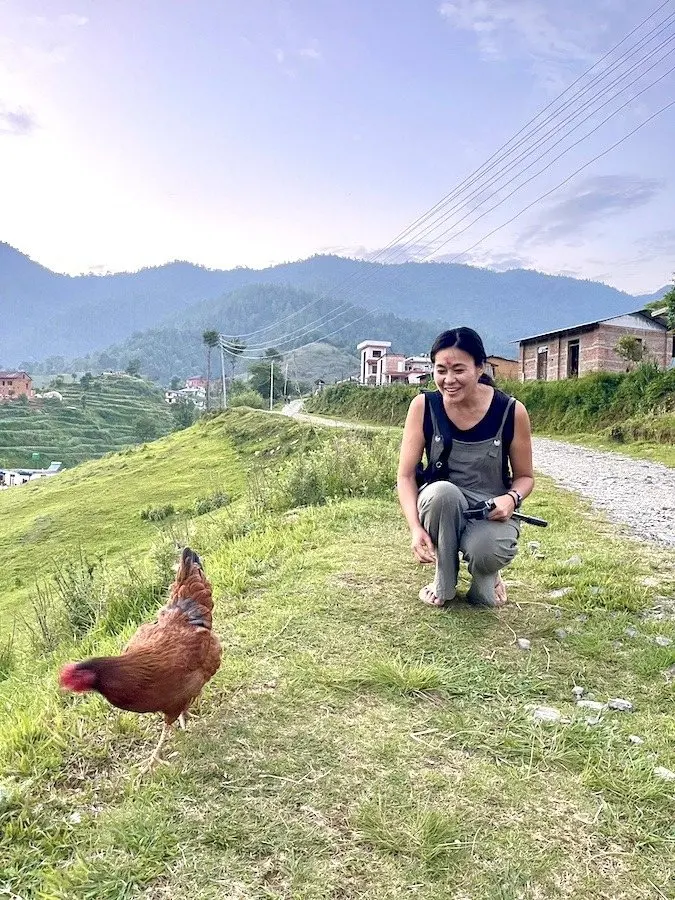
Nepal shifted her thinking in a different direction. Staying with the Gurung community in the hills above Pokhara, and later at a family farm deep in a valley — one where livestock had to be brought indoors each night because of a resident tiger — she watched people live largely off their own land, happy without the career-and-consumerism blueprint she'd been raised on. Back home in the US, that trip prompted her to start growing her own food, citing worries about food recalls and pesticides, and to eat smaller, more mindful portions.
There's also a psychological angle. Kaaloa frames travel as involuntary shadow work: stripped of your job title, reputation and social history abroad, you get an unfiltered look at who you actually are. Being warmly welcomed in countries she'd been warned were 'dangerous' dismantled her inherited fears, and learning to function daily in a place where she didn't speak the language rewired her relationship to the unknown — to the point where she now improvises trips across Asia without itineraries.
Why should a traveller care? Because this is the case for solo travel beyond the usual 'find yourself' clichés. The argument here is that witnessing — in person, not on Instagram — how other cultures handle healthcare, food, community and ageing quietly expands your options back home. Her most vital souvenirs, she says, are the alternate life blueprints she's collected, from a $20 wisdom tooth to a bidet installation to a backyard garden. The piece speaks most directly to women considering their first solo trip, and to anyone returning from a big trip feeling like they don't quite fit their old life anymore.