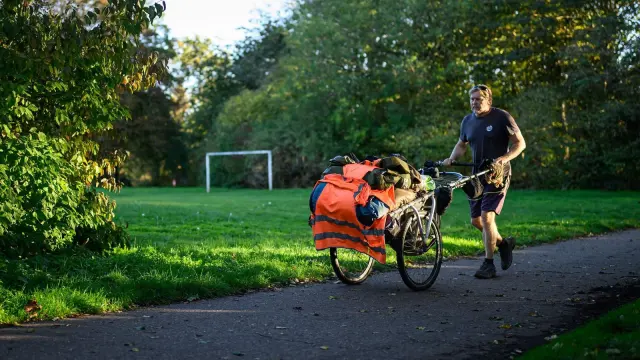
A Backpacker writer just spent 25 days in Washington State wearing the same T-shirt, hoodie, pants and boxer briefs — no laundry, no showers beyond a few river dips — and reckons the anti-odour fabrics largely delivered. The test happened on a planned 330-mile stretch of the Great American Rail Trail, a former rail corridor running from the Cascade foothills to the Idaho border. A foot injury ended the hiking early at 60 miles, but the clothes kept working through roughly 90 total trail miles, 1,200 feet of alpine climbing, van camping, two baseball games and a birthday bar crawl.
The kit mixed two technologies. A $130 HercLéon shirt and matching boxer briefs use copper fibres and charcoal blended into the fabric itself (not sprayed on), built over a lyocell base. Copper ions released when damp damage bacterial cell walls, the charcoal traps whatever odour molecules do form, and a plasma treatment spreads sweat so it evaporates instead of pooling. The writer found the shirt genuinely impressive: three weeks in, no pit stains, no sagging collar, and it still passed as a navy shirt, just tie-dyed with pack-strap sweat. Noticeable smell arrived somewhere between day 12 and day 20 — roughly in line with the brand's 10-day freshness claim for normal use.
The underwear needed some compromise. Rather than going three-plus weeks truly unwashed, the writer rinsed the HercUnderwear twice — once in a sink with soap, once in the ocean — and got up to nine days per wear, versus a hard four-day limit with ordinary Hanes briefs. They run small (mediums for a 29-30 inch waist) and run warm, so they're better for cool-weather trips than desert hikes.
The second piece, Patagonia's Capilene Cool Ultra hoody, uses HeiQ Mint, a coating of encapsulated mint-oil compounds that trap odour during wear and release it in the wash. It became the writer's daily layer — light enough for a hot exposed climb of Exfoliation Dome, warm enough to take the edge off a damp Pacific Northwest morning, and quick to rinse and dry. Odour control wasn't quite as strong as the HercLéon gear, but stayed socially acceptable.
Why should a traveller care? If you've ever wanted to travel carry-on only, or you're hiking a long trail where laundry days are scarce, odour-resistant fabrics are the difference between one outfit and five. The science here is real: cheap polyester traps skin oils and develops permanent stink, while merino and these engineered fabrics manage bacteria instead. The takeaway is honest, too — this isn't magic. You'll still want a rinse every week or so, and underwear hygiene has limits. But a single shirt that stays presentable for 10 days of real use is a legitimately useful packing trick for anyone counting grams or packing cubes.
Full test results at Backpacker.