Phú Quốc has jumped to the number one spot on Agoda's ranking of overseas destinations searched by South Korean families with children, overtaking well-known favourites in Japan and Southeast Asia. The data covers searches made between July and September 2026 for stays between November 2026 and January 2027, and shows accommodation searches for the Vietnamese island up 33 per cent year on year — enough to lift it four places to the top.
Japanese destinations still dominate the rest of the list, taking half of the top ten: Fukuoka ranks second after a 61 per cent surge in searches, followed by Osaka, Tokyo, Okinawa and Sapporo. Nha Trang (fourth) and Đà Nẵng (sixth) join Phú Quốc in representing Vietnam, with Cebu and Chiang Mai rounding out the list.
Why is Phú Quốc winning over Korean parents? Timing plays a big part. The island's dry, sunny season begins around November, matching the Korean winter school break almost perfectly. Korean media have also pointed to how much families can pack into one trip: snorkelling over coral reefs, then amusement parks and a safari park, without long transfers.
The south of the island is the family hub. From Sunset Town, a cable car — billed as the world's longest three-wire line — carries visitors across to Hòn Thơm Island, where Sun World Hòn Thơm and the Aquatopia Water Park cater to everyone from toddlers to thrill-seekers. Evenings mean dinner by the water and shows like Kiss of the Sea, complete with fireworks.
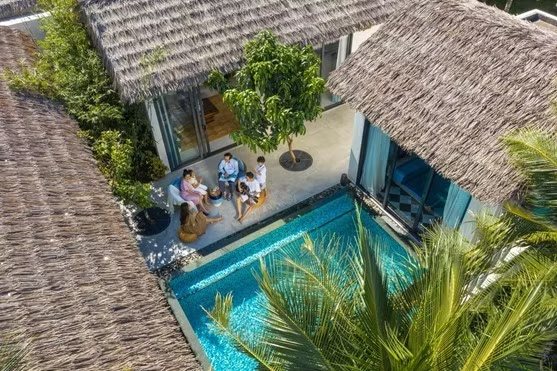
Hotels are a bigger part of the holiday here than in most beach destinations. Korean families have embraced "hocance" — a staycation-style break where the resort itself is the attraction. Properties such as Premier Village and New World Phú Quốc rent multi-bedroom villas with private pools, ideal for travelling with grandparents as well as kids. The JW Marriott Phú Quốc Emerald Bay goes a different route, designed as a whimsical fictional 19th-century university that children love to explore.
Getting there is straightforward too: Sun PhuQuoc Airways flies direct between Seoul and the island, so families skip the connecting flight that complicates trips elsewhere.
For anyone planning a winter sun break — not just Korean families — the same logic applies. November to March is the island's driest window, villa-style resorts make group travel easier, and attractions are clustered close enough that you can adapt each day around the kids' routines. Phú Quốc's rise suggests it's no longer a hidden gem but a genuine alternative to Japan's winter classics.