There's a spot where the map of the United States simply stops. Point Barrow — Nuvuk in Iñupiaq — is the country's northernmost point, a narrow spit of Arctic coast where the Chukchi and Beaufort Seas meet, roughly ten miles northeast of Utqiaġvik, the northernmost city in America. It's about as far from a typical holiday as you can get, and that's exactly the appeal.
This isn't an empty wasteland. People have lived around Point Barrow for some 1,500 years, with archaeological finds dating back to around 500 A.D. At the nearby Birnirk National Historic Landmark (closed to the public), researchers have unearthed tools, hunting weapons, stone lamps and even a boat from between 500 and 900 A.D. The whaling tradition that grew there continues in the Iñupiat communities of the region today.
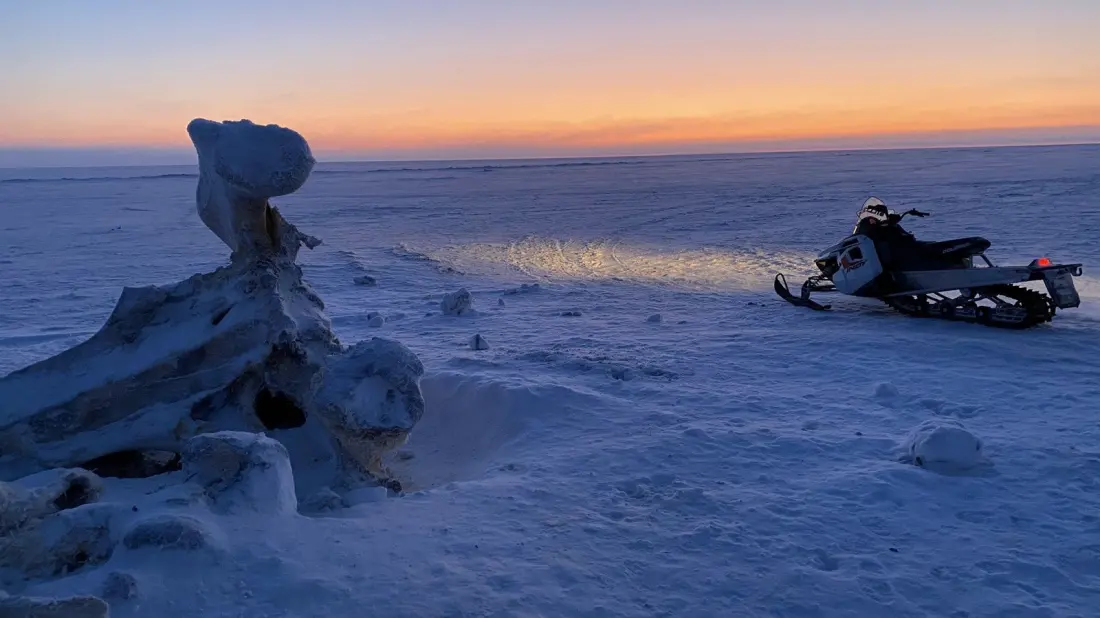
The wildlife is the other headline act. Spring brings millions of migratory birds — snowy owls, geese, ducks and the scarce Steller's eider among them. Bowhead and beluga whales pass along the coast on seasonal migrations, seals and walruses haul out nearby, and on land you could spot caribou, Arctic foxes or, yes, polar bears. Visitors regularly report bear sightings from the point itself, where there are no trails, no visitor centre and no infrastructure at all — just a stark, windswept strip of coastline with water stretching to the horizon.
Getting there is an expedition in itself. Utqiaġvik has no road connections, so you'll fly in from Anchorage or Fairbanks. From town, there's no public road to the point either, so you'll want a guided trip — partly for the rugged terrain, and partly because wandering polar bear country alone is a bad idea. Two Iñupiat-owned operators based in Utqiaġvik, Kiita Tours and 71 North Tours, run excursions to Point Barrow; 71 North operates in the warmer months, while Kiita offers tours year-round.
Why bother with the effort? Because few places in America offer this combination: a genuine geographic extreme, a living Indigenous culture going back centuries, and Arctic wildlife you simply can't see in the Lower 48. If your trip goes well and you still want more wilderness, Gates of the Arctic National Park — the least-visited national park in the US — is a logical next stop.