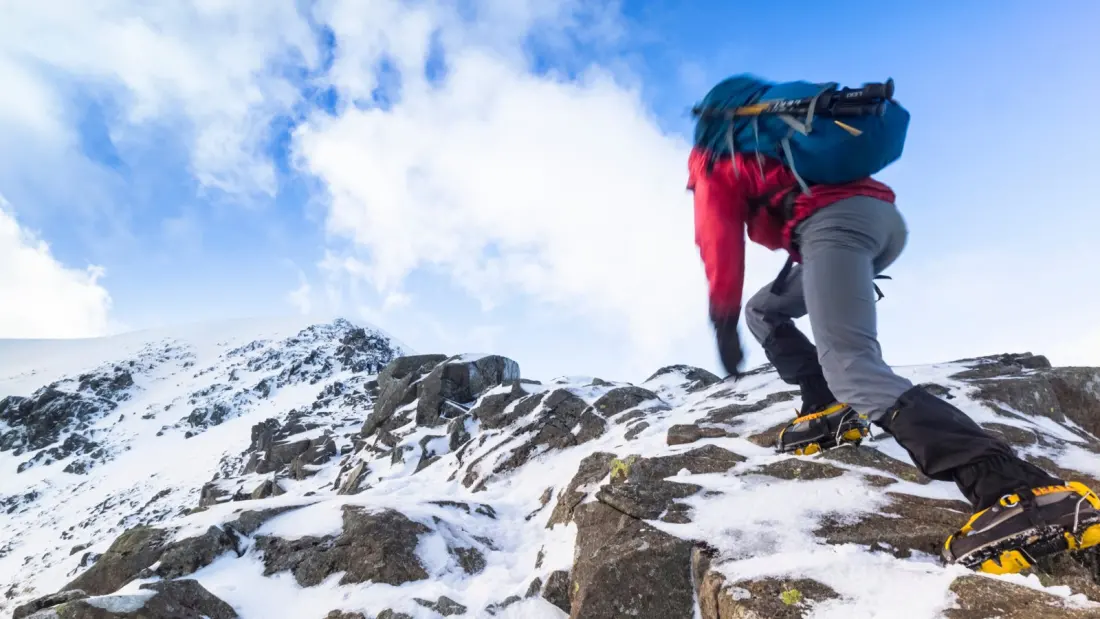
New York's Adirondack Park is the largest publicly protected area in the US, roughly six million acres, and each year it draws hikers chasing a badge: the 46er, someone who has summited all 46 High Peaks above 4,000 feet. It also draws search and rescue teams with sobering regularity — from a hypothermia death on a solo Mount Marcy hike to near-daily rescues of people who run out of food, water or daylight.
So what's going wrong? According to forest ranger Logan Quinn of the New York Department of Environmental Conservation, plenty of those rescued are aspiring 46ers pushing past their limits. John Bulmer, co-founder of Adirondack Mountain Rescue, points to social media as another culprit: viral shots of spots like Indian Head look effortless online, but give no sense of the navigation skills and effort required to reach them. Fall leaf-peeping season, when social feeds are full of the region, only amplifies the effect.
Conditions here are genuinely different from other Northeast ranges. Locals talk about the "Adirondack mile" — a distance that feels far longer than it reads on a map. Trails are over a century old, often poorly marked, and root-and-rock strewn, climbing steeply over short spans. Rain or melting snow can turn them into streams. Weather swings hard too: temperatures can plummet between Lake Placid and a nearby summit, with whipping winds and surprise snow, while summer hikers may find reliable water sources reduced to a trickle.
remoteness matters as well. Sam Fairchild of the Adirondack Mountain Club flags Allen Mountain — an 18-mile round trip and one of the most remote peaks in the Northeast — as a frequent problem spot. It made national news in winter 2024 when an experienced Canadian hiker vanished on a solo trek; his body was recovered in spring. Overconfidence also plays a part: hikers attempt familiar mountains in bad conditions, or run long on food and daylight with rescue far away.
The single most common trigger for SAR calls, the experts say, is over-reliance on cell phones. When your phone is your only light, navigation and communication and it dies in a remote spot in winter, that's the worst-case scenario. Their fix is the classic ten essentials: paper map and compass or GPS, a headlamp with spare batteries, sun protection, first aid, a knife and repair kit, fire-starting gear, emergency shelter, extra food, extra water or purifiers, and spare warm layers — enough, ideally, to survive an unplanned night out.
Preparation tools exist if you look. The Adirondack Trail Conditions Facebook group and the DEC website flag closures, weather and trail reports, and the Adirondack Mountain Club runs training from map reading to beginner backpacking. And the top piece of advice from those who do the rescuing is simple: don't hike the remote peaks alone. If something goes wrong, no one is there to help.
For travellers, the takeaway is that the Adirondacks reward respect more than fitness. Come in any season, but check conditions, carry real gear, and start with the lower peaks.