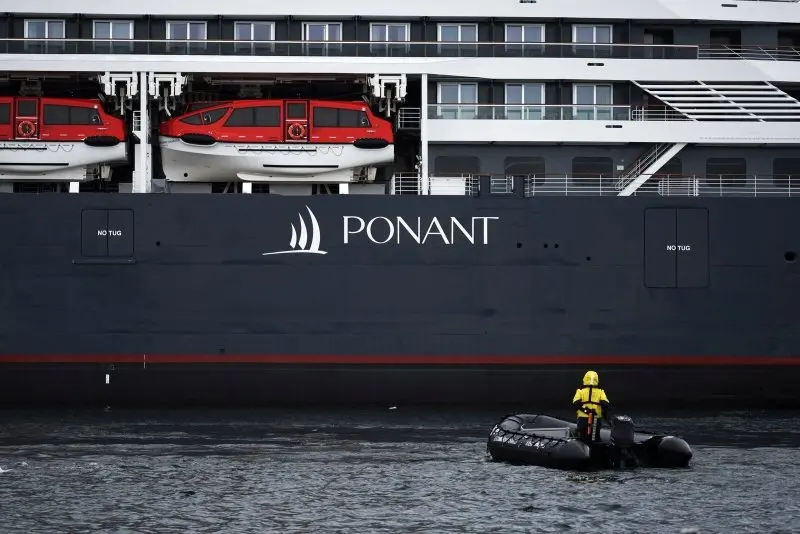
Luxury expedition cruise line Ponant has published its 2025 Sustainability Report, and the standout number is a big one: waste recovered rather than landfilled rose from just 13 percent in 2023 to 49 percent in 2025, closing in on a 50 percent target set for next year.
The jump did not happen by accident. Ponant worked with certification body Bureau Veritas from 2024 to audit the waste chain at the ten ports that handle half of all waste unloaded across the fleet's 150 ports of call. That list reads like a map of the line's expedition routes: Papeete, Athens, Venice, Nice, Longyearbyen, Glasgow, Broome, Darwin, Fort-de-France and Valletta, with Ushuaia and Reykjavik assessed separately outside the partnership. The audits traced everything from onboard sorting to onshore transport and treatment, exposing where recyclable material was simply getting binned.
The clearest fix came in Papeete, where the Paul Gauguin docks more than 50 times a year. Auditors discovered waste carefully sorted onboard was later mixed and sent to landfill onshore. Ponant convened the local waste management stakeholders, and the recycling rate for waste unloaded there went from zero in 2025 to 60 percent in 2026.
In Greece, a June 2025 partnership with waste firm Antipollution examined practices onboard Le Dumont d'Urville and at port, producing framework documents and crew training programmes that will now roll out across the fleet with standardised monitoring.
Other figures from the report: all waste is now sorted onboard, with materials recycled, reused or converted to energy where possible, and nearly 24 tons of single-use plastic were eliminated in 2025. The group says it is also working on decarbonising the fleet, supporting scientific research and building ties with communities along its routes. "Enhancing waste recovery is a key driver in reducing the environmental impact of our operations and helping to preserve the ecosystems we visit," said Wassim Daoud, head of CSR and sustainability at Ponant Explorations.
For travellers weighing an expedition cruise to fragile destinations - think Svalbard, French Polynesia or Antarctica gateway Ushuaia - this matters. The places these ships visit often have thin waste infrastructure, and a cruise line's environmental footprint depends heavily on what happens ashore after its recycling leaves the gangway. Ponant's approach of auditing actual port systems rather than just reporting onboard figures is a more honest measure of impact, and it gives eco-minded passengers a concrete benchmark to compare operators against. If you're choosing between expedition lines, sustainability reports with third-party verified numbers like these are worth reading before you book.