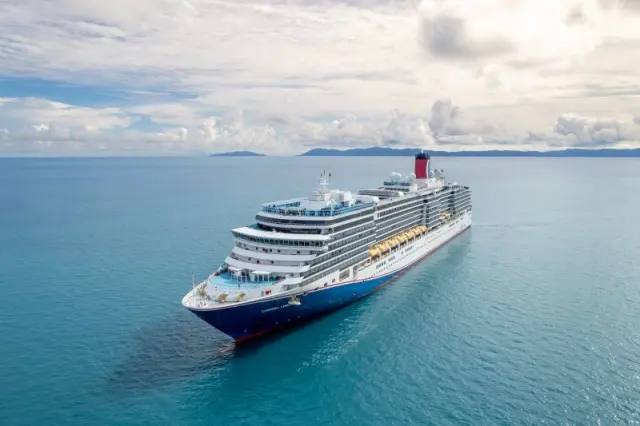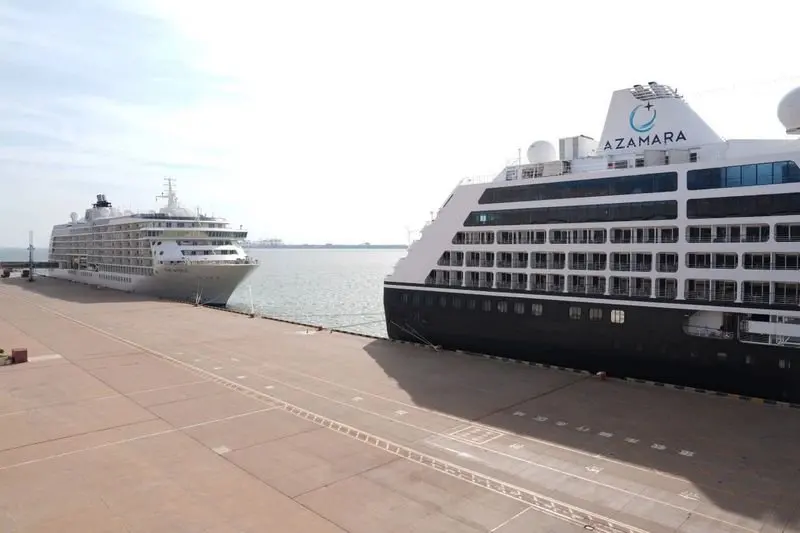
Tianjin's cruise terminal rarely sees ships like these. Within 24 hours this October, the northern Chinese port welcomed the Azamara Pursuit, a small luxury vessel on a long-haul itinerary, and The World, the famous residential ship where passengers literally own their apartments at sea.
The Azamara Pursuit, a 30,277-ton ship, arrived on Oct. 18 carrying more than 600 guests, mostly from the US, Australia and Canada. The following day The World pulled in for a four-day stay, with roughly 140 residents stepping ashore in China. Because both ships are on extended voyages rather than sailing in and out of Tianjin as a homeport, the terminal briefly had two visiting vessels alongside at the same time.
What makes this interesting beyond the novelty is how much coordination it took. Tianjin Port Group used a 'one ship, one plan' approach to juggle berths and passenger flows for two very different vessels with very different schedules. The maritime safety authority ran a bespoke plan for the Pursuit, pairing sea patrols with electronic monitoring of the berth. Border inspection officers with foreign-language skills handled the arrival formalities, with online arrival cards and 240-hour temporary entry permits issued to nearly 200 guests in a single on-site session — a big time-saver for anyone keen to start exploring.
For travellers, the takeaway is that Tianjin is quietly working to make life easier for international cruise guests. The 240-hour visa-free transit arrangement means passengers on longer itineraries can leave the ship and see the city without sorting paperwork in advance. And Tianjin itself is a worthwhile stop: a port city with European-style former concession districts, a riverside old town and a high-speed rail link putting Beijing about 30 minutes away. If your cruise itinerary includes it, hopping the train to the capital for a day is entirely doable.
Small-ship and expedition-style cruising through Asia is growing, and ports like Tianjin are clearly gearing up for more of it. If you're considering a longer voyage that calls at northern China, expect smoother clearance than in years past — and consider building in extra time ashore rather than treating the port as a mere gateway to Beijing.