A power bank catching fire at 30,000 feet is the scenario behind a wave of new airline restrictions. In October, an IndiGo flight from Delhi to Chennai with more than 180 people aboard had to divert to Hyderabad after a passenger's portable charger ignited in an overhead bin. It landed safely and no one was hurt, but the incident sharpened attention on a risk regulators have been worried about for years: damaged or faulty lithium-ion batteries can produce intense, hard-to-extinguish fires.
The good news is that you can still fly with a power bank on most airlines — but the rules are getting stricter, and they vary depending on who you're flying with.
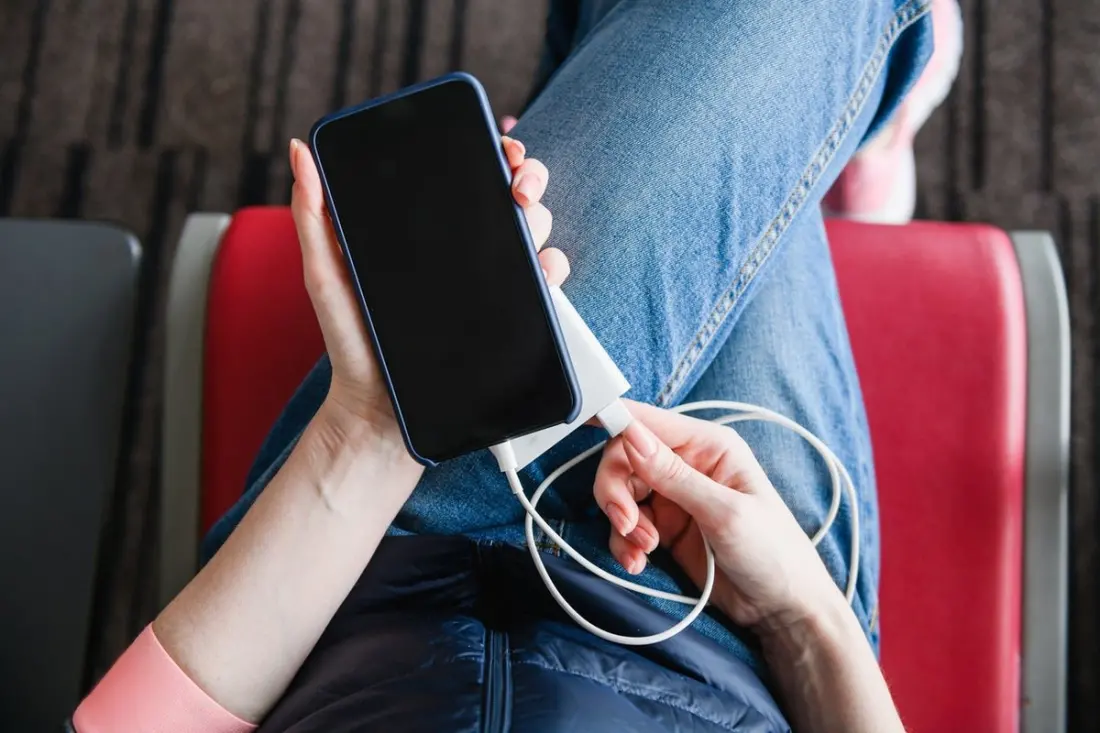
The baseline rules, as set out by the UK Civil Aviation Authority, are straightforward. Power banks go in your cabin bag only — never in checked luggage. Capacity matters too: chargers of 100 watt-hours or less are generally fine without airline approval, and you're limited to two individually protected spare batteries per person. Batteries must be protected against short circuits, and the CAA adds that they should be switched off completely rather than left on standby. The UK regulator goes further than most: it says you should not use your power bank to charge devices mid-flight, and you cannot recharge the power bank itself on board. The Foreign Office echoes the advice to check with your airline if unsure.
Other regulators have moved in the same direction. New specifications from the International Civil Aviation Organization, introduced in March, cap passengers at two power banks each and prohibit recharging them during flights. Emirates went further in October 2025, banning passengers from using power banks on its flights altogether — though you may still carry one on board, provided it has visible capacity ratings and stays in your seat pocket or a bag under the seat in front, not the overhead locker.
In Australia, Virgin Australia, Qantas and Jetstar have all tightened their policies, citing the risks from damaged or defective lithium battery devices, and no longer allow charging on board — including from in-seat power ports. Hong Kong's aviation authority imposed similar restrictions after a fire on a Hong Kong Airlines flight from Hangzhou last April. Carriers in the US, China, Taiwan, Thailand, South Korea, Japan, Singapore and Switzerland have also introduced new rules.
The common thread: keep the power bank where crew can see it and reach it quickly. Overhead bins are increasingly off-limits because a fire there is harder to spot and tackle. Under-seat storage and seat pockets let cabin crew respond fast if something starts to overheat.
For travellers, the practical checklist is simple. Pack your power bank in your hand luggage, never your checked bag. Check the capacity is 100Wh or less, or confirm with your airline if it's bigger. Don't plan on charging anything mid-flight — assume your power bank is for use on the ground, at the gate and during layovers. And if you're flying Emirates, Qantas, Virgin Australia, Jetstar or a Hong Kong carrier, expect not to use it on board at all. A quick check of your airline's policy before you pack beats having a charger confiscated at the gate — or worse, being on a diverted flight.