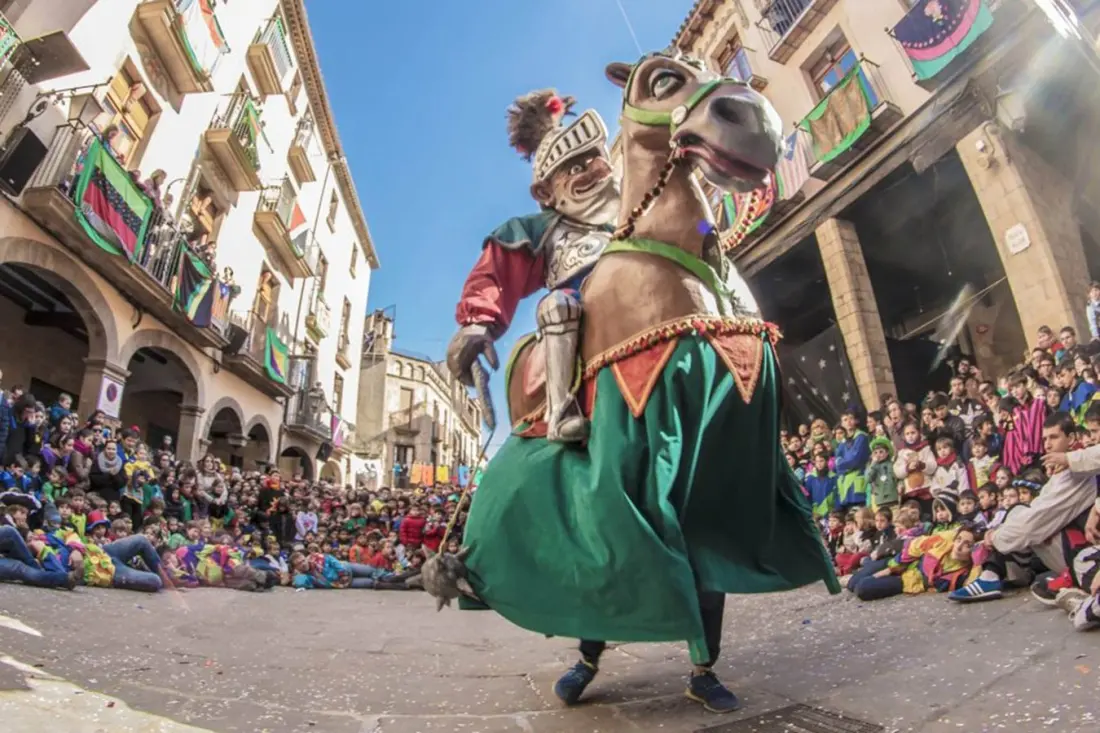
The Catalan Pyrenees sit barely two hours from Barcelona, yet most visitors heading to Catalonia never make it past the coast. That's their loss. This mountain corner of the country packs in eight UNESCO-listed Romanesque churches, medieval monasteries, craft villages and some of the liveliest folk festivals in the Pyrenees — all stitched together by excellent walking trails. Three areas stand out: Alta Ribagorça, Ripollès and Alt Urgell.
Alta Ribagorça, in the far north-west, is the remotest of the three and home to the Vall de Boí, one of Europe's densest clusters of Romanesque architecture. Its slender-bell-towered churches were built between the 11th and 13th centuries in the Lombard style borrowed from northern Italy, and many were once covered in vivid blue, yellow and green frescoes. At Sant Climent de Taüll, video mapping now projects those paintings back onto the walls as medieval worshippers would have seen them. Time a summer trip right and you'll catch the Falles, a solstice fire festival where villagers carry flaming torches down from the mountains and hurl them onto a communal bonfire — another UNESCO-recognised tradition. The circular Durro Route links villages where you can refuel on slow-cooked boneless lamb or wild boar stew.
Ripollès is the pick for medieval monuments. The Benedictine monastery of Santa Maria de Ripoll is among Catalonia's most famous buildings; its 12th-century entrance portal is covered in intricately carved biblical scenes, and there's a basilica and cloister to match. The town's Ethnographic Museum covers local crafts, from glazed ceramics to the metalwork the area was known for. A short drive away, Sant Joan de les Abadesses — the name means 'Saint John of the Abbesses' — mixes a Romanesque church, Gothic cloister and Baroque chapel in one monastery, with the medieval Pont Vell bridge nearby. The town sits on the Ruta del Ferro i del Carbó, a walking and cycling greenway through striking country. Snack fact: bakeries here sell Moixaines de Ripoll, wafer cylinders filled with hazelnut and almond paste.
Alt Urgell centres on La Seu d'Urgell, where the Valira and Segre rivers meet below the Serra del Cadí. Its Romanesque cathedral is the star, but the colonnaded medieval streets, the church of Sant Miquel and the Diocesan Museum's medieval paintings reward a slow wander. Up in the Vansa Valley, the hamlet of Ossera has earned the nickname 'Village of Artisans' for its shops selling cheese, honey, soap and medicinal herbs. In nearby Tuixent, the Museum of the Trementinaires tells the story of local women who walked the region on foot selling herbal remedies from the 19th century until the 1960s. Trails here head towards the twin-peaked Pedraforca, one of Catalonia's most distinctive mountains.
For travellers, the appeal is the combination: serious mountain walking plus genuinely significant heritage, without the crowds of better-known Pyrenean spots. Hikers get village-to-village trails; culture-seekers get a millennium of architecture; and everyone gets hearty mountain stews at the end of the day. Source: Wanderlust.