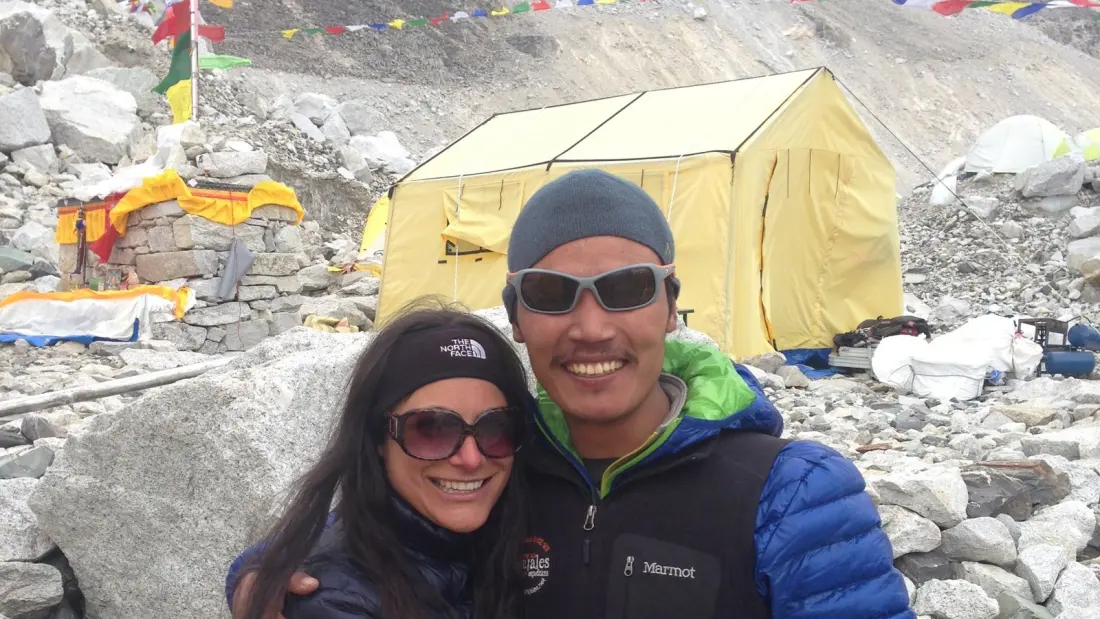
Most Everest stories are about summits. This one is about the moment the mountain came down. Outside Online has published an excerpt from Nicole LoBiondo's debut memoir, 'Where the Air Grows Thin,' a first-person account of surviving a catastrophic avalanche on Everest — triggered by an earthquake — while she was camped in the Western Cwm, the basin climbers call the Valley of Silence.
LoBiondo and her climbing partner Kara had just threaded the Khumbu Icefall, the notoriously unstable maze of ice blocks that guards the lower mountain. They were in their tent sipping water when the ground tilted, then lurched. Seconds later they were airborne, carried off with the snow as ice chunks and rock rained down around them. Kara — a commercial pilot who flies through lightning storms for a living — said out loud what both were thinking: they were going to die. LoBiondo slammed her ice axe into the moving slope, got one solid hold, and eventually clawed her way up through the snow into open air.
What followed was the part most coverage skips. Stranded in a bowl of shattered snow with the Lhotse Face unclimbable above and the route back to Base Camp wiped out below, the survivors could go neither up nor down. LoBiondo crawled toward the one Sherpa tent still standing, where she found rescuers chanting alongside Kara, alive and shaking. The memoir also revisits a detail few travellers ever encounter: the paperwork climbers sign before setting foot on the mountain, which spells out — in unnervingly bureaucratic language — what happens to your body if you die up there. A mountain burial or cremation by local Buddhist monks runs several thousand dollars; repatriation through Kathmandu costs over ten thousand and can take weeks.
The excerpt is also a double story. LoBiondo was chasing the Seven Summits while serving as primary caregiver for her mother, who had ALS, and the book braids the two together — the discipline of waiting beside a hospital bed, the discipline of waiting out a mountain. It's less a gear-and-glory climbing tale than a meditation on what survival actually feels like: stillness, silence, and one breath at a time.
For travellers, this is worth reading even if you'll never strap on crampons. Everest's Khumbu region draws tens of thousands of trekkers a year to the Everest Base Camp trail, and pieces like this strip away the postcard version of the mountain. It's a reminder of what the Sherpa community — who appear in the memoir mourning friends with quiet, practiced grief — live with every season, and why the mountain commands respect from everyone who walks beneath it, whether at 8,849 metres or on the gentle lower trails to Namche Bazaar.