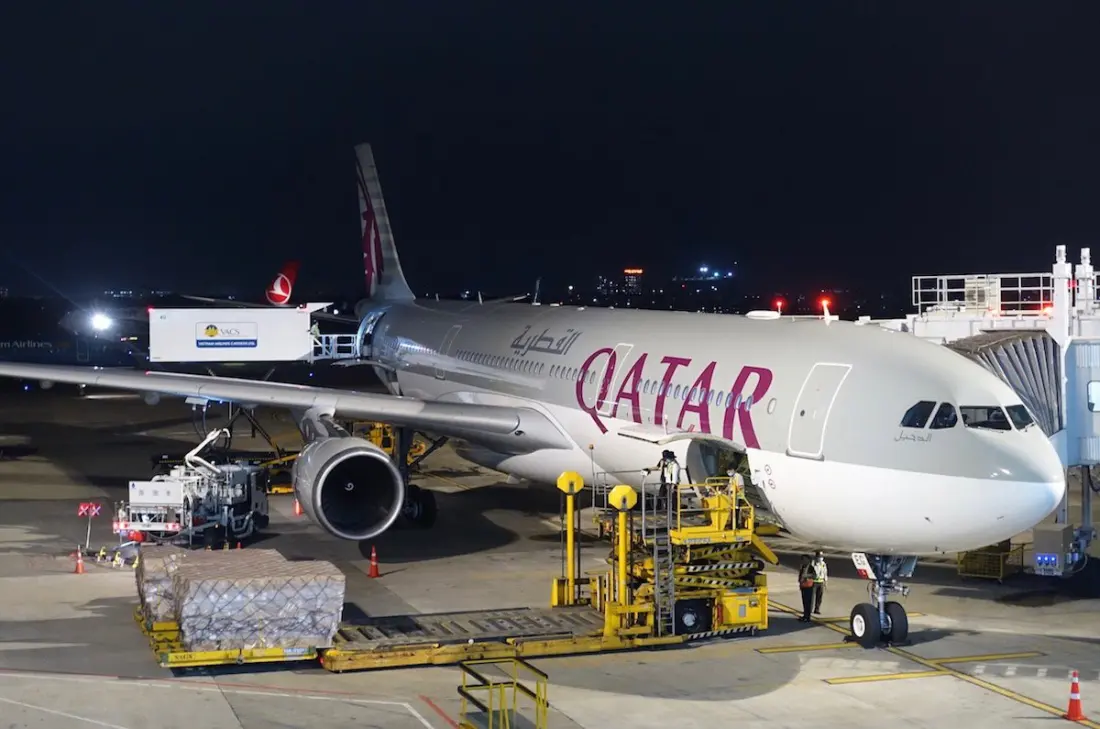
Qatar Airways has quietly pulled the plug on its passenger Airbus A330 fleet, a type that still accounted for roughly 7% of its capacity earlier this year. The move isn't a shock — the A330s have been serving the airline since 2002, were already slated for retirement, and only stuck around because delays on newer aircraft forced Qatar to squeeze extra years out of them. Over its time with the carrier, the fleet ran to 45 planes: 29 A330-200s and 16 A330-300s. Four additional A330s leased from Oman Air last year never even entered service.
The timing matters, though. The conflict involving Iran has hit Gulf carriers hard, and Qatar Airways more than most. Its whole business model depends on connecting travellers between Europe, Asia, Africa and beyond via Doha — and plenty of people are currently avoiding transiting the Middle East altogether. So the airline is dealing with falling demand and, unusually, no ability to raise prices.
That second part is the interesting bit for anyone booking long-haul flights. While airlines elsewhere have passed soaring fuel costs on to passengers, Qatar Airways CEO Hamad Al-Khater has said the carrier is absorbing them for now. Higher fares, he suggested, are an "option of last resort" given the competitive situation. Translation: with demand down and nervous travellers steering clear of the region, undercutting rivals on price is one of the few levers left. For travellers, that means some genuinely competitive fares on Doha connections — if you're comfortable with the routing.
The A330 retirement also created a surplus of pilots, and Qatar's solution is refreshingly practical: a voluntary short-term secondment programme sending A330 pilots to RwandAir, the Kigali-based carrier with which it has long-standing ties. RwandAir even bought one of Qatar's former A330s earlier this year. On the other side of the ledger, the airline says it expects 138 new aircraft over the next five years, so the fleet is being refreshed rather than shrunk.
The bigger question hovering over all this is the A380. Qatar still flies a small fleet of the double-deckers, and with the A330s now gone, speculation about how much longer the superjumbos will last is hard to avoid. For now, though, the airline's owner has deep enough pockets to weather the storm, and management is framing the A330 exit as routine fleet renewal rather than crisis management.
Why should holidaymakers care? If you've been eyeing a long-haul trip through Doha — whether to Asia, Africa or Australia — fares are unusually favourable right now because Qatar Airways is competing on price while demand is soft. Just weigh that against current regional tensions and check routing and connection comfort before booking. And if you're an aviation fan, your chances of catching a Qatar A330 in passenger service are now officially zero.