Long before weather apps, South Africans read the sky, the wind and the land itself. Farmers, hikers, fishers and rural communities built up a practical toolkit of natural signs — and it still works today, whether you're hiking the Drakensberg or waiting out a storm on the Wild Coast.
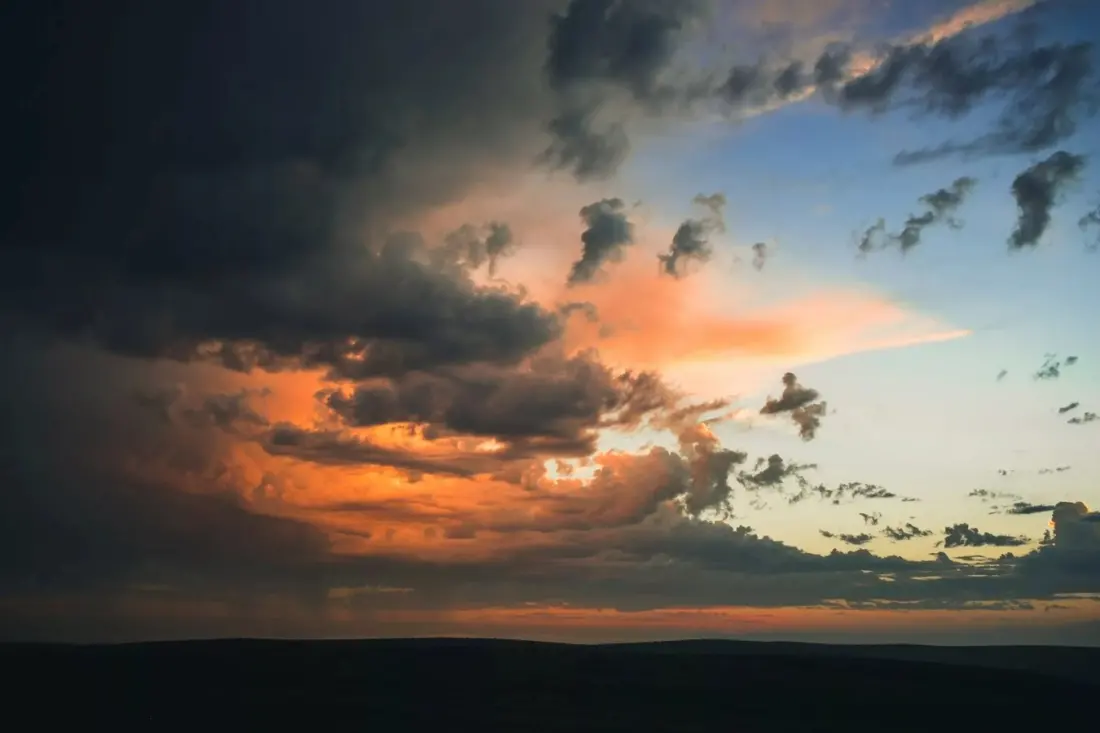
Clouds are the most obvious starting point. Their shape, height and movement reveal plenty about the atmosphere. In the Drakensberg, towering cumulonimbus clouds are a reliable signal of summer thunderstorms. In Cape Town, cloud spilling over Table Mountain is so familiar it has its own name: the tablecloth. The general rule: dark, vertically building clouds with thunder mean a storm is developing, while thin wispy clouds high up can hint that a weather system is on the way. The trick is to treat clouds as part of a bigger picture, not a single guaranteed forecast.
Winds carry local names for good reason. Cape Town's summer southeaster is nicknamed the Cape Doctor because it sweeps the city clean of cloud and pollution. The berg winds of the interior — hot, dry air descending from higher ground toward the coast — can send temperatures climbing fast. Knowing which wind arrives from which direction was once the closest thing to a forecast.
Plants keep a seasonal calendar too, and in South Africa it varies sharply by region. The southwest gets winter rain while the interior and east get summer rain, so the same month looks completely different in Namaqualand, whose wildflowers erupt after good winter rains, compared with the Highveld or bushveld, where the first summer rains turn dry ground green within days.
And the animals? There's real science behind the folklore. Birds, insects and mammals respond to shifts in temperature, humidity, air pressure and wind, so it's true that creatures often react to conditions changing around them. But that's reaction, not prediction — a bird sheltering before a storm is responding to weather that has already arrived, not consulting an internal forecast.
The practical takeaway for travellers: the landscape is constantly broadcasting information if you pay attention. In the Cederberg, Drakensberg or Golden Gate Highlands, mountain weather can turn within hours. On the Wild Coast, wind and cloud can transform a beach day fast. In the Kalahari, a bank of thunderclouds building on the horizon is your cue for dramatic summer storms. Modern forecasts and radar remain essential for severe weather, but pairing them with a bit of observation makes you a savvier traveller — and it's genuinely fun to leave the phone in your pocket for an afternoon and read the sky the way locals have for generations.