Nearly five years after Taiwan's carriers stopped crossing Russian airspace following the invasion of Ukraine, China Airlines flights to Europe are quietly routing over Russia again. The switch coincided with the start of the IATA winter season on October 25, 2026, and the reason behind it says a lot about how awkward geopolitics can make a long-haul flight plan.
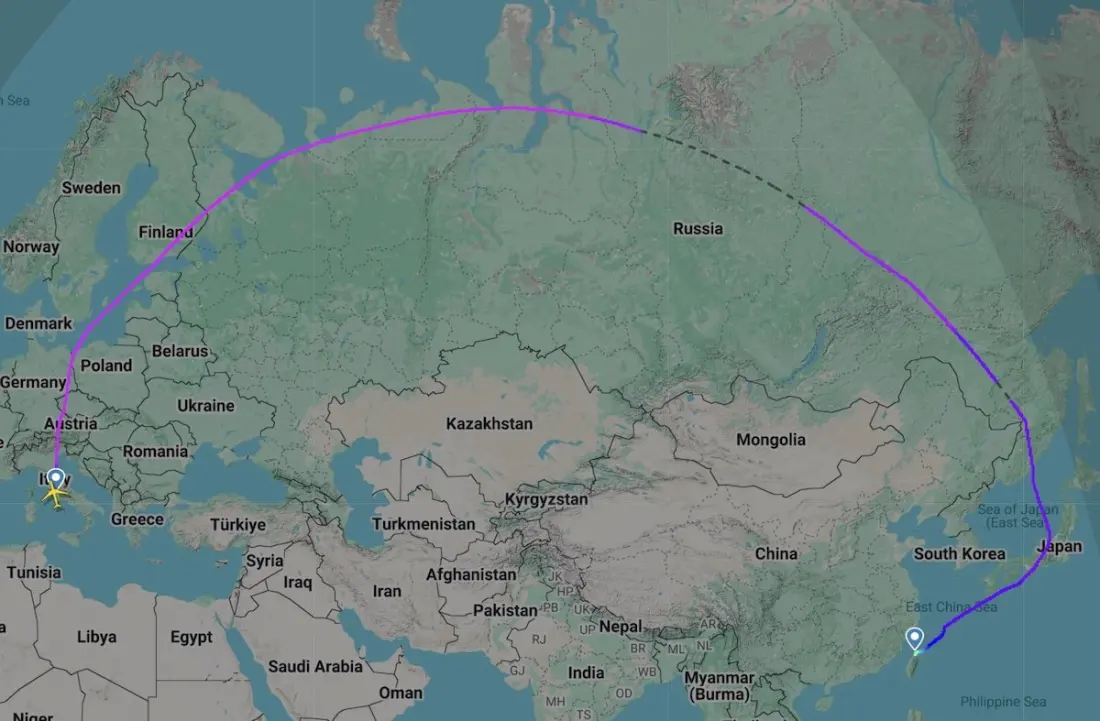
Taiwan's Civil Aeronautics Administration had voluntarily barred its airlines from Russian airspace back in 2022 — Russia never banned Taiwanese carriers directly, but the safety and insurance concerns applied all the same. That voluntary ban appears to have been lifted. China Airlines flight CI75 from Taipei to Rome was tracked flying almost its entire route across Russia on the night of October 24-25, when it would previously have swung far south over India, Pakistan and Turkmenistan.
So why now? Taiwanese media suggest a fresh risk assessment concluded the detour was no longer necessary — and in winter, that makes sense, since strong westbound headwinds on southern routings mean flying over Russia can shave roughly an hour off a Taipei-to-Europe flight. But aviation analyst Enilria offers a more pointed theory: as of October 25, Pakistan has banned Taiwanese airlines from its airspace, reportedly under pressure from China, one of Pakistan's closest allies. There's no official notice yet, but the routing changes back it up. China Airlines' Taipei-to-London flight consistently overflew Pakistan until that date, then shifted to a Middle East routing skirting the Strait of Hormuz.
The squeeze is real. Taiwanese carriers can't overfly mainland China for obvious political reasons, so if Pakistan is closed too, the only ways to Europe are south over the Middle East or north over Russia. Russia it is — at least for now. Expect Taiwanese carriers to limit this to European routes, though: the US bars codeshares on flights using Russian airspace, so transpacific routes will likely keep avoiding it.
For travellers, the practical takeaway is shorter westbound flights between Taipei and European cities this winter, with the time savings potentially showing up in schedules and connection times. But it's also a reminder of how fragile routing maps are — Taiwan's airlines are effectively navigating a corridor between two giant neighbours who won't open their airspace, and any shift in the Ukraine war, insurance markets, or China-Pakistan relations could redraw these routes again.