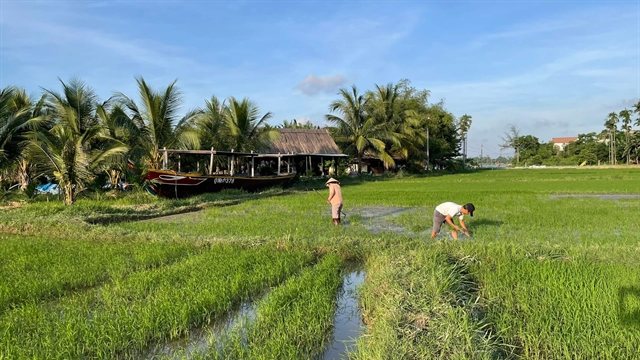
Five hectares of paddy in Cẩm Kim village, a short cycle from Hội An's Old Quarter, have become something unusual in central Vietnam: a strictly organic farming zone run entirely by villagers, and one of the area's most rewarding slow-travel stops.
The Hội An Heritage Rice Co-operative brings together 66 households who farm the Đồng Mẫu, Ông Đảng and Đồng Cao fields along the Thu Bồn River. After five years of dropping chemicals, the results are visible — birds are nesting in the rice again, and ragworm, a seasonal species that can't survive contaminated soil, has reappeared after decades away. Farmers like 72-year-old Trần Mạnh Thắng remember the old ways: his family used green manure before synthetic fertilisers took over in the 1980s, a shift that stripped the fields of insects and birds while costs kept climbing.
The co-op has turned the recovery into a business model. The standout offer is a prepaid farm deal: pay for 500 square metres of rice land and receive 300kg of organic rice after harvest, plus free field tours and meals cooked from the farm's own produce. It's a neat way for travellers to literally own a slice of Vietnamese farmland for a season. There's also a circular system in place — straw and husks become humus for mushroom growing, then go back into the next rice crop.
For visitors, the pitch is hands-on rural life rather than a look-and-go stop. Tours cover organic farming techniques, buffalo ploughing demonstrations and rice cake making, all framed around the village's preserved traditional lifestyle. Traceability is taken seriously too: digital diaries, crop coding and transparency reports on inputs, with backing from researchers at Belgium's Ghent University.
The hospitality trade has caught on. EMIC Hospitality's Field Restaurant has cooked with Cẩm Kim rice since the organic switch, and EMIC Travel now promotes the farm tours alongside rice sales. The Đà Nẵng Tourism Association sees it as part of a wider green shift — Cẩm Kim sits alongside Trà Quê vegetable garden, the nipa palms of Cẩm Thanh and Cẩm Nam's corn farms as Hội An's agritourism circuit, and tourists, apparently, will pay more for the real thing.
Why it matters: if Hội An's lantern-lit Old Quarter feels too busy by mid-morning, Cẩm Kim offers the counterpoint — mud between your toes, a meal you can trace to the field it came from, and money going straight to the families who farm it. It suits slow travellers, food-focused visitors and anyone travelling with kids who'd enjoy seeing (and trying) where rice comes from. Pair it with a morning in the ancient town and you've got a properly rounded day.
— Vietnam News Life