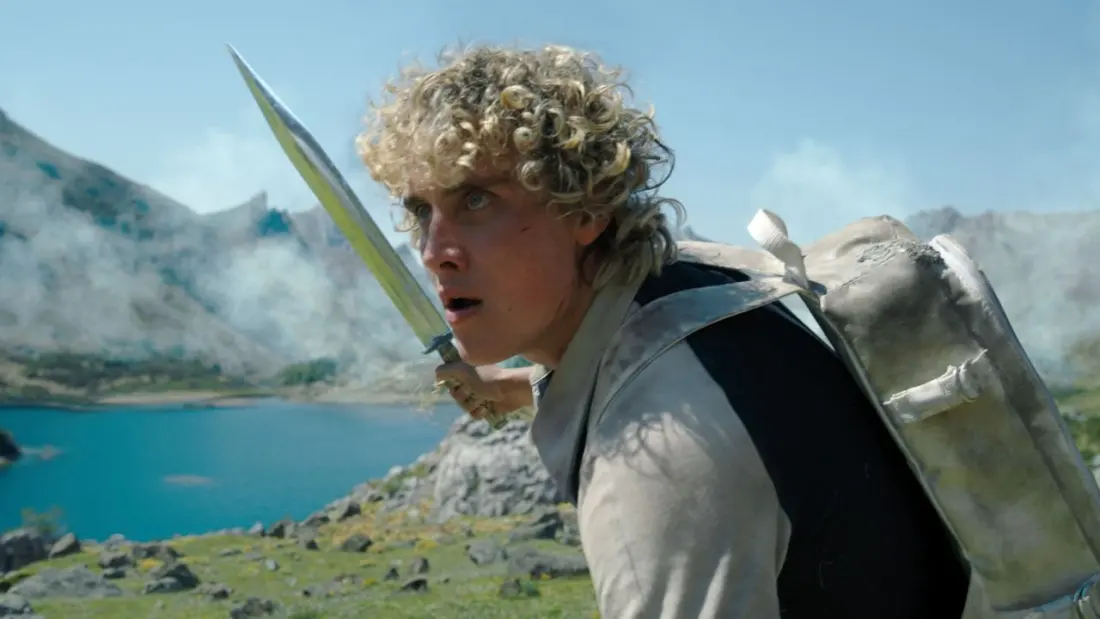
The latest trip to Panem is nearly here. The Hunger Games: Sunrise on the Reaping, the sixth film in the franchise, arrives this autumn and rewinds the clock 24 years before Katniss Everdeen's story. It follows a young Haymitch Abernathy — Katniss's sardonic mentor in the originals, played by Woody Harrelson — as he competes in his own Games, a special Quarter Quell edition with double the usual number of tributes. Joseph Zada takes the lead, backed by Ralph Fiennes, Glenn Close, Elle Fanning and Kieran Culkin.
What makes this instalment interesting for travellers is where it was actually shot. Director Francis Lawrence skipped green-screen fantasy in favour of real places, and two of them sit in northern Spain's Asturias region.
The Games arena is Somiedo Natural Park, a UNESCO Biosphere Reserve of jagged mountains, glacial valleys, dense forest and still lakes — and home to the last brown bear population in Europe. The Cornucopia scenes were staged there with the Asturian peaks and a glacial lake behind them. Nearby locations added texture: the Hayedo de Montegrande beech forest in Teverga for woodland battles, plus the Saliencia Lakes and Lago de la Cueva for other arena scenes. Location manager Pedro Aráez described the area's wild, untouched feel as exactly what the filmmakers wanted.
The Capitol's sleek architecture came partly from Oviedo, where Santiago Calatrava's claw-shaped Edificio Calatrava stands in for a government building in President Snow's seat of power.
Germany supplied the rest. Berlin's Velodrom, with its cold silver interior, became the underground launch pods arranged around the Cornucopia, while the Olympiastadion hosted the televised tribute parade — the franchise moment famous for Katniss's flaming dress. Outside Cologne, 14th-century Ehreshoven Castle's lush interiors reportedly stand in for the Capitol, and Lindlar Quarry was dressed with wooden huts for the edges of District 12.
The grimmest setting, Haymitch's down-at-heel home district, is Landschaftspark Duisburg-Nord, a former smelting and mining complex in western Germany. Ironically, the site is anything but desolate in real life: British artist Jonathan Park's nightly light installation illuminates the industrial ruins, and the park hosts open-air film screenings, the Ruhr Games and the Traumzeit Festival.
For film fans, this is a ready-made route through two countries. Asturias offers genuinely wild hiking in Somiedo — bear-spotting country — while the German locations cluster nicely: the Duisburg park, Cologne-adjacent castle and Berlin's two venues are all reachable on a straightforward city-and-Ruhr itinerary. Most of these spots are publicly accessible, so you can stand where the tributes did without a Capitol permit.