Every four years, one of ocean racing's biggest spectacles sends a fleet of solo sailors across the Atlantic. The Route du Rhum – Destination Guadeloupe starts on Sunday 1 November 2026 at 13:00 CET from the walled port city of Saint-Malo in Brittany, with 115 skippers racing 3,500 miles to Pointe-à-Pitre in Guadeloupe. First run in 1978, it's the largest transatlantic race in the world, spanning six multihull and monohull classes.
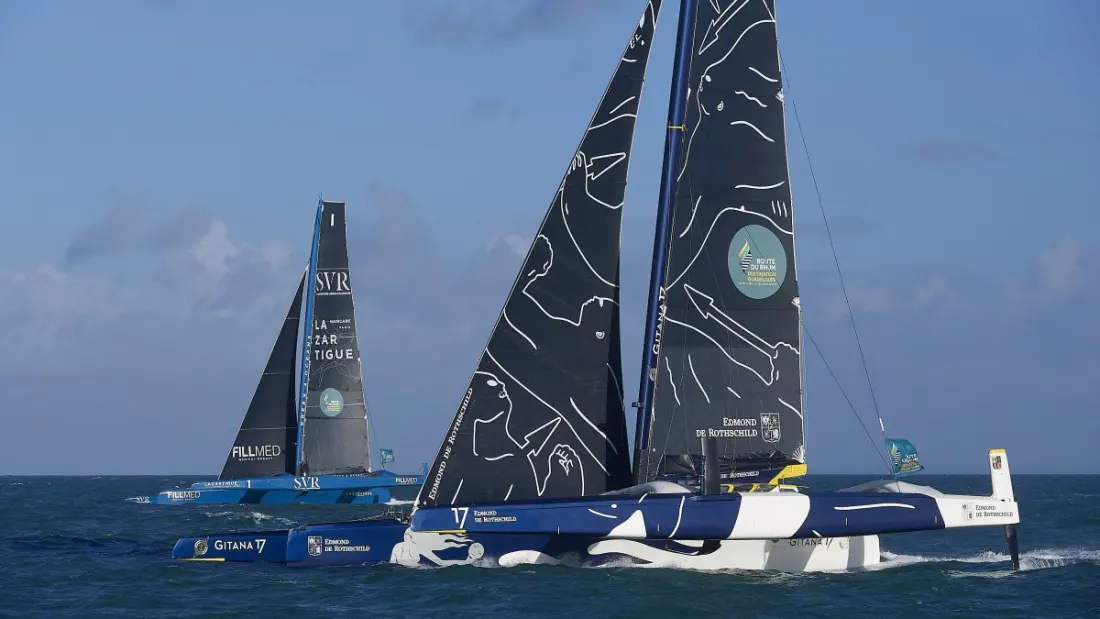
The headline act is the Ultime class: eight enormous foiling trimarans that can sustain more than 40 knots. They'll be chasing the outright course record of 6 days, 19 hours and 47 minutes, set by Charles Caudrelier in 2022. Caudrelier returns on the brand-new Gitana 18, the most talked-about racing yacht of the moment, though its lack of sea miles could bite. His rivals include Armel Le Cléac'h on Banque Populaire XI, young gun Tom Laperche on SVR-Lazartigue (handy if the start is light), veteran Thomas Coville on his ninth Rhum, and Alexia Barrier — the first woman ever to skipper an Ultim in this race.
The IMOCA 60 fleet, 22 strong, brings its own drama. Britain's Sam Goodchild on Macif Santé Prévoyance is the clear favourite after winning the IMOCA Globe Series, though he's famously never finished a Route du Rhum in two attempts. Jérémie Beyou, 50, is chasing a first win on his heavily reworked Charal 2, while Boris Herrmann and Sébastien Simon both race brand-new, barely tested boats. Watch also for 25-year-old Violette Dorange and two-time Olympian Francesca Clapcich, racing solo for the first time.
There's a nostalgic thread too: new Vintage divisions for multihulls and monohulls. Francis Joyon, who won the 2018 edition by just seven minutes, returns on a classic ORMA 60. Jean Le Cam races a restored Swan 59, Damien Seguin sails the Fujicolor II trimaran he watched finish in Guadeloupe as an 11-year-old, and 71-year-old Charlie Capelle lines up on Acapella for the eighth time.
For travellers, the start is a genuine spectacle — Saint-Malo's ramparts and beaches fill with spectators for the departure, and the race village in the days before is free and lively. At the other end, Pointe-à-Pitre hosts a finish festival, and Guadeloupe in November is warm, green and pre-high-season quiet. If you can't make either, the race runs roughly six to eight days for the trimarans and around two weeks for most monohulls, tracked live online.