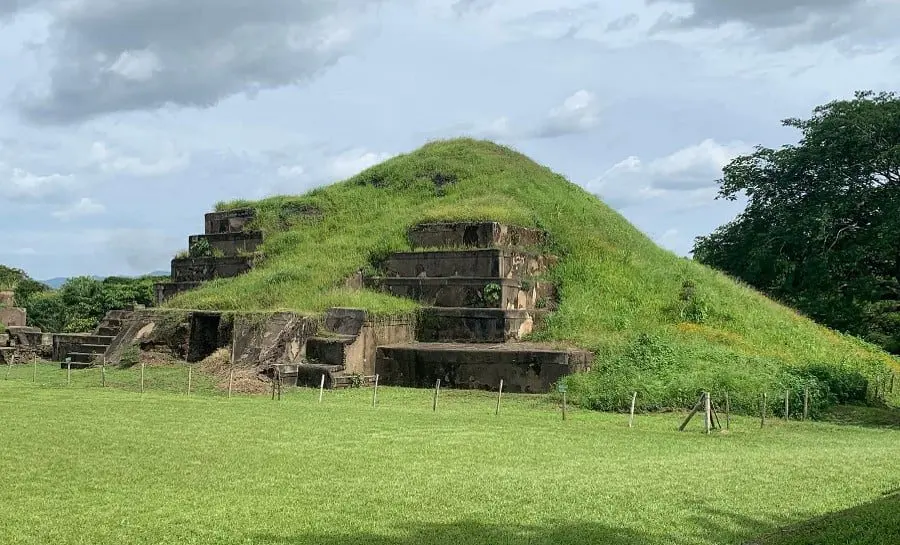
Forty minutes west of San Salvador, past the bustle of the capital, the Zapotitán Valley hides one of Central America's most underrated ancient sites. San Andrés was a major Maya political and ceremonial centre between roughly 600 and 900 AD, and today it's an open, walkable archaeological park where you can have the ruins almost to yourself.
Unlike El Salvador's smaller ancient sites, San Andrés was a genuine regional power. At its height the city may have sprawled across 200 hectares, complete with homes, farmland and workshops where artisans produced pottery and obsidian tools while farmers cultivated maize, beans and squash. Its rulers oversaw trade, religious ceremonies and civic life in the fertile valley.
What you see today centres on a few key structures. The Acropolis, a complex of raised platforms, was likely the domain of the ruling elite. Several pyramid-shaped monuments — built with local techniques and materials rather than the tall stone style of Guatemala or Mexico — mark where public ceremonies once took place. Between them sits the ceremonial plaza, the gathering heart of the ancient city. The buildings are adobe-based and fragile, so conservation teams have carried out careful repairs to protect them.
Start at the on-site museum before heading out to the ruins. Its exhibits explain how the settlement developed and its ties to other Mesoamerican cultures, which makes the structures far easier to read once you're standing in front of them. There's an unexpected bonus here too: the museum covers a colonial-era indigo processing facility found at the site, so you get two distinct chapters of Salvadoran history in one visit.
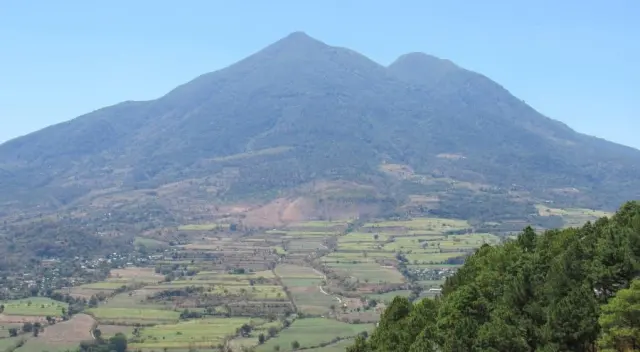
Volcanoes shaped San Andrés as much as the Maya did. Eruptions repeatedly hit the valley over the centuries, sometimes burying and preserving archaeological evidence under layers of ash. That same volcanic soil made the valley fertile enough to support a large population in the first place.
Why bother with San Andrés when Tikal and Copán get the crowds? Precisely because it doesn't. This is a site you can explore in a relaxed half-day, and it's an easy detour off the Pan-American Highway. Better still, it sits near Joya de Cerén, the UNESCO-listed 'Pompeii of the Americas' where a farming village was preserved under volcanic ash. Pair the two and you get a full picture of ancient life in western El Salvador — elite ceremony at one, everyday domestic life at the other.
San Andrés also makes a point worth remembering: the Maya world didn't stop at Guatemala, Mexico and Honduras. Western El Salvador was part of that same connected region, and this site is the best evidence of it.
Credit: El Salvador Info