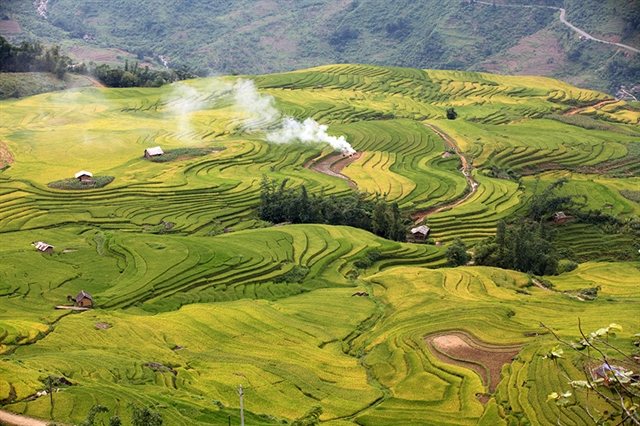
Vietnam's favourite mountain town is quietly reinventing itself. Sa Pa, in the northern province of Lào Cai, is rolling out a blend of digital services, cultural preservation projects and a plan to cover the town in flowers — all aimed at making it a greener, smarter place to visit without losing its highland character.
The tech side is already visible for travellers. Since September, four interactive information kiosks and public Wi-Fi hotspots have gone live, supporting more than 2,000 simultaneous connections and giving visitors touchscreens packed with maps, accommodation, restaurant and destination info. There's a Sa Pa Tour app and a digital tourism platform on the ward's website, plus smart parking and cashless payment options. Even local specialty products under Vietnam's OCOP scheme now carry electronic traceability labels and sit on e-commerce platforms.
Culture is the other half of the equation. Sa Pa maintains a dedicated cultural space showcasing five ethnic groups — the Dao, Mông, Tày, Xá Phó and Giáy — run by the Community Connection Culture Cooperative. Visitors can see traditional houses and kitchens, blacksmithing, brocade embroidery and basket weaving, with residents themselves performing and explaining the traditions. The cooperative handles coordination and quality, so the money and the storytelling stay local.
The numbers suggest it's working. Visitor arrivals grew roughly 20 per cent a year between 2020 and 2025, and in the first nine months of 2026 the town welcomed over 3.55 million visitors, pulling in more than VNĐ22.47 trillion (about US$880.7 million) in tourism and service revenue.
Then there's the flowers. A 2026-2029 plan will put nearly 20,000sq.m of flower landscapes into public spaces, streets, schools, offices and residential areas, backed by new nurseries, flower-lined streets and a mix of perennial ornamentals with seasonal blooms. A Green Sa Pa programme launched in August runs regular clean-ups, tree planting and waste treatment, with officials explicitly asking visitors to do their bit for the town's image.
Infrastructure is getting a boost too: 13 projects covering transport links, urban renovation, schools and community cultural houses are under way, with total investment above VNĐ420 billion. Three urban improvement projects worth over VNĐ6 billion should wrap up in the first half of 2027.
Why should this matter to your trip? Sa Pa's appeal has always been the combination of terraced rice fields, cool mountain air and ethnic minority culture — but rapid growth has strained the town before. If these plans land, you get better public Wi-Fi and wayfinding, easier cashless payments, more greenery, and cultural experiences run by the communities themselves rather than staged for tour buses. Go in the next couple of years and you'll likely catch the town mid-transformation: the flowers are coming, the infrastructure is being rebuilt, but the Friday love market, the H'Mông and Dao villages, and the trek out to Fansipan's foothills are very much still the real Sa Pa.