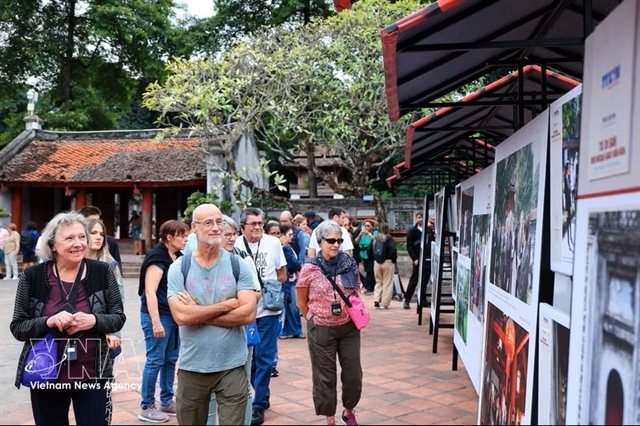
The Văn Miếu – Quốc Tử Giám complex in Hanoi is celebrating a big birthday: the founding of Quốc Tử Giám, Vietnam's first national university, happened roughly 950 years ago. Marking the anniversary, Russian Oriental studies researcher Dr Anatoly Sokolov told the Vietnam News Agency that the site is far more than a preserved monument — it has kept passing down a tradition of learning across generations and still plays a live role in the country's cultural life.
For travellers, the complex is one of Hanoi's most rewarding stops. It combines the Temple of Literature (Văn Miếu), built in 1070 and dedicated to Confucius, with the university founded a few years later to educate the sons of the elite. It later opened its doors more widely and became the heart of Vietnam's Confucian examination system. The famous stone stelae standing on turtle backs — inscribed with the names of doctorate recipients — are among the site's most photographed features and give a tangible sense of nearly a millennium of academic tradition.
Sokolov makes an interesting point for modern visitors: the complex has become a platform for cultural diplomacy, and a photo exhibition titled "From Heritage to Cultural Diplomacy" has toured abroad, including in Moscow, showcasing its historical and diplomatic significance. Back in Hanoi, the site is being updated for 21st-century audiences, with interactive programmes, richer information resources and modern technology gradually being introduced, in line with Vietnam's national push on cultural development and digital transformation.
Why does a thousand-year-old university still draw crowds of international visitors and foreign government delegations? Sokolov argues the appeal is universal: respect for education, the pursuit of knowledge, recognition of talent and appreciation of teachers — values that translate across any culture. For a traveller wandering the courtyards, the place reads as a love letter to learning, which is a nice change of pace from temple-hopping or market bargaining elsewhere in the Old Quarter.
Practically speaking, the complex sits a short walk from central Hanoi and pairs well with nearby sights like Hoan Kiem Lake and the Imperial Citadel. Go early to beat tour groups and local students in graduation photos — caps and gowns are a daily sight here, which tells you everything about how revered the site remains. Whether you're drawn by history, architecture or just a quiet garden in a loud city, Quốc Tử Giám earns its reputation as more than a photo op: it's the beating heart of Vietnam's academic identity, now entering its tenth century.